“This Job Paid for My Children’s Education”: A Nairobi Matatu Tout’s Story

Eunice Achieng, a single mother of two adult children, has spent nearly five years working as a matatu tout on Nairobi CBD routes. Recently, she attended her daughter’s graduation ceremony — a moment she describes as deeply satisfying after years of struggle in the city’s informal sector.

Her daughter is now set to join college.

“For me, that day meant everything,” Eunice says. “It showed that all the hard work was not for nothing.”

ALSO READ: Adult Video Gaming in Kenya: From Mall Consoles to a Growing Cultural Mainstream

From Restaurant Work to the Streets of Nairobi

Eunice moved to Nairobi several years ago in search of employment. Like many low-income earners, her first job was in the service industry.

“I worked as a waiter in a small restaurant for about five years,” she recalls. “But the salary was very small, and you had to wait until the end of the month.”

With rent, food, and school needs to meet, Eunice knew the income was not sustainable.

“If you want to survive Nairobi, sometimes you must change direction,” she says.

Life in Kayole: Struggling to Get By

Eunice lives in Kayole, Eastlands, a densely populated area that houses tens of thousands of Nairobi residents. The estate attracts low-income earners who depend largely on informal jobs to survive.

“In life, you have to struggle to make ends meet,” she says.

For many families in Kayole, daily income determines whether there will be food on the table.

Eunice at her workplace in Nairobi Bus Station

Why She Joined the Matatu Industry

Eunice says she joined the matatu business after closely observing how matatu crews worked.

“I was not introduced by anyone,” she explains. “I just noticed they earned money daily.”

Unlike restaurant work, where wages are paid monthly, the matatu industry offers daily earnings, something that appealed to her as a single mother.

“As a parent, emergencies don’t wait. I needed money every day.”

How Much Does a Matatu Tout Earn?

According to Eunice, a matatu tout can earn between KSh 800 and KSh 1,000 per day, depending on passenger flow.

“But it is not guaranteed,” she notes. “Some days are good, others are not.”

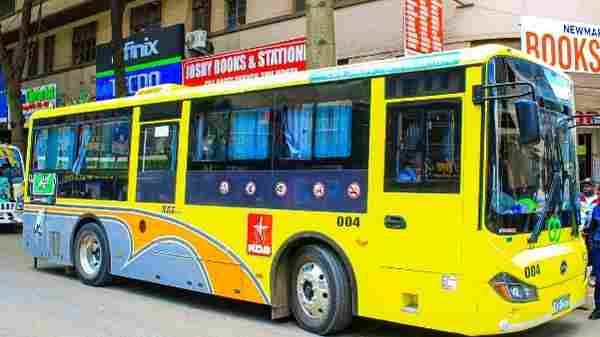
The matatu industry remains one of Nairobi’s biggest employers, directly and indirectly supporting hundreds of thousands of households across the city.

Daily Challenges on the Road

Despite the income, the job comes with constant challenges.

“Arrests and bribes are part of daily life for matatu operators,” Eunice says.

She points to frequent harassment by traffic police and city council enforcement officers, commonly known as kanjos.

“Sometimes you are not even wrong, but you still have to pay,” she says.

A City That Depends on Matatus

Nairobi is the largest city in East Africa and heavily depends on public transport to function.

Available transport data shows:

  • Major bus corridors carry between 10,000 and 33,500 passengers daily
  • Combined matatu routes handle over 100,000 passengers every day
  • Matatus account for more than 60% of daily public transport trips in Nairobi

Without matatus, the city’s economy would slow down significantly.

“You Just Have to Take Something Home”

Despite the hardships, Eunice says she has learned to live with the realities of the job.

“You just have to take something home,” she says. “It is the job I chose.”

For her, the reward is not the money alone, but the outcome.

“When I saw my daughter graduate, I knew it was worth it.”

One Story Among Many

Eunice’s story reflects the lives of thousands of Nairobi residents who depend on the informal sector to survive. It is a reminder that behind the noise, chaos, and traffic of the matatu industry are real people working daily to build a future for their families.

Hot this week

Nairobi Tested Scheduled Buses and Fixed Fares in 2025. What Happened to the Plan?

Nairobi tested scheduled bus departures and fixed fares along Route 111 in 2025. More than a year later, questions remain about the pilot's lasting impact.

Changa Fuel: Kenyan Platform Wants to Make Shared Travel Cheaper and Safer

A Kenyan technology company is seeking to change how...

Could Nairobi Become Africa’s Most Photographed City?

Nairobi's streets are becoming open-air photography studios. As county authorities move to recognise street photographers, some welcome the change while others fear growing competition could threaten their livelihoods. Could Nairobi become Africa's most photographed city?

Could Ebola Bring Back Lockdowns? How Nairobi Commuters Should Prepare

Kenya’s Ebola cases have reached seven. Here are the symptoms to know, how to protect yourself on public transport, and why commuters should plan quietly for the possibility of movement restrictions.

Why You Must Get Out of Your Car on the Likoni Ferry: 5 Reasons That Might Surprise You

Passengers crossing the Likoni Channel are required to leave their vehicles, but why? From the danger of sinking cars to insurance complications and emergency evacuations, here are five reasons behind this important ferry safety rule. Copy

Topics

Nairobi Tested Scheduled Buses and Fixed Fares in 2025. What Happened to the Plan?

Nairobi tested scheduled bus departures and fixed fares along Route 111 in 2025. More than a year later, questions remain about the pilot's lasting impact.

Changa Fuel: Kenyan Platform Wants to Make Shared Travel Cheaper and Safer

A Kenyan technology company is seeking to change how...

Could Nairobi Become Africa’s Most Photographed City?

Nairobi's streets are becoming open-air photography studios. As county authorities move to recognise street photographers, some welcome the change while others fear growing competition could threaten their livelihoods. Could Nairobi become Africa's most photographed city?

Could Ebola Bring Back Lockdowns? How Nairobi Commuters Should Prepare

Kenya’s Ebola cases have reached seven. Here are the symptoms to know, how to protect yourself on public transport, and why commuters should plan quietly for the possibility of movement restrictions.

Why You Must Get Out of Your Car on the Likoni Ferry: 5 Reasons That Might Surprise You

Passengers crossing the Likoni Channel are required to leave their vehicles, but why? From the danger of sinking cars to insurance complications and emergency evacuations, here are five reasons behind this important ferry safety rule. Copy

Delta’s Premium Seats Now Out-Earn Economy. Kenya Airways Has 30 Per Dreamliner.

Delta Air Lines is betting on premium passengers with 101 premium seats on its new Airbus A350-1000. Kenya Airways operates just 30 business-class seats on each Dreamliner. Could the American airline's strategy offer lessons for Kenya's national carrier? Copy

Government Raises Fuel Prices, Matatus Raise Fares — And Kenyans Are Expected to Pay for Everyone’s Failures

The government has increased fuel prices, and matatu owners now want fares raised by 10%. But who is protecting commuters? Metros Kenya examines the role of the government, EPRA, the Ministry of Transport and matatu operators in Kenya's growing transport costs.

You Could Be Fined or Even Jailed on Kenya’s SGR for These 5 Surprising Things — Number 3 Might Shock You

Did you know that certain actions aboard Kenya's Madaraka Express could attract fines or even imprisonment? Discover five surprising SGR passenger rules, from ticket transfers and First Class seating to prohibited items and emergency equipment.

Related Articles

Popular Categories

spot_imgspot_img