


Summary
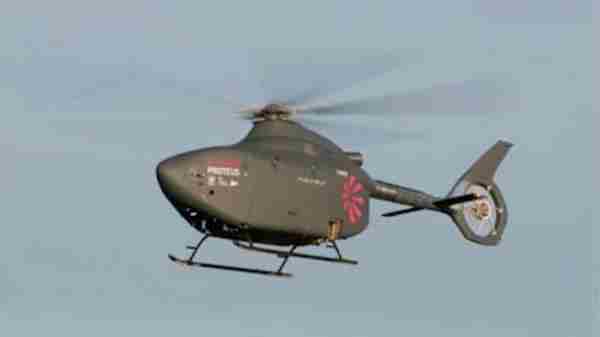
Britain’s Royal Navy has successfully tested its first full-sized autonomous helicopter, Proteus. The drone aircraft is designed to track submarines, patrol seas, and carry out dangerous missions without human pilots, as defence spending rises across Europe due to growing security concerns in the North Atlantic.
Royal Navy Tests Autonomous Helicopter
Britain’s Royal Navy has announced that its first full-sized autonomous helicopter has completed its maiden flight. The aircraft, known as Proteus, successfully carried out a short test flight on Friday.
Proteus is designed to operate without a crew onboard and can be used in high-risk missions, including tracking submarines and monitoring activity at sea.
ALSO READ U.S. Suspends Immigrant Visa Processing for 75 Countries
Rising Security Concerns in the North Atlantic
The development comes amid increased military tension in Europe following Russia’s full-scale invasion of Ukraine in February 2022. Since then, European governments have raised defence spending and planned to expand their armed forces.
The United States has also shown interest in Greenland as part of efforts to monitor waters used by Russian submarines and vessels around Greenland, Iceland, and Great Britain. Russia has rejected claims that it poses a threat to the region, calling such concerns a myth.
Designed for Modern Naval Warfare
Proteus was developed under a £60 million ($80.46 million) programme and is seen as a key tool for defending Britain and NATO allies against what the Navy described as “evolving threats.”
The helicopter was designed and built by Leonardo, a defence and aerospace company. It uses advanced software and sensors to analyse its environment and make decisions independently.
According to the Royal Navy, Proteus will be used for anti-submarine warfare, sea patrols, and tracking underwater vessels.
Leonardo Helicopters UK managing director Nigel Colman said the aircraft marks a major step forward in maritime aviation, adding that it can carry out “dull, dirty and dangerous” missions without putting human operators at risk.
Source: Reuters