
In Summary
- Iran is facing nationwide protests driven by economic collapse, social frustration, and declining political legitimacy.
- The Arab Spring offers a cautionary precedent, as most uprisings ended in renewed authoritarianism or prolonged instability.
- Unlike earlier Arab revolutions, Iran’s leadership is deeply ideological and its security forces remain largely cohesive.
- Analysts warn that economic decline, currency collapse, and lack of credible reforms have weakened the Islamic Republic.
- History suggests that even if Iran’s system changes, the aftermath is more likely to be volatile than democratic.
ALSO READ Nairobi Building Collapses: How Accountability in Approvals Can Save Lives
More than a decade after the Arab Spring reshaped the Middle East, its legacy stands as a warning rather than a blueprint for change. The uprisings that began in 2011 were driven by hopes of freedom, dignity, and economic opportunity, but their outcomes were largely bleak. As Iran confronts its most serious wave of unrest in years, the experiences of those earlier revolutions provide critical context for understanding what may lie ahead.
The Arab Spring’s broken promise
The Arab Spring began in Tunisia in January 2011, when longtime ruler Zine el-Abidine Ben Ali fled the country after weeks of protests. Tunisia was later hailed as the movement’s lone success story, adopting a democratic constitution and holding competitive elections for nearly a decade. That experiment ended in 2021, when President Kais Saied dissolved parliament and began ruling by decree, returning the country to one-man rule.
Elsewhere in the region, the consequences were even more severe. Egypt’s brief democratic opening collapsed into military-backed authoritarianism. Syria descended into a devastating civil war. Libya fragmented into militia rule, while Yemen fell into prolonged conflict and humanitarian catastrophe. Across the Middle East, the Arab Spring demonstrated that removing entrenched rulers did not guarantee democracy or stability.
Iran’s unrest: similarities and limits
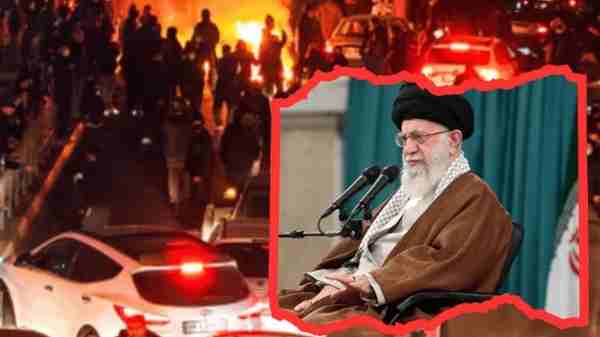
Iran’s current protests echo some elements of the Arab Spring. Economic hardship played a central role in triggering unrest, and demonstrations have spread across social classes and regions. The long-standing barrier of fear has weakened, with citizens openly challenging the state in ways rarely seen before.
Yet Iran also differs in important ways. Its ruling system is not simply authoritarian but ideological, shaped by revolutionary institutions that view survival as existential. Most significantly, Iran’s security forces—especially the Islamic Revolutionary Guard Corps (IRGC)—have remained largely unified and loyal. During the Arab Spring, regime collapse in Tunisia and Egypt only became possible when parts of the military refused to act against protesters. No such fracture has yet appeared in Iran.
An economy under severe strain
Unlike earlier protest waves, including the 2022 “Women, Life, Freedom” movement, the current unrest is increasingly centered on economic collapse. The sharp decline of the national currency, high inflation, and worsening living standards have left the government with few credible policy options.
Economists argue these problems cannot be resolved quickly. Any serious reform would likely deepen short-term hardship, while public trust in official promises has eroded. Social concessions that once eased tensions are no longer sufficient, and reducing foreign tensions—one of the few remaining pressure valves—would come at significant political and strategic cost.
A weakened but enduring system
Some analysts believe the Islamic Republic has entered a phase of long-term decline. Even if protests are contained, the system may emerge weaker, less legitimate, and more internally strained. Commonly cited scenarios include collapse driven by elite or security splits, an incomplete transition dominated by military figures, or continued erosion sustained through repression.
What unites these scenarios is the belief that a return to strong, stable governance is unlikely.
The decisive role of the security forces
Most assessments agree that the size of protests alone will not determine Iran’s future. The key factor remains the loyalty and cohesion of the security apparatus. As long as the IRGC and allied forces remain unified, mass demonstrations are unlikely to produce immediate regime collapse.
However, prolonged unrest, economic pressure, and external threats could gradually weaken that cohesion. If the balance within the security forces shifts, the political situation could change rapidly and unpredictably.
The danger after change
The Arab Spring showed that the most consequential phase of upheaval often comes after a regime weakens or falls. Power vacuums tend to produce instability, competition, and violence rather than orderly transitions.
Even if Iran experiences significant political change, it would face familiar challenges: weak democratic institutions, economic expectations that cannot be quickly met, fragmented opposition groups, and the risk that security forces dominate any transition.
A sober conclusion
History suggests that political upheaval in the Middle East rarely produces clean or immediate outcomes. The fall or weakening of authoritarian systems does not automatically lead to democracy and often results in prolonged instability.
As Iran navigates one of the most critical moments in its post-1979 history, the central question is not only whether change occurs, but how it unfolds—and who controls what comes next. The lessons of the Arab Spring remain clear: revolutions capture global attention, but it is the aftermath that shapes the future.