

Electric mobility company Spiro has secured a $215 million (approximately Sh27.8 billion) equity investment to expand its electric vehicle operations and battery-swapping infrastructure across Africa.
The funding round attracted major institutional investors, including Impact Fund Denmark and Equitane, marking one of the largest recent investments in Africa’s growing electric mobility sector.
What the Investment Will Fund
According to the company, the new capital will be used to:
- Expand battery-swapping stations across Africa
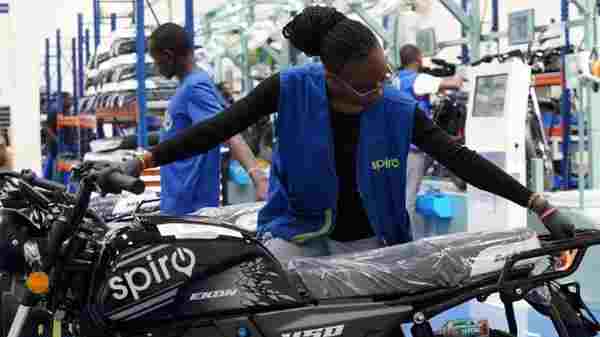
- Increase vehicle manufacturing and assembly capacity
- Advance electric mobility technology development
- Support entry into new markets such as the Democratic Republic of Congo and Ethiopia
The investment will also strengthen operations in countries where Spiro already has a presence, including Kenya, Uganda, Rwanda, Nigeria, Cameroon, Benin, and Togo.
100,000 Electric Vehicles Already Deploy
Spiro says it has now deployed more than 100,000 electric vehicles and established over 2,500 battery-swapping stations across seven African markets.
The company believes the network is helping make clean transport more accessible and affordable for everyday riders.
“Across seven active markets, our deployment of 100,000 electric vehicles and 2,500 smart-swap stations has turned sustainable mobility into an affordable, everyday reality,” said Gagan Gupta, Founder of Spiro and Chairman of Equitane.
He added that the company is entering a new phase of growth aimed at delivering affordable transport and clean energy solutions to millions of riders across the continent.
Benefits for Riders
Spiro says riders using its electric motorcycles can cut operating expenses by up to 40 percent compared to petrol-powered motorcycles.
This translates to savings of roughly Sh258 ($2) per day, a significant reduction for commercial riders who depend on motorcycles for daily income.
Environmental Impact
A lifecycle assessment conducted in Kenya found that Spiro’s electric motorcycles:
- Reduce climate impact by 72 percent
- Prevent approximately 19 tonnes of CO₂ emissions over a vehicle’s lifetime
- Cut ozone depletion potential by 80 percent
- Lower particulate matter emissions by 20 percent
The findings highlight the potential role of electric motorcycles in reducing pollution while supporting cleaner urban transport systems.
Environmental Impact
A lifecycle assessment conducted in Kenya found that Spiro’s electric motorcycles:
- Reduce climate impact by 72 percent
- Prevent approximately 19 tonnes of CO₂ emissions over a vehicle’s lifetime
- Cut ozone depletion potential by 80 percent
- Lower particulate matter emissions by 20 percent
The findings highlight the potential role of electric motorcycles in reducing pollution while supporting cleaner urban transport systems.
Kenya’s Growing Role in Electric Mobility
Kenya remains a key market for Spiro and hosts one of the company’s manufacturing facilities.
The company also operates manufacturing plants in Rwanda and Uganda, while its battery recycling facility is located in Nigeria.
Beyond transportation, Spiro is investing in solar-powered battery-swapping stations and second-life battery storage systems, which could help support renewable energy adoption across African markets.
Investor Confidence in Africa’s EV Future
Impact Fund Denmark said the investment reflects growing confidence in both Spiro and Africa’s electric mobility industry.
“We see potential for significant commercial growth in Spiro and electric mobility across Africa, as well as measurable climate impact,” said Lars Bo Bertram, Chief Executive Officer of Impact Fund Denmark.
Metros Insight
For Kenya, the investment is another sign that electric mobility is moving beyond pilot projects and into large-scale commercial deployment. As fuel prices remain a major concern for riders and transport operators, expanded battery-swapping networks and locally assembled electric motorcycles could play an increasingly important role in reducing transport costs and emissions across the country
Source: Capital Business