

Kenya is rapidly embracing electric public transport as operators and Saccos increasingly add electric buses to their fleets. Companies such as BasiGo have demonstrated that the technology is viable, with more buses now serving commuters on Nairobi’s roads.
However, while the number of electric buses continues to grow, a much bigger conversation is emerging—whether the country’s transport infrastructure is evolving at the same pace.
The transition to electric mobility is about more than replacing diesel engines with batteries. It also requires modern passenger management systems, dedicated bus infrastructure, organized boarding points, and digital fare collection that can efficiently handle the growing number of commuters.
Today, many public service vehicles operating in Nairobi’s central business district still pick up and drop off passengers at multiple unofficial locations. The city lacks a centralized terminal specifically designed for modern electric buses, raising concerns about how a larger electric fleet will operate once adoption accelerates.
Road infrastructure also remains a key challenge. While the government continues investing in road improvements and Bus Rapid Transit (BRT) corridors, much of the supporting infrastructure needed for smart public transport is still under development.
One of the biggest missing pieces is a fully integrated cashless fare system.
Kenya is widely recognized as a global leader in digital payments through platforms such as M-Pesa, yet cash continues to dominate much of the country’s public transport sector. Conductors still collect fares manually, resulting in inconsistent pricing, revenue leakages, longer boarding times and operational inefficiencies.
ALSO READ Dar es Salaam BRT May Introduce Facial and Palm Recognition for Passengers
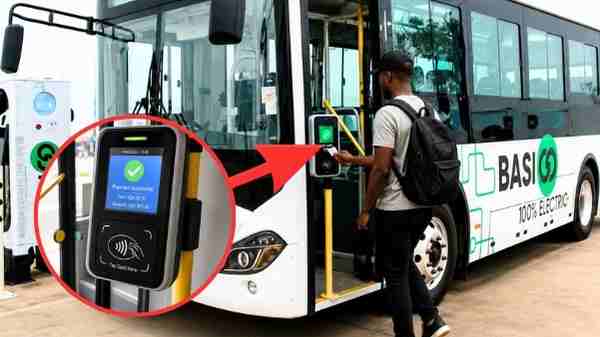
Modern transit systems across the world rely on smart card validators installed at bus doors. Passengers simply tap a prepaid smart card, bank card or mobile wallet before boarding, allowing them to enter within seconds while automatically recording the transaction.
Such systems not only speed up boarding but also improve accountability, reduce cash handling and provide operators with valuable passenger data for planning routes and schedules.
A member of the BasiGo team, who declined to be named because they were not authorized to speak publicly on the matter, told Metros Kenya that the company is already looking ahead to smarter fare collection technologies.
“A smart cashless payment system is in the pipeline for now,” the official said, without providing a timeline for implementation.
Across the border, Tanzania is already taking another step beyond smart cards.
The Dar Rapid Transit Agency (DART) recently announced that it is exploring the introduction of facial and palm recognition technology for passengers using the Bus Rapid Transit (BRT) network in Dar es Salaam.
Under the proposal, commuters would eventually be able to board buses using facial recognition or palm scans instead of relying solely on physical smart cards. DART says the biometric technology would complement—not replace—the existing smart card ticketing system.
According to the agency, the move is intended to improve passenger convenience while reducing revenue losses associated with the current fare collection system.
If adopted, the technology would significantly reduce boarding times while minimizing fare fraud and eliminating the need for commuters to carry physical transit cards.
Biometric fare collection is increasingly becoming part of public transport systems in major cities around the world as authorities seek faster, more secure and more efficient ways of managing passenger movement.
For East Africa, Tanzania’s plans signal how rapidly urban mobility is evolving.
Kenya has already positioned itself as a continental leader in digital payments and electric mobility. The next challenge will be integrating those strengths into a seamless public transport ecosystem that combines electric buses, dedicated infrastructure, organized stations and fully cashless fare collection.
As more electric buses enter service over the coming years, commuters will increasingly judge the success of the transition not only by cleaner vehicles, but also by how efficiently they can board, pay and travel across the city.
Without modern terminals, dedicated stopping points and intelligent fare management systems, the full promise of smart urban mobility may remain just out of reach.