

By Metros Reporter
Senior officials from the Kenya National Highways Authority (KeNHA) and the Nairobi Metropolitan Area Transport Authority (NaMATA) have inspected ongoing works on the Bus Rapid Transit (BRT) Line 2 project, a major transport initiative expected to reshape commuting across Nairobi and parts of Kiambu County.
According to StreamlineFeed.co.ke, the weekend inspection focused on evaluating construction progress and ensuring key infrastructure is ready for the next phase of implementation.
The 31-kilometre BRT Line 2 corridor will connect Nairobi’s Central Business District with Ruiru, passing through Lang’ata Road, Ngong Road, Juja Road and Komarock Road. Major passenger stations are planned at Dandora, Kariobangi, Gikomba Market and Ruiru.
Focus on Critical Infrastructure
During the inspection, engineers reviewed several ongoing works, including the Pangani underpass, where traffic signal systems are being installed to give priority to BRT buses and improve traffic flow through one of Nairobi’s busiest junctions.
Officials also assessed construction at the Kasarani terminal, stressing that dedicated BRT lanes must be fully separated from general traffic before trial operations can begin.
A Solution to Nairobi’s Traffic Crisis
The government views the BRT programme as a long-term solution to Nairobi’s worsening traffic congestion, which continues to cost the economy billions of shillings annually through fuel wastage and lost productivity.
BRT Line 2 is the first priority corridor under NaMATA’s wider master plan, which proposes five high-capacity transit routes serving Nairobi and neighbouring counties, including Kiambu, Kajiado, Machakos and Murang’a.
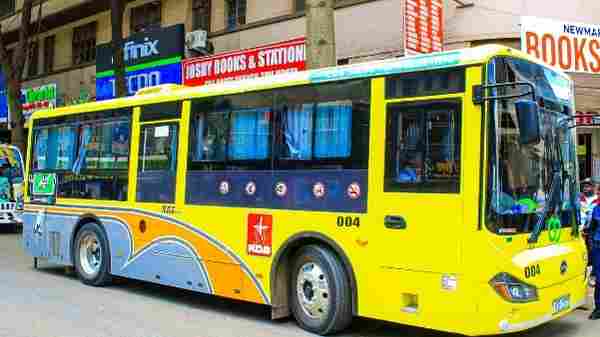
Once operational, the system is expected to offer faster, more reliable public transport while reducing dependence on private vehicles and conventional matatus.
Electric Bus Fleet Planned
The project will also introduce a fully electric bus fleet following a KSh 8.7 billion funding agreement secured through the United States’ Millennium Challenge Corporation (MCC).
The electric buses are expected to significantly reduce transport-related emissions while supporting Kenya’s clean mobility and decarbonisation goals.
Authorities also plan to introduce:
- A fully cashless fare payment system.
- Intelligent transport management technology.
- Accessible facilities for elderly passengers, children and persons with disabilities.
- Modern passenger stations and dedicated boarding platforms.
Key Project Highlights
- Length: 31 kilometres.
- Route: CBD – Lang’ata Road – Ngong Road – Juja Road – Komarock Road – Ruiru.
- Major stations: Dandora, Kariobangi, Gikomba Market and Ruiru.
- Bus fleet: 100% electric.
- Funding: KSh 8.7 billion from the Millennium Challenge Corporation.
Delays Still a Concern
Although construction continues, the project has experienced several delays over the years, leading to frustration among motorists and commuters affected by roadworks along the Thika Superhighway and other sections of the corridor.
NaMATA says safety and engineering standards remain the priority and that pilot operations will only begin after all dedicated BRT lanes have been completed and isolated from normal traffic.
Once completed, BRT Line 2 is expected to become one of Nairobi’s largest public transport upgrades, improving mobility, reducing congestion and supporting the city’s long-term economic growth.
Source: StreamlineFeed.co.ke