
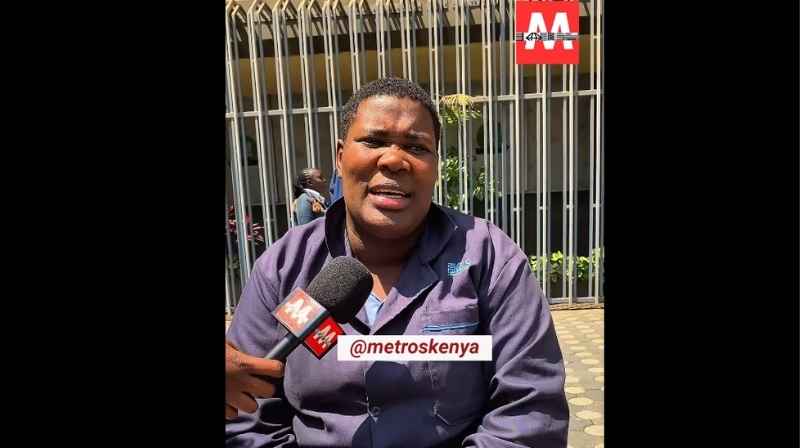

NAIROBI, Kenya — For seven years, Maureen Wambui has worked as a conductor in Kenya’s matatu industry, a sector traditionally dominated by men.
Working as a female conductor has given her an income and a place in one of Kenya’s biggest sources of informal employment. But according to Wambui, being a woman in the industry also comes with challenges that her male colleagues may not experience in the same way.
ALSO READ: Matatu Driver Alleges Nairobi Kanjo Askaris Demand Group Bribes as County Officer Says ‘Blame Goes Both Ways’
Wambui, who works with Kenya Bus Service (KBS), says female conductors continue to face gender stereotypes, discrimination and harassment from different people they interact with while doing their jobs.
She says some people still believe that working as a conductor is a job meant only for men.
“Men take advantage of our availability that comes with this work and think that it is desperation that has pushed us to do these jobs of conductor,” Wambui says.
Seven years working as a conductor
Wambui has spent seven years in the public transport sector and understands the demanding nature of the job.
Conductors often start work early and finish late, depending on the route, traffic conditions and the vehicle they are working in.
For Wambui, the long working hours are particularly challenging for women.
She says women have to endure the same difficult working conditions faced by male conductors while also dealing with negative attitudes about whether women belong in the profession.
Despite the challenges, she continues working.
Passengers sometimes refuse to pay female conductors
According to Wambui, discrimination can also come from passengers.
She says some passengers become difficult when asked to pay their fare, forcing female conductors to be firm before they receive payment.
“The customers too sometimes are cheeky and don’t want to pay unless we really force them to pay,” she says.
Some passengers, she adds, openly tell female conductors that they should not be working in the matatu industry.
“They openly tell us that this job is not for women. It is so discouraging,” Wambui says.
Encounters with police and county officers
Wambui also claims female conductors face difficulties during encounters with police and county enforcement officers, commonly known as kanjo.
She alleges that some officers view women as easier targets because they consider them less confrontational than their male colleagues.
“The police and kanjo too have not spared us. They think we really are not fit to do this job and so they take advantage of our softness and extort money from us,” she claims.
These are Wambui’s allegations based on her experience in the sector.
She says encounters with enforcement officers can also affect a conductor’s earnings.
“Sometimes there is no salary, especially if there were challenges with police during working hours,” she says.
Matatu industry remains a major source of jobs
Kenya’s matatu industry has for decades provided employment to thousands of drivers, conductors and other workers, including people entering the labour market after completing secondary school.
Unlike many formal jobs, entry into some roles in the sector has traditionally required fewer academic qualifications, making public transport an important source of livelihood for people who might otherwise struggle to find formal employment.
The industry underwent major reforms during the tenure of former Transport Minister John Michuki in the early 2000s.
The reforms sought to bring greater order, safety and regulation to a sector that had struggled with lawlessness, poor working conditions and criminal activity.
As the industry evolved, women increasingly began taking up jobs that had traditionally been associated with men, including working as conductors and drivers.
However, women remain a minority in many frontline matatu jobs.
Wambui’s experience suggests that entering the industry does not necessarily mean escaping long-standing gender stereotypes.
“Sometimes I want to give up”
Despite spending seven years in the sector, Wambui admits there are moments when the pressure becomes overwhelming.
“Sometimes I want to give up and do something else, but I keep going,” she says.
Her experience highlights the difficulties faced by some women trying to build careers in traditionally male-dominated occupations.
For Wambui and other female conductors, the issue is not whether women are capable of doing the job, but whether they are given the same respect as the men working alongside them.