


Once viewed with suspicion by city authorities, street photography is becoming an increasingly visible part of Nairobi’s urban culture. But as photographers gain recognition, some worry that their growing numbers could threaten their livelihoods.
Walk through Nairobi’s Central Business District on any busy afternoon and you are likely to encounter someone posing for a photograph.
From the pavements along Kenyatta Avenue to the busy streets around Moi Avenue, photographers are increasingly becoming part of the city’s everyday scenery.
Some photograph couples, friends and families. Others capture fashion portraits, graduation celebrations or ordinary people looking for a memorable picture against Nairobi’s urban backdrop.
It raises an interesting question: Could Nairobi become Africa’s most photographed city?
There is no reliable city-by-city data to establish which African city attracts the most photography. But Nairobi’s increasingly visible street photography scene suggests that the Kenyan capital is developing a culture worth paying attention to.
From Suspicion to Acceptance
For years, taking photographs in Nairobi’s city centre was not always a comfortable experience.
Photographers sometimes faced questions and interference from county enforcement officers, creating the impression that photography in public spaces was somehow prohibited.
Street photographer Jacob Onkoba remembers those days.
According to Onkoba, there was a time when taking photographs in the city almost felt like breaking an unwritten rule.
He says the city council appeared overly cautious about photography, even when there was no obvious reason for concern.
But attitudes seem to be changing.
Onkoba believes county authorities have gradually become more accustomed to seeing photographers working in the city centre.
Today, photographers are a familiar sight on Nairobi’s streets, helping document the city’s people, fashion, architecture and everyday life.
For a city that continues to evolve through new infrastructure, commercial developments and changing public transport networks, street photography also provides a visual record of Nairobi’s transformation.
New County Guidelines Could Change Everything
Recent directions by Nairobi Governor Johnson Sakaja concerning photography in the CBD have introduced another dimension to the conversation.
For some photographers, the prospect of a clearer registration and permit system represents an opportunity for their profession to gain formal recognition.
One street photographer, who requested anonymity, believes the guidelines could help establish photographers as legitimate participants in the city’s economy.
In his view, recognition by the county government could reduce confrontations with county enforcement officers, commonly known as kanjo askaris.
Instead of photographers worrying about being chased away, those undertaking commercial photography would have a clearer process for operating legally.
However, the precise registration requirements, permit conditions and their application to different types of photography will be important in determining how the guidelines work in practice.
But Could Too Many Photographers Spoil the Business?
Despite welcoming recognition, the anonymous photographer has another concern.
He fears that making it easier to enter the profession could attract even more photographers into a market where earnings are already under pressure.
Street photography has relatively accessible entry requirements. With a camera, editing skills and the ability to attract customers, a newcomer can begin building a business.
As more photographers compete for the same customers, however, prices could fall further.
The photographer worries that formal recognition may come with an unintended consequence: a proliferation of operators competing for an already limited pool of paying clients.
It presents an interesting dilemma.
How does Nairobi encourage creative entrepreneurship without making it harder for existing photographers to earn a decent living?
Nairobi Is Becoming a City of Pictures
Photography is also changing how Nairobi presents itself.
Its skyline, busy streets, historic buildings, colourful public transport and expanding commercial districts offer photographers a wide variety of backgrounds.
A portrait taken on an ordinary CBD pavement can become a widely shared social media post within minutes.
The city itself becomes part of the picture.
As Nairobi develops new shopping centres, roads, public spaces and transport infrastructure, the opportunities for urban photography continue to expand.
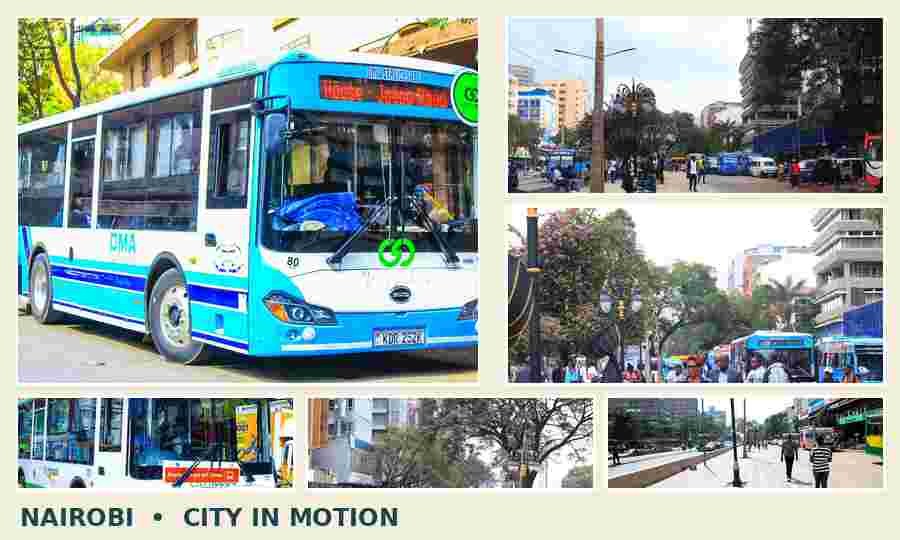
Even the contrast between modern electric buses and the city’s older public transport fleet tells a story about a capital undergoing change.
For visitors and residents alike, photography can help shape how Nairobi is remembered and represented.
A Creative Economy Worth Protecting
Street photographers are more than people carrying cameras.
They are small business operators who depend on customers, public spaces and a predictable working environment.
A well-designed county framework could help professionalise the sector, reduce unnecessary enforcement disputes and give photographers greater confidence to invest in their work.
But permits alone will not guarantee better incomes.
Photographers will still need to distinguish themselves through quality, creativity, customer service and the ability to reach new markets.
The county government, meanwhile, faces the challenge of balancing public order with the needs of people earning an honest living in public spaces.
Could Nairobi Really Take the Crown?
Cities such as Cape Town, Cairo, Marrakech and Lagos have their own internationally recognised photographic appeal.
Nairobi’s claim to being Africa’s most photographed city would therefore require more than the growing number of photographers operating in its streets.
But perhaps the more important question is not whether Nairobi can claim the title.
It is whether the city can become one of Africa’s most welcoming places for photographers.
For Jacob Onkoba, the apparent shift away from suspicion is already a meaningful change.
For the anonymous photographer, recognition offers hope, but also uncertainty about the future of his livelihood.
And for Nairobi, the opportunity is clear: a city that once appeared uncomfortable with cameras could increasingly become a city that embraces them.
The real achievement may not be becoming Africa’s most photographed city, but becoming a city where photographers can work freely, legally and profitably.
ALSO READ