
From July 1, 2026, all vehicles older than four years in Kenya will undergo mandatory annual inspections under new rules by the National Transport and Safety Authority (NTSA). On paper, it is a road safety measure. In practice, it adds another recurring cost layer on private motorists in an already expensive mobility system.
The inspection regime will apply to private vehicles, PSVs, school transport, accident-damaged vehicles, and modified units. Fees are set at around Ksh. 2,000 per vehicle cycle, with penalties for non-compliance including fines up to Ksh. 20,000, possible jail terms, and vehicle bans without inspection stickers.
NTSA says the policy is already anchored in law and necessary for road safety enforcement. As Director General Nashon Kondiwa noted:
“We regularly check but what is in the law is an annual inspection. For users who are always on the road, 12 months is such a long time.”
The authority also argues that Kenya’s ageing vehicle fleet is driven by financing constraints in the transport sector:
“The big problem we have with operators is financing capacity… these are symptoms of a wrong model we’re operating in in the public transport system.”
That “system problem” is exactly where the public debate should shift.
The real issue is not inspections — it is dependence on private cars
Annual inspections will now become another predictable cost for millions of car owners. But the deeper question is why so many urban residents are locked into private vehicle dependence in the first place.
In most developed cities, vehicle inspection systems exist — but they operate within a fundamentally different reality:
- Reliable rail and bus networks move most commuters daily
- Car ownership is optional, not essential
- Urban planning prioritizes mass transit over private convenience
In those cities, inspection fees are a compliance detail. In Nairobi, they are part of a growing cost burden tied to survival-level mobility.
Middle class reality: forced car ownership
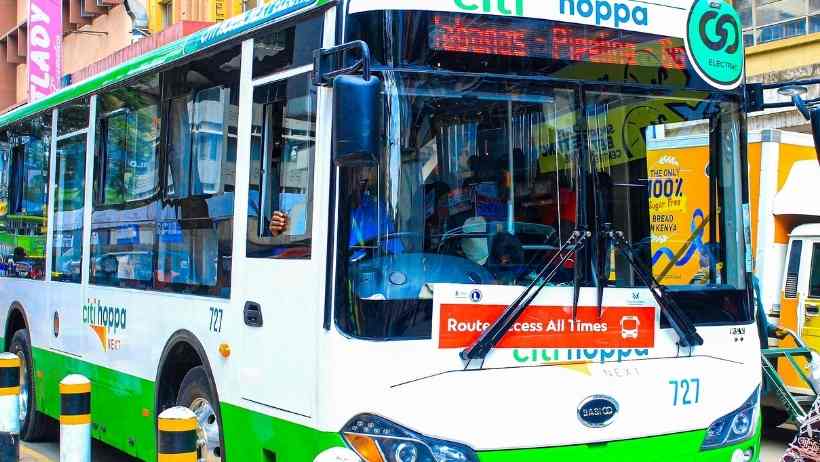
For Nairobi’s middle class and working professionals, the choice is not really a choice. Weak, inconsistent, and overcrowded public transport forces private car ownership for basic reliability.
That means every new regulation — inspection fees, fuel costs, parking charges, or insurance — is not optional spending. It is a mandatory tax on getting to work.
This is where the conversation must shift.
Instead of normalizing every new levy on private vehicles, citizens should be asking a harder question: why is public transport still unreliable enough that car ownership remains unavoidable?
The policy blind spot
The NTSA inspection rollout may improve safety compliance, but it also exposes a structural gap: enforcement is moving faster than mobility reform.
Without a strong mass transit system:
- Cars remain a necessity, not a luxury
- Private motorists carry disproportionate cost pressure
- And regulation becomes a substitute for transport reform
Time for a shift in demand
The real policy pressure should not only be on motorists to comply, but on government to deliver alternatives that reduce dependence on private cars.
Because until public transport becomes fast, reliable, and dignified, every new annual requirement on car owners will feel less like safety enforcement — and more like compulsory taxation on a system people cannot escape.
The conversation is overdue: it is time the middle class demanded better public transport, not just more rules for private vehicles.