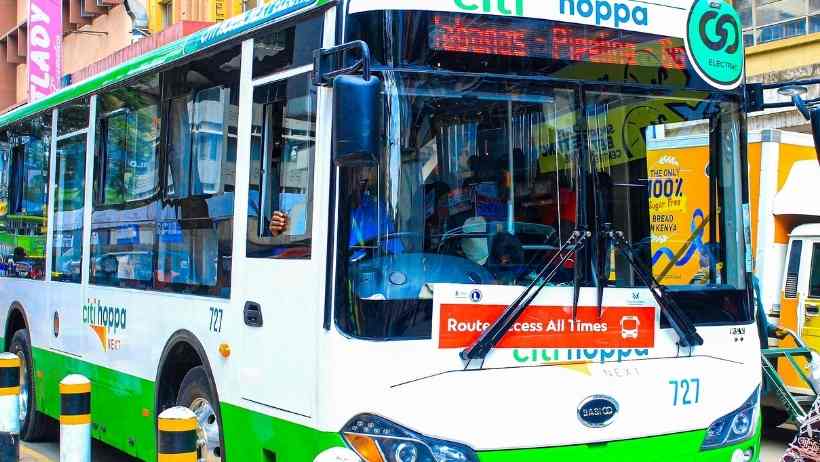
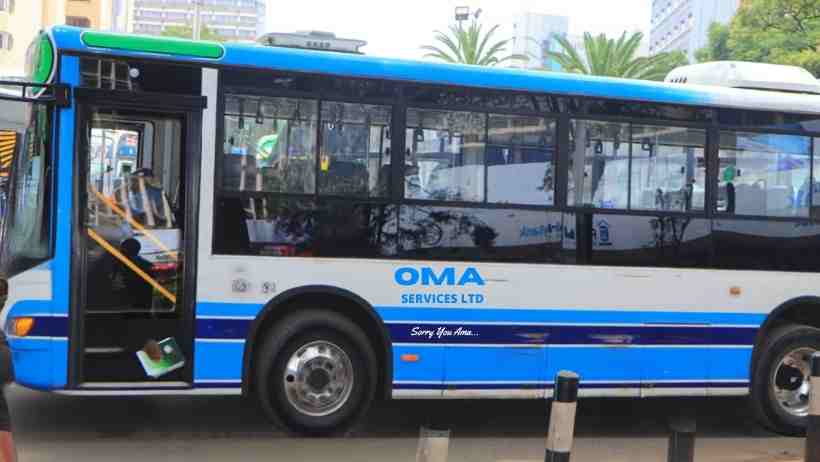

Nairobi is investing in electric mobility, integrated transport planning, and high-level policy dialogue—but the physical city those systems are meant to operate in has not evolved at the same pace. The result is a growing mismatch between ambition and infrastructure, where electric city buses are being deployed into a road network that is structurally unprepared for them.
ALSO READ More Kenyans Ditch Road Travel for Flights
The issue is not the vehicles. It is the roads.
Narrow roads that were never redesigned for mass public transport
Most of Nairobi’s key commuter corridors remain narrow, congested, and poorly optimized for high-capacity, scheduled public transport systems. Electric city buses—designed for structured stops, predictable lanes, and controlled boarding points—are forced into environments dominated by:
- Encroached road reserves
- Irregular lane discipline
- Unmarked or missing bus stages
- Mixed traffic with matatus, private cars, vendors, and pedestrians sharing the same constrained space
Instead of functioning as a modern mass transit system, electric buses are effectively adapting downward to informal conditions. This reduces efficiency, slows operations, and undermines the very sustainability gains they are supposed to deliver.
The missing infrastructure: stages and order
A functioning city bus system depends on structure—especially designated stops and controlled boarding points. In much of Nairobi, that structure is either weak or entirely absent.
Drivers report that they are frequently forced to stop anywhere along the road to pick or drop passengers because:
- Official stages are too few or poorly spaced
- Existing stages are occupied by informal operators or roadside traders
- Passengers expect flexible stopping patterns inherited from matatu culture
One EV bus driver described the situation bluntly:
“We are expected to operate like a formal system, but the roads are still informal. You stop where passengers are, not where the stages are—because sometimes there are no usable stages at all.”
This creates friction with other motorists, slows traffic flow, and increases safety risks for pedestrians and commuters alike.
AUF 2026: strong conversations, familiar outcomes
The Africa Urban Forum (AUF) 2026 concluded in Nairobi after three days of discussions at KICC focused on sustainable, inclusive, and resilient cities. The event brought together policymakers, practitioners, and development partners to exchange ideas on urban transformation.
NaMATA participated as both delegates and exhibitors, presenting integrated transport planning and data-driven mobility approaches intended to shape Nairobi’s future transport system.
The messaging was consistent and forward-looking:
- Integrated transport planning
- Sustainable urban mobility systems
- Data-driven decision-making for city transport
As the forum ended, the dominant tone was “moving from ideas to action.”
However, this is not the first time such language has been used. Similar forums over the years have produced comparable declarations, yet the physical commuter experience in Nairobi remains largely unchanged. The gap between policy discussion and street-level transformation persists.
Policy language that sounds structured, but lacks urgency on ground reality
Cabinet Secretary for Roads and Transport Davis Chirchir stated:
“Kenya moves because of the resilience of commuters and the dedication of the transport sector. Public transport is the vital link to livelihoods and the economy. The ministry is committed to providing the framework, safety, and order that allows this great national engine to run smoothly for everyone.”
While the statement is formally structured, it reads as administrative rather than operational. It outlines intent and framework but does not directly confront the core bottlenecks visible on the ground—encroached road reserves, missing stages, weak enforcement, and lack of redesign for modern mass transit systems.
The issue is not communication. It is implementation depth.
Basic fixes still missing: the real missed opportunity
Before Nairobi can fully realize electric bus potential, the foundational issues are not complex or expensive compared to large infrastructure megaprojects. Some of the most immediate improvements include:
- Reclaiming encroached road reserves occupied by informal traders
- Establishing clearly marked, enforced bus stages every fixed distance
- Recarpeting and standardizing key arterial roads for smoother bus operation
- Enforcing stopping discipline for both matatus and buses
- Designing dedicated lanes where possible on major corridors
These are not futuristic reforms. They are baseline requirements for any functioning city bus system.
On-the-ground reality from EV drivers
Drivers operating newly introduced electric buses describe a system still adapting to informal commuter behavior:
- Frequent unscheduled stops due to passenger demand
- Difficulty accessing designated stages
- Constant interaction with mixed traffic conditions
- Public expectation of matatu-style flexibility within a formal system
One driver summarized the tension:
“The buses are modern, but the road system is still old. You cannot run a scheduled service on an unscheduled road environment.”
Road reform,
Institutions like NaMATA, alongside national and metropolitan transport stakeholders, continue to engage in high-level planning, exhibitions, and forums like AUF 2026. These platforms are valuable for alignment and strategy.
However, their impact is limited if the foundational urban transport environment remains unchanged.
If Nairobi’s roads were properly structured—reclaimed, staged, and maintained—many of the operational challenges facing electric city buses would disappear without additional policy complexity.
In that scenario, much of the recurring cycle of forums, exhibitions, and declarations would shift from discussion to refinement.
Until then, the system risks continuing to repeat the same message: innovation is ready, but the road is not.