

As Kenya, Uganda and Tanzania prepare to jointly host the 2027 Africa Cup of Nations, much of the attention has naturally focused on the stadiums themselves.
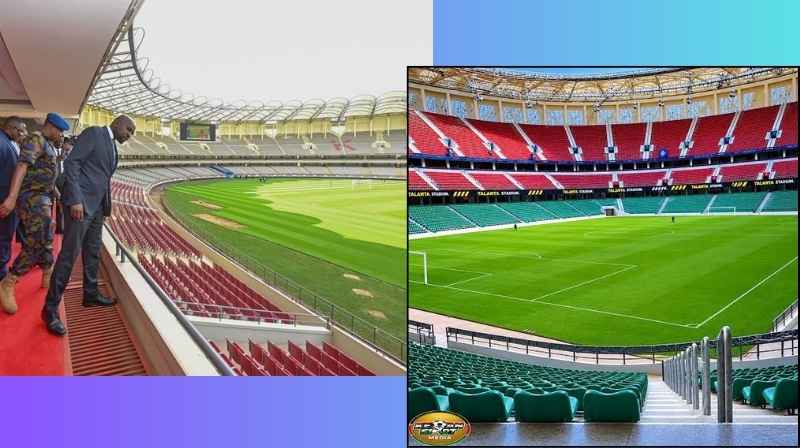
Tanzania has new venues rising in Arusha and Zanzibar. Uganda has invested in new facilities including Hoima City Stadium. Kenya, meanwhile, is preparing the new 60,000-seat Raila Odinga International Stadium at Talanta Sports City alongside the established Moi International Sports Centre, Kasarani.
But Kenya’s biggest advantage may not simply be what happens inside the stadiums.
It could be how easily tens of thousands of supporters can get to them.
Both of Kenya’s principal AFCON 2027 match venues are located within Nairobi, East Africa’s largest aviation and commercial hubs, and both sit within established or expanding mass-transport corridors.
For an international tournament in which spectators must move between airports, hotels, fan zones and stadiums, that could make Talanta and Kasarani two of the most accessible venues of AFCON 2027.
Two Major Stadiums, One City
Kenya plans to use Raila Odinga International Stadium at Talanta Sports City and Moi International Sports Centre, Kasarani as its principal AFCON competition venues.
That immediately gives Nairobi an interesting advantage.
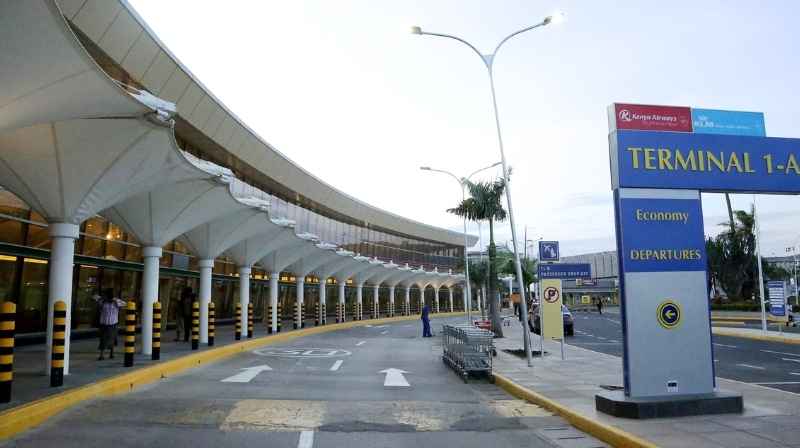
An international supporter arriving at Jomo Kenyatta International Airport does not need to make an intercity journey to reach either venue.
Instead, both stadiums form part of the wider Nairobi metropolitan transport system.
The same city contains the country’s principal international airport, major hotel districts, shopping centres, restaurants, hospitals and established public transport networks.
CAF’s September 2026 inspection of Kenya did not look at the stadium in isolation. The delegation also examined airport facilities, hotels and other infrastructure forming part of Nairobi’s AFCON preparations.
That wider ecosystem matters.
Talanta Is Being Built Around More Than Roads
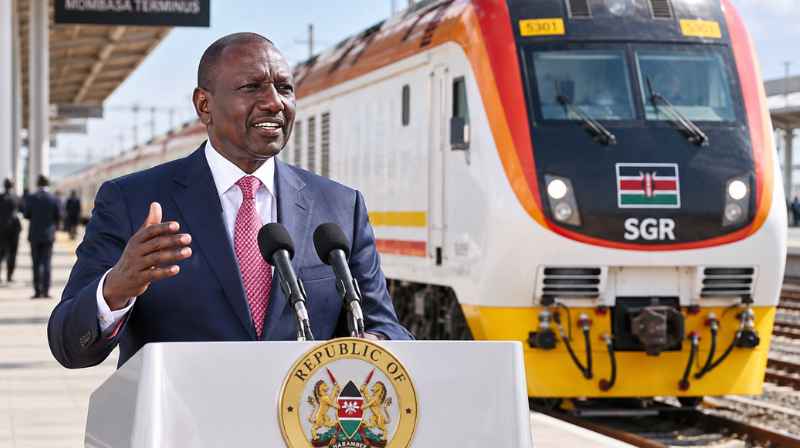
The most significant transport development surrounding Talanta Sports City is the planned railway connection.
Kenya Railways is developing a new commuter rail spur connecting Nairobi Central Station with Talanta Sports City through the Nyayo Stadium area and Kibera.
The project also includes a new railway station adjacent to Nyayo National Stadium.
If delivered as planned, supporters could eventually travel:
Nairobi CBD → Nyayo area → Kibera → Talanta Sports City
without relying entirely on road transport.
Kenya Railways says the objective is to provide a safe, reliable and affordable transport option while making movement to AFCON venues easier.
Metros has been following the project since railway corridor clearance began. Read our detailed report: Kenya Railways Begins Land Clearance for New AFCON Rail Project.
The significance extends beyond football.
A functioning Talanta rail connection would give Nairobi another piece of permanent urban transport infrastructure after AFCON has ended.
It also fits into Kenya Railways’ much broader plan to modernise the Nairobi Commuter Rail Service, including approximately 100 kilometres of railway infrastructure and a proposed future rail connection to JKIA.
Talanta Also Has Major Road Connections
Rail will not be Talanta’s only access option.
The stadium’s position on the Lang’ata side of Nairobi places it within reach of several important road corridors serving southern and western Nairobi.
The Nairobi Expressway already provides a high-capacity road connection from the JKIA side of the city towards the western side of Nairobi, while Lang’ata Road and the Southern Bypass form part of the broader road network around the stadium zone.
This gives international visitors multiple possible ways of approaching the venue depending on where they stay.
A visitor arriving through JKIA could therefore move from the airport into Nairobi before connecting towards the Talanta/Lang’ata area, while supporters staying around the CBD, Westlands, Kilimani, Karen and other established accommodation areas would remain within Nairobi’s metropolitan transport network.
The key challenge will be match-day traffic management.
A 60,000-seat stadium can overwhelm even good road infrastructure if too many spectators arrive in private vehicles at the same time. That makes the planned commuter railway particularly important.
Kasarani Already Sits on One of Nairobi’s Biggest Public Transport Corridors
On the other side of Nairobi, Kasarani has a different transport advantage.
Moi International Sports Centre sits along the wider Thika Road corridor, one of the busiest and most established public transport corridors in Kenya.
Thousands of matatus and buses already move commuters between Nairobi CBD, Pangani, Roysambu, Kasarani and destinations farther along Thika Road.
For local supporters, that means Kasarani does not require an entirely new public transport ecosystem to be invented for AFCON.
The transport network already exists.
For example, Route 49 is one of the established services connecting Nairobi CBD with Kasarani through Murang’a Road, Pangani, Thika Road and Roysambu.
Visitors unfamiliar with the route can use our Route 49 Nairobi to Kasarani: Matatu Stages, Stops and Travel Guide before travelling.
Supporters staying elsewhere in Nairobi can also use the city’s interchange system. Metros’ Kasarani to Westlands: Matatu Route, Interchange & Commuter Guide illustrates how Kasarani connects with Nairobi’s western commercial and hotel districts through the CBD and the wider matatu network.
For the complete network, see Nairobi Matatu Routes and Numbers.
Nairobi’s Public Transport Network Could Become Part of the AFCON Experience
This is where Kenya’s stadium proposition begins to look different.
AFCON supporters will not only need transport on match day.
They will need to move between:
JKIA → hotel
hotel → stadium
stadium → CBD
CBD → restaurants and entertainment
stadium → accommodation
and eventually:
hotel → JKIA
Having the principal stadiums inside one large metropolitan transport network simplifies that problem.
Kasarani already has extensive matatu and bus connections.
Talanta is being positioned to gain commuter rail access in addition to Nairobi’s road network.
Kenya’s wider AFCON transport strategy therefore has the potential to make public transport part of the tournament infrastructure rather than treating stadium access purely as a road and parking problem.
Metros previously examined this regional shift in AFCON 2027: Kenya and Tanzania Put Public Transport at the Centre of Major Rail and BRT Plans.
CRBC Says Talanta’s Location Demanded Something Exceptional
Talanta’s transport accessibility is only one part of the story.
The stadium itself is being built by China Road and Bridge Corporation (CRBC) under the supervision of the Kenya Defence Forces Engineering Department.
Speaking to Metros Kenya, a CRBC official involved with the project said its Nairobi location influenced the ambition behind the development.
“We chose to give Talanta our all because the location demands it. It is located in the hottest business district in the whole of East and Central Africa. We had to raise the bar.”
The description of the area as the “hottest business district” represents the official’s own assessment, but the broader point speaks to Talanta’s positioning.
This is not an isolated stadium on the outskirts of a secondary city.
It is being built inside Kenya’s capital, surrounded by one of the region’s largest concentrations of business, hospitality, transport and international aviation infrastructure.
Government Official: Kenyans Were Meant to Remember Talanta
A government official at the construction site, who spoke to Metros Kenya on condition of anonymity because they are not authorised to speak to the media on behalf of the government, said the ambition was to create a stadium that would leave a lasting impression.
“We had to give Kenyans what they will not forget for a long time. Kasarani was built to international standards, and that’s why it has stood the test of time.”
That comparison is significant.
Kasarani represents Kenya’s established generation of major international sports infrastructure.
Talanta represents the next one.
Instead of replacing Kasarani, Kenya will potentially enter AFCON 2027 with two very different large stadium propositions: an established international venue anchored to the Thika Road public transport corridor and a new-generation stadium being integrated into Nairobi’s expanding rail and road network.
How Kenya Compares With Tanzania and Uganda
Tanzania and Uganda are also developing impressive AFCON infrastructure.
Tanzania’s proposed venues include Benjamin Mkapa Stadium in Dar es Salaam, the new Samia Suluhu Hassan Stadium in Arusha and Fumba Stadium in Zanzibar.
Uganda’s preparations centre on Mandela National Stadium at Namboole and the new Hoima City Stadium, with additional infrastructure being developed elsewhere.
Several of these venues have compelling advantages.
Arusha offers access to Tanzania’s northern tourism circuit. Zanzibar gives international supporters the possibility of combining football with an island holiday. Kampala provides the urban infrastructure of Uganda’s capital, while Hoima represents a major new investment in western Uganda.
But Nairobi’s proposition is unusually concentrated.
Kenya’s two principal match stadiums are within the same major international city, connected to established transport corridors and surrounded by the accommodation, commercial and aviation infrastructure needed for a tournament of AFCON’s scale.
That does not automatically make them superior stadiums.
It does, however, give Talanta and Kasarani a compelling accessibility argument.
The Real Test Will Come on Match Day
Infrastructure on paper and transport under the pressure of 60,000 football supporters are two very different things.
Nairobi traffic remains unpredictable.
Thika Road can become heavily congested around Kasarani and Roysambu, particularly during peak periods and major events. The roads around Lang’ata can face similar pressure.
The success of Kenya’s transport strategy will therefore depend on more than simply having large highways.
Authorities will need effective traffic management, clear spectator information, reliable public transport, organised drop-off and pick-up areas and, critically, completion and operation of the planned Talanta commuter railway.
If those systems work together, Kenya could demonstrate something important during AFCON 2027:
a major African football tournament does not have to depend almost entirely on private cars and taxis to move supporters.
Talanta and Kasarani Could Leave a Transport Legacy Beyond AFCON
The strongest argument for Kenya’s AFCON infrastructure may ultimately have little to do with the final whistle.
Kasarani already forms part of Nairobi’s everyday transport geography.
Talanta could do the same.
A commuter railway built for AFCON would remain useful after the tournament. Improved roads, stations and pedestrian connections would continue serving Nairobi residents. Public transport improvements introduced to move football supporters could eventually move workers, students and ordinary commuters.
That is where Kenya’s two principal stadiums could stand out.
Talanta may provide the new architecture. Kasarani provides the history. Nairobi’s transport network is what could connect the two to the city around them.
For AFCON 2027, that connection may prove every bit as important as the stadiums themselves.