

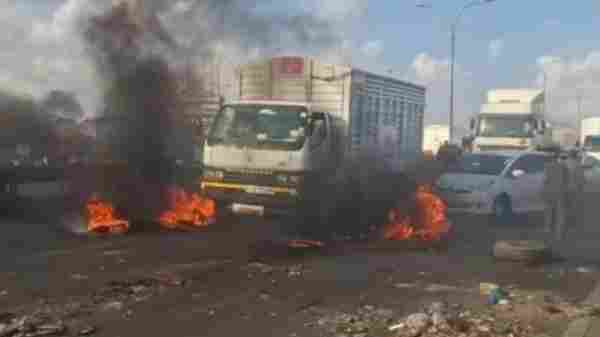

The demolitions in Githurai 45 are not just about roadside stalls.
They are about a bigger collision.
Infrastructure versus livelihoods.
On February 18, 2026, the Kenya National Highways Authority (KeNHA) moved in with excavators along Thika Superhighway. Structures were flattened overnight. Traders woke up to debris where businesses once stood.
KeNHA says it was reclaiming road reserves and creating space for bus bays.
Traders say they were given only seven days’ notice.
But beyond the legal arguments, a deeper issue is emerging:
Kenya’s infrastructure expansion is running straight into its informal economy — and there is no clear transition plan.
The Planning Question Nobody Is Asking
For years, traders operated in Githurai 45. Many paid levies. Some had local approvals. The market became part of the transport ecosystem — serving matatu passengers, commuters, and residents.
So here is the real question:
If the land was a road reserve, why were businesses allowed to grow there in the first place?
Urban planning failures rarely make headlines. Demolitions do.
Enforcement in Kenya often comes late — after businesses have invested, borrowed money, and built supply chains. When the state finally reclaims land, it looks sudden. But the roots go back years.
That is a governance problem.
Infrastructure Is Accelerating
The government is aggressively upgrading roads, building bypasses, and planning bus systems. Road safety and traffic decongestion are legitimate public goals.
Thika Superhighway is one of the busiest corridors in the country.
Bus bays could reduce chaos.
Clear road reserves improve visibility and safety.
No serious city can function without enforcing planning rules.
But development without structured relocation creates economic shock.
The Informal Economy Is Not Small
Githurai is not just a roadside cluster.
It is part of Kenya’s vast informal sector — which employs millions and contributes significantly to household incomes.
When stalls are demolished:
- Traders lose stock.
- Families lose rent money.
- Suppliers lose customers.
- Casual workers lose daily wages.
The ripple effect spreads beyond the immediate site.
This is not just about wood and iron sheets.
It is about cash flow disruption in a high-density urban economy.
Lessons From Past Evictions
Kenya has seen similar tensions before.
In 2020, demolitions in Kariobangi during the pandemic displaced thousands. The backlash was intense. Human rights groups condemned the move.
But there are also different models.
In 2024, Nairobi County relocated traders from Muthurwa and Marikiti markets to Kangundo Road Market after consultations and a Resettlement Action Plan. There were negotiations. Stall allocations. Structured transition.
The contrast is clear.
Demolition alone is enforcement.
Relocation planning is governance.
The Political Layer
President William Ruto pledged in 2022 to end unauthorized evictions and property demolitions.
Now the question becomes:
Was this operation aligned with that commitment?
Or is infrastructure pressure overriding political promises?
KeNHA insists it acted in public interest. Traders argue they were not meaningfully consulted.
When demolitions happen at night, trust erodes fast.
The Bigger National Dilemma
Kenya wants modern highways.
Kenya also relies on informal traders.
You cannot ignore one to build the other.
The real policy gap is this:
Where is the national framework that synchronizes infrastructure upgrades with structured informal-sector relocation?
Without it, every road expansion will trigger confrontation.
Every enforcement will look like punishment.
Every trader will feel disposable.
What Comes Next?
If the government continues expanding roads and reclaiming land, it must institutionalize:
- Early public engagement
- Transparent notices
- Verified relocation sites
- Compensation mechanisms
- County coordination
Otherwise, demolitions will remain reactive.
Githurai is not an isolated incident.
It is a warning.
Kenya’s development agenda is accelerating.
But unless planning reforms catch up, infrastructure growth will keep colliding with survival economies.
And that collision is expensive — politically, socially, and economically.
metros.co.ke/ will continue tracking how Kenya balances progress with protection.