
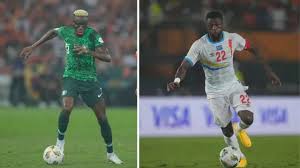

Nigeria’s journey to the 2026 FIFA World Cup came to a heartbreaking end on Sunday night in Rabat, Morocco, after a dramatic and deeply contentious penalty shootout defeat to the Democratic Republic of Congo (DR Congo). The CAF play-off finale, hosted at the Prince Moulay Hassan Stadium, ended 1-1 after extra time before DR Congo edged the Super Eagles 4-3 on penalties.
The result sent the Congolese players and fans into euphoric celebration as they sealed a historic spot in the inter-confederation play-offs scheduled for March 2026. For Nigeria, however, it marked a devastating collapse—one compounded by controversy, managerial frustration, and allegations of unorthodox behaviour during the decisive spot-kicks.
A Night Charged With Tension From the Start
The match began at a breathless pace. Nigeria took the lead almost immediately; Frank Onyeka smashed home in the third minute following a spell of aggressive pressing that forced a turnover high up the pitch. The early goal electrified the Nigerian fans and appeared to set the tone for a dominant start.
But DR Congo, seasoned by their gritty semi-final victory over Cameroon, did not buckle. They responded with determination and tactical discipline. In the 32nd minute, Meschak Elia equalised with a composed finish after a clever attacking movement on the left flank. The goal reset the contest and restored balance in what had quickly become a fiercely competitive knockout encounter.
From that point on, however, the match descended into a slower, cagier affair. Both sides struggled to create decisive openings after halftime, and Nigeria’s momentum further stalled when star striker Victor Osimhen was substituted at the break due to discomfort in the back of his leg. Nigerian manager Eric Chelle later confirmed the injury, noting that Osimhen “felt something pulling” and could not continue.
Second Half Stagnation and a Nervy Extra Time
The second half was marked by physical battles, long spells of midfield play, and defensive caution from both sides. Nigeria’s attacking spark faded as the Congolese defence grew more comfortable absorbing pressure. DR Congo, on the other hand, began to grow into the match with a sense of purpose, pushing their opponents deep into their own half as the game ticked into the final minutes.
The Congolese side thought they had found a late winner when Mayele slotted home in the 95th minute, but the referee ruled it out for offside and a foul on the Nigerian goalkeeper during the follow-up challenge. Minutes later, another Congolese goal was cancelled: this time a header from a cross, disallowed after the referee identified a shove in the build-up.
Extra time, too, offered moments of high drama. Chancel Mbemba—who has become something of a national hero after his last-minute winner in the semi-final against Cameroon—hit the post from a free-kick. DR Congo carved out two promising opportunities through patient wing play, repeatedly threatening the Nigerian defence. Nigeria, meanwhile, looked content to survive, dragging the match inevitably towards penalties.
Congolese coach Sébastien Desabre made a bold tactical decision in the final minute of extra time: he substituted his goalkeeper, bringing on Timothy Fayulu specifically for the shootout. The decision would prove decisive.
The Dramatic Penalty Shootout
The shootout began under intense rainfall, adding yet another layer of unpredictability. Nigeria’s first taker, Calvin Bassey, fired high and wide—an ominous start for the Super Eagles. DR Congo’s Samuel Moutoussamy then saw his own attempt saved by Nigerian goalkeeper Stanley Nwabali, bringing the teams level again.
What followed was a rollercoaster:
- Moses Simon’s penalty was saved, giving DR Congo the advantage.
- Sadiki scored for DR Congo.
- Adams responded, restoring balance for Nigeria.
- Tuanzebe’s weak penalty was gathered by Nwabali, swinging momentum again.
- Onyemaechi buried his shot, giving Nigeria hope.
- Mayele calmly converted, keeping DR Congo alive.
- Ejuke scored despite crowd interference, maintaining Nigeria’s push.
- Balikwisha delivered a powerful strike, levelling again.
- Ajayi saw his penalty saved by Fayulu, a turning point in the shootout.
- Captain Mbemba blasted his kick into the net, sealing a 4-3 victory and sparking scenes of wild celebration.
The Congolese players sprinted toward their supporters, holding their flag aloft with pride. They had survived a gruelling 120 minutes and a nerve-shredding shootout to keep their World Cup dream alive.
The Controversy: “Voodoo” Allegations from Nigeria’s Coach
What happened next sent shockwaves through the post-match environment.
Nigeria’s manager, Eric Chelle, stunned reporters during his press conference by alleging that DR Congo’s players practiced “voodoo” during the penalty shootout.
Chelle initially confronted members of the DR Congo coaching staff moments after the final whistle, prompting security and Nigerian staff to intervene. At his press conference, he asked the attending journalists why they had not inquired about the alleged incident.
Speaking in French, he claimed:
“DR Congo guys were doing maraboutage.”
The term maraboutage, derived from “marabout,” refers to a Muslim holy man but carries regional connotations involving witchcraft or spiritual interference.
Chelle later repeated his accusation in English in the mixed zone:
“During all of the penalties, the players of Congo were doing some voodoo.”
DR Congo officials swiftly dismissed the claims when contacted by The Athletic, labelling them baseless and insisting their win was purely the result of preparation, bravery and mental strength.
DR Congo head coach Sébastien Desabre attempted to downplay the altercation:
“It was not an issue,” he said calmly, refusing to be drawn into the controversy.
CAF did not comment immediately, but the allegations are expected to draw formal scrutiny.
Nigeria’s Pain: A Dream Deferred Again
This defeat marks a painful milestone for Nigeria. For the first time since 1990, the Super Eagles have failed to reach the World Cup in consecutive editions, having missed Qatar 2022 as well. The disappointment was evident in the faces and words of senior players.
William Troost-Ekong, one of Nigeria’s longest-serving internationals, described himself as “devastated.”
“This one hurts deeply. But this team has a bright future. We will rise again.”
Unfortunately for Nigerian fans, this “future” is becoming a repeated promise rather than a concrete step forward. A disastrous start to their qualifying campaign—three draws and a defeat in their first four matches—left them with an uphill battle. Despite late improvements and a spirited semi-final win over Gabon, they could not salvage qualification.
Questions will also be asked about tactical decisions, squad depth, injuries, and Chelle’s handling of the pressure.
Reactions Across Africa and the Football World
The match and its fallout have dominated social media.
Debate erupted almost instantly over Chelle’s “voodoo” claims—with many fans condemning the remarks as superstition, frustration or unprofessionalism. Others defended the coach, insisting he was reacting to suspicious behaviours he believed influenced the outcome.
DR Congo supporters, meanwhile, celebrated long into the night at the stadium and across Kinshasa, Goma, Kolwezi and Lubumbashi. The team’s achievement is monumental: DR Congo has not reached a World Cup since 1974, when they participated as Zaire. That long drought could finally end if they win in the inter-confederation playoffs.
What Comes Next: DR Congo’s March Mission
DR Congo will now join five other nations in the inter-continental play-offs:
- New Caledonia (Oceania)
- Bolivia (South America)
- One Asian representative (either UAE or Iraq)
- Two CONCACAF runners-up, currently projected to be Curacao and Costa Rica
A draw on Thursday will determine the two play-off pathways. The top two ranked teams will receive automatic placement into the final round, while the remaining four will compete in one-off semi-finals.
DR Congo will be confident. Their resilience, belief and ability to endure pressure have already been tested. With players like Mbemba, Elia, Masuaku and Mayele performing at their peak, they now stand just two matches away from making history.
Nigeria Turn Focus to AFCON
While the pain of missing the World Cup will linger, Nigeria must now shift their attention to the upcoming Africa Cup of Nations (AFCON), also being hosted in Morocco.
The Super Eagles have been drawn into a challenging group featuring Tanzania, Tunisia and Uganda. After finishing runners-up to Ivory Coast in the last edition, expectations remain high. Yet questions loom large: Can Chelle rally his team after this emotional collapse? Will Osimhen regain fitness? Can Nigeria rebuild confidence and identity quickly enough?
The federation will also face scrutiny regarding preparations, squad selection and long-term strategy.
Conclusion: A Night of Drama, Controversy and Historical Significance
The Nigeria vs DR Congo play-off final will be remembered as one of the most dramatic African qualifiers in recent memory. It had everything:
- An early goal
- A spirited comeback
- Disallowed strikes
- A goalkeeper substitution
- A tense shootout
- An explosive confrontation
- Allegations of spiritual interference
Football, especially on the African continent, thrives on passion, emotion and narratives bigger than the match itself. Sunday night in Rabat delivered all of that—and more.
For Nigeria, it is a night that will haunt them.
For DR Congo, it is a step toward destiny.
The road to the 2026 World Cup continues in March. But one thing is clear: DR Congo will march into the inter-confederation play-offs with belief soaring—and a continent watching closely.