
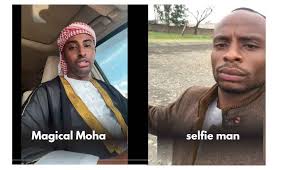

A viral video and images appearing to show the popular TikToker known as the selfie man in handcuffs have ignited a fierce national debate in Kenya over cultural boundaries, respect for Muslim women, and the growing entitlement associated with modern content creation.
The selfie man, famous for his spontaneous street-style videos where he quickly poses for selfies with strangers, has amassed a huge following by walking up to random people and capturing brief, playful moments. But concerns escalated when journalist and creator Magical Moha—a respected Muslim commentator—accused him of crossing a dangerous line by touching Somali Muslim women during filming.
According to Moha, such behavior violates both Somali cultural expectations and Islamic religious principles that forbid unrelated men from touching women in public. He previously warned the selfie man publicly, demanding he stop before triggering community outrage.
ALSO READ: Kenya’s middle class is one emergency away from begging.
When images surfaced allegedly showing the selfie man arrested, Kenyans erupted online. TikTok and X became battlegrounds as thousands debated whether he deserved consequence or whether society was overreacting. The comment section reflected a sharply divided nation.
Many Somali and Muslim users defended Magical Moha and condemned the selfie man:
- Ahmed Hassan Wehlie 🇸🇴🇩🇪: “No one can touch our Somali queens.”
- Namo Hashi: “When our own cousin cannot touch us like that, who is he?”
- Lafta Geela Badha 🐪🔥🦁: “Allow Farax hanaga qadin.”
- Wazirka Masakinta: “Who can try Magical Moha? He is our hero.”
Others pointed out the double standards faced by young girls within some communities:
- 💝: “Ameshikwa lakini what about the little girls in Garissa being married at 12, 9, 13?”
Meanwhile, supporters of the selfie man called for his release, criticizing what they saw as exaggerated outrage:
- Bonita 🥰: “Free selfie man… na venye hasemi kitu.”
- Smoke: “Fala sana… free selfie man.”
- Steven Mokaya: “The industry needs you to relate with people… humble yourself and move forward.”
- Lavidavi22: “EVERYONE IS SPECIAL… why are Muslims acting like they’re more special than others?”
Some even responded aggressively toward the Somali community, turning the conversation into an ethnic clash:
- ďäň 🚜💙: “Si mrudi Somalia, mnanuka senge.”
- Steve: “Wacha nipeleke nguruwe msikitini sasa.”
A few commenters attacked Islam itself:
- sting: “Dini ya ufala sana.”
And others mocked the new-age Gen Z bravado that content creators often carry:
- RANGER: “Kile cha nitakushadaa mwanzo ndo nataka kishikwe.”
Despite the noise, legal voices reminded Kenyans of the core issue:
- TrendingkeOfficial 🇰🇪: “Article 28: Every person has inherent dignity and the right to have it respected and protected. Hapaaa, dignity ndiyo inakufunga.”
As the debate intensified, one lesson stood out: digital freedom is not a license to ignore cultural and religious boundaries. Kenya’s young creators—often driven by virality and fame—are now confronting the reality that not every community will tolerate intrusive public interactions.
The incident highlights a growing ideological divide between Kenya’s liberal, Gen Z-driven content culture and communities whose cultural and religious values remain deeply rooted. And while the government may be lenient with youthful excesses, the societal and ideological boundaries remain firmly in place.
Ultimately, content creation is not a free pass everywhere—and respect, consent, and cultural awareness are not optional.