
NAIROBI, Kenya, July 24 – Every major transport revolution changes far more than the way people travel. It changes economies, cities, businesses and lifestyles.
If Nairobi’s proposed underground railway is successfully implemented, it could trigger one of the biggest transformations in Kenya’s transport history: the gradual decline of diesel-dependent commuter buses and the rise of a cleaner, electric-powered public transport system.
The proposed underground railway beneath Nairobi’s Central Business District is not simply another infrastructure project. It has the potential to become the backbone of a modern transport ecosystem where high-capacity rail carries the largest share of commuters, while electric buses provide efficient connections between residential estates, business districts and railway stations.
Rather than competing, the two systems could complement one another to create an integrated network designed for speed, reliability and sustainability.
The limits of diesel transport
For decades, Nairobi has relied heavily on diesel-powered buses and matatus to move millions of passengers every day.
While these vehicles have played an essential role in connecting the city, they also face growing challenges.
Traffic congestion increases fuel consumption, raises operating costs and contributes to air pollution. Vehicles spend long periods idling in traffic, reducing efficiency while increasing maintenance expenses.
As fuel prices fluctuate, commuters often feel the impact through changing fares, making transport costs difficult to predict.
These pressures are likely to become more pronounced as Nairobi’s population continues to grow.
Rail for the busiest routes
Around the world, cities with successful public transport systems increasingly rely on metro rail to move the highest number of passengers along their busiest corridors.
Rail systems are capable of transporting thousands of commuters every hour without becoming trapped in road traffic.
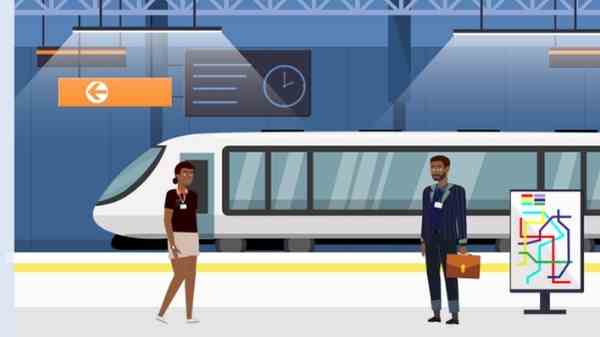
For Nairobi, the proposed Eastlands-CBD underground railway could perform exactly that role, removing significant passenger volumes from congested roads and creating faster, more predictable journeys.
Instead of carrying every commuter across the city, buses could increasingly serve as feeder services, connecting neighbourhoods to rail stations.
The rise of electric mobility
As the railway expands, electric buses could become a natural partner.
Unlike diesel buses, electric buses produce no tailpipe emissions and generally have lower operating and maintenance costs over their lifetime, although their upfront purchase costs are typically higher.
Integrated with the railway, electric buses could transport passengers over shorter neighbourhood routes while the metro handles long-distance, high-capacity travel.
Such a system would reduce dependence on imported diesel, lower emissions and improve air quality across Nairobi.
For commuters, the result could be quieter, cleaner and more comfortable journeys.
A new transport model for Kenya
If Nairobi successfully integrates underground rail, Bus Rapid Transit, commuter rail, walking infrastructure and electric buses, it could establish a transport model that other Kenyan cities may eventually seek to replicate.
Future urban transport planning in cities such as Mombasa, Kisumu, Nakuru and Eldoret could increasingly prioritize clean, interconnected mobility rather than relying primarily on diesel-powered road transport.
This would represent not merely an infrastructure upgrade but a broader shift in how cities are designed and how people move within them.
Economic opportunities
The transition to green mobility could also create new industries.
Electric bus assembly, battery technologies, charging infrastructure, software systems, maintenance services and renewable energy integration all have the potential to generate employment and attract investment.
Kenya has already positioned itself as a regional leader in renewable electricity generation. Expanding electric public transport could allow more of that electricity to power mobility instead of relying predominantly on imported fossil fuels.
Such a transition could strengthen energy security while supporting Kenya’s climate objectives.
The shift away from diesel-powered public transport would not happen overnight.
Diesel buses and matatus would likely continue operating for many years, particularly on routes where rail infrastructure is unavailable.
The pace of change would depend on financing, supportive policies, charging infrastructure, electricity supply, fleet renewal and decisions by transport operators.
Even so, large transport projects often reshape investment decisions long before the entire network is completed.
The most significant impact may ultimately be social rather than technological.
Imagine a Nairobi where commuters leave home knowing exactly when they will arrive at work.
Imagine stepping off an underground train and boarding a quiet electric bus that completes the final leg of the journey without adding to congestion or air pollution.
Imagine children growing up in neighbourhoods with cleaner air, reduced traffic noise and streets designed for people as much as vehicles.
That vision extends beyond transport. It reflects a different way of living—one in which mobility is faster, cleaner, more predictable and more closely integrated with the rhythm of everyday life.
Whether Nairobi fully realizes that vision will depend on successful implementation, sustained investment and careful planning.
If it does, the underground railway may come to represent more than a landmark engineering project. It could become the catalyst for Kenya’s transition to green mobility, setting the stage for a future in which electric buses and high-capacity rail redefine urban transport and influence how generations of Kenyans live, work and move across their cities.