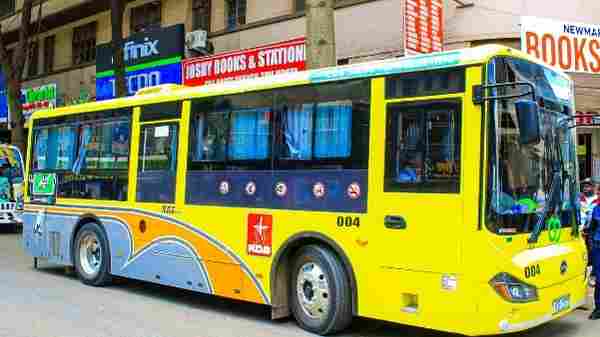

Nearly five years ago, electric commuter buses in Nairobi looked like an experiment—small pilots, donor-backed projects, and a few curious matatu operators testing unfamiliar technology. Today, that experiment has evolved into a quiet but undeniable revolution reshaping how the city moves.
What began around 2021 with startups like BasiGo deploying just a handful of buses has now grown into a visible presence across Nairobi’s major commuter routes. From CBD corridors to estates like Buruburu and Kikuyu, electric buses are no longer a novelty—they are becoming part of the system.
From Concept to Street Reality
In 2022, the launch of the first mass electric buses by companies like Roam signaled a serious shift. These buses weren’t just “green”—they were practical, carrying up to 77 passengers, covering up to 360 km per charge, and designed for real Nairobi conditions.
Fast forward to today, and the numbers tell the story. Electric buses have already transported hundreds of thousands to millions of passengers, proving reliability in daily operations.
This is no longer pilot phase. It’s operational reality.
The Economics Are Forcing the Shift
Forget climate talk for a second—what’s really driving adoption is money.
Operators report up to 70% lower operating costs compared to diesel buses, mainly due to savings on fuel and reduced maintenance.
Models like pay-as-you-drive leasing have lowered entry barriers, allowing matatu Saccos to adopt electric buses without massive upfront capital.
In a city where fuel prices constantly eat into profits, this is a structural advantage—not a trend.
Passengers Are Quietly Voting With Their Feet
Nairobi commuters are not activists—they choose what works.
And increasingly, they are choosing electric buses.
Why?
- Quiet rides (no engine noise)
- Better comfort (Wi-Fi, USB charging, cleaner interiors)
- Same fare as traditional matatus
Passengers are actively seeking them out, signaling a shift in expectations for public transport.
This is how disruption actually happens—not through policy, but through preference.
Policy Is Now Catching Up
For years, the private sector moved ahead while policy lagged behind. That gap is now closing.
Kenya’s government is introducing tax incentives, reduced duties, and broader electric mobility policies aimed at accelerating adoption and local assembly.
The direction is clear: electric transport is no longer optional—it’s being institutionalized.
The Real Impact: A System Under Pressure
Electric buses are not just replacing diesel engines—they are challenging the entire matatu ecosystem.
They introduce:
- Predictability (structured operations)
- Data-driven fleet management
- Lower long-term costs
- Standardized commuter experience
This directly confronts Nairobi’s historically fragmented, chaotic transport model.
The Hard Truth
Five years in, electric buses have proven one thing:
Nairobi’s transport chaos is not inevitable—it’s just been tolerated.
Electric commuter buses are showing that:
- Efficiency is possible
- Comfort is scalable
- Profitability and sustainability can align
But here’s the catch—scale is still limited. Infrastructure gaps, charging networks, and financing constraints are slowing full adoption.
Final Word
This is not hype anymore.
Electric buses have moved from pilot projects to pressure points—forcing the entire transport system to evolve.
The only question now is whether Nairobi will scale this momentum into a full system transformation… or let it stall like many good ideas before it.