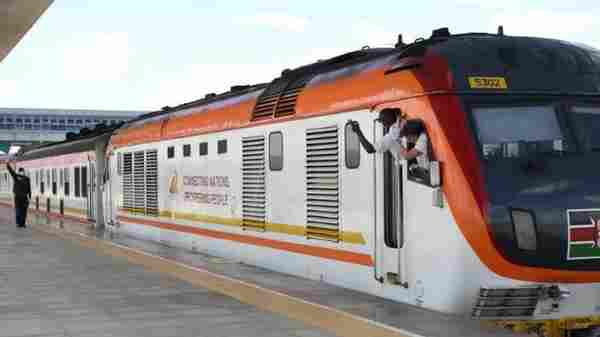

Kenya is doubling down on the expansion of the Standard Gauge Railway (SGR), a flagship infrastructure project linking the Port of Mombasa to Nairobi and Naivasha, even as concerns over cost and debt sustainability persist.
Constructed between 2013 and 2019 with Chinese financing, the railway was initially envisioned to extend beyond Kenya into Uganda and eventually connect the wider East African region. However, that regional ambition stalled after China halted further lending, leaving the line incomplete.
Debt vs Revenue Reality
Kenya currently spends about $1 billion annually servicing loans largely tied to the SGR. In contrast, the railway generates roughly $165 million per year, creating a significant financial gap despite recent growth in passenger and freight usage.
An audit report also revealed inefficiencies in debt management, with over $260 million lost in penalties and interest due to delayed repayments.
Government Push to Complete the Line
Despite these financial pressures, the government remains committed to completing the railway. President William Ruto has described the SGR as a transformative project that will shape Kenya’s economic future.
Speaking alongside Uganda’s President Yoweri Museveni in Kisumu, Ruto emphasized the railway’s potential to cut transport delays and lower the cost of moving goods across the region.
Currently, cargo takes up to 80 hours from Mombasa to Malaba and over 100 hours to Kampala, delays that leaders say hinder trade competitiveness.
Next Phase: Kisumu to Malaba
The railway is now expected to reach Kisumu by June 2027, with plans to extend further to Malaba at the Kenya-Uganda border.
This phase is projected to cost over KSh 500 billion ($3.9 billion) and is expected to create jobs while easing pressure on Kenya’s road network.
Unlike earlier phases, Kenya is not relying on new Chinese loans. Instead, the government plans to finance the project through future cargo levy collections, while still working with Chinese contractors on construction.
Regional Impact Still the Goal
The long-term vision remains to connect landlocked countries—including Uganda, Rwanda, South Sudan, and the Democratic Republic of Congo—to the Port of Mombasa, strengthening regional trade corridors.
Uganda’s President Museveni has supported the project, calling current transport systems inefficient and costly, and positioning the railway as a key solution.