
Metros
NAIROBI, Kenya – Nairobi has taken a major step toward transforming its public transport network after the Nairobi City County Executive approved the first phase of the proposed Nairobi Metropolitan Mass Rapid Transit System (NMRTS), a flagship metro rail project expected to reshape commuting across the capital.
ALSO READ: One Route, One Price? Inside Kenya’s Fare Reform
The approval, granted during a County Executive Committee meeting chaired by Governor Johnson Sakaja, signals the transition of the ambitious project from the planning stage toward implementation.
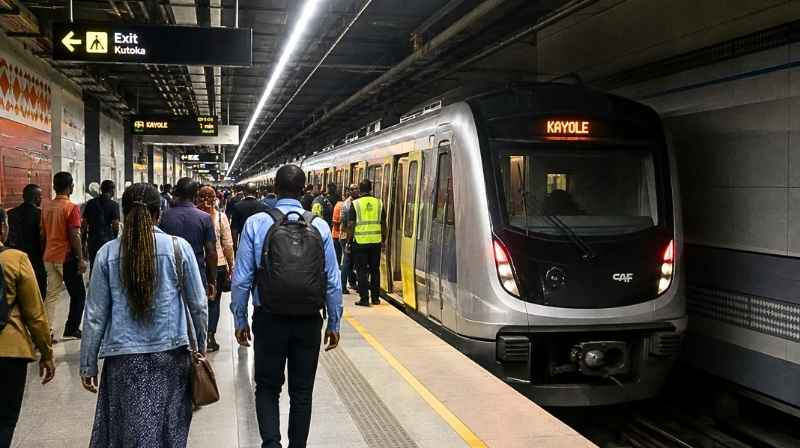
The first phase of the network will feature two key corridors: a 10-kilometre underground orbital line serving Nairobi’s central business district and a 20-kilometre Eastlands corridor stretching to Kayole. Together, they are expected to ease chronic congestion that has long affected commuters travelling into and out of the city centre.
Governor Sakaja said the project represents a decisive move toward solving Nairobi’s long-standing transport challenges.
“For far too long, commuters have spent countless hours trapped in traffic, slowing productivity and affecting the city’s economic growth,” he said.
The first phase is estimated to cost approximately US$7.78 billion (about Sh1 trillion), making it one of Kenya’s largest transport infrastructure investments. The budget includes civil works, station construction, railway systems, rolling stock, depot facilities, and utility relocation.
According to the county government, the metro will be delivered through a Design-Build-Finance-Operate-Maintain (DBFOM) Public-Private Partnership (PPP) model. Private investors, pension funds, commercial banks, government financing, strategic partners, and climate finance institutions are expected to contribute to the project’s funding.
Project planners estimate that the investment will generate strong long-term returns, with the metro expected to significantly improve mobility while stimulating economic activity across Nairobi and the wider metropolitan region.
The first phase will comprise 25 stations, including 10 underground stations, with the remainder constructed as elevated or surface-level facilities. The railway will be powered by electricity through overhead lines and will feature regenerative braking technology designed to improve energy efficiency. Modern Communications-Based Train Control (CBTC) signalling is also planned to maximise train frequency and operational safety.
Metro aims to tackle Nairobi’s worsening congestion
The approval comes as Nairobi continues to grapple with some of Africa’s worst urban traffic congestion. The city is currently home to an estimated 6 to 6.5 million people, a figure projected to more than double over the coming decades.
Average vehicle speeds within the city centre frequently fall to between 5 and 10 kilometres per hour, with many commuters spending two to four hours travelling each day. Traffic congestion is also blamed for substantial economic losses and contributes to a significant number of road fatalities annually.
County estimates suggest congestion costs Kenya’s capital more than Sh130 billion every year. Officials believe the metro system could help boost national economic growth by between 1 and 1.5 percent annually by 2035 through improved mobility and increased productivity.
Construction timeline
Before construction begins, Nairobi County plans to conduct public participation forums, engage transport stakeholders, and coordinate implementation with national government agencies.
If the current schedule is maintained, groundbreaking is expected in 2028, with passenger services targeted to begin in January 2034.
Planning has already started for Phase Two, which is expected to extend metro services toward Westlands, Ngong Road and Lang’ata Road, while providing improved connectivity for rapidly growing suburbs including Ongata Rongai and Ngong.
Source: Originally published by Railjournal.com.