🔴 LIVE UPDATE: April 28 — Kenya Railways Defends BRT Expansion Amid Public Debate Over Nairobi Traffic Solution

NAIROBI, April 28 — Kenya Railways has defended its growing Bus Rapid Transit (BRT) integration strategy after online criticism erupted over the corporation’s decision to launch bus-based commuter connections instead of focusing purely on rail transport.

The debate intensified after a Kenyan netizen questioned why a railway authority was venturing into road transport despite rail being marketed as the long-term solution to Nairobi’s notorious traffic congestion.

“Kenya Railways launching a bus line just seems odd. Isn’t rail supposed to be the remedy against road traffic congestion?” the social media user posted.

🚆 Kenya Railways Explains the BRT Strategy

In response, Kenya Railways clarified that the BRT system is not replacing rail transport but is instead designed to support commuter rail operations through what transport planners call first-mile and last-mile connectivity.

According to the corporation:

  • 🚌 BRT buses help commuters reach railway stations faster
  • 🚉 Rail remains the backbone of the transport network
  • 🔄 Integrated transfers are intended to reduce dependence on matatus and private cars
  • ⏱️ The goal is to make train commuting more reliable and accessible

Kenya Railways stated:

“The BRT service is designed to complement rail by improving first- and last-mile connectivity, making it easier to access our train services.”

The corporation added that the broader objective is to reduce overall traffic congestion by increasing the number of Nairobi residents using commuter trains.


🚉 Nairobi Link Train Highlighted as Example

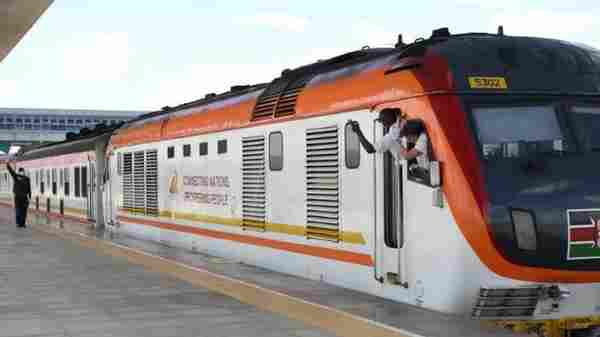
Kenya Railways also pointed to the Nairobi Link Train between the CBD and Syokimau as a working example of integrated transport planning.

The service:

  • Connects Nairobi Central Railway Station to the SGR Terminus in Syokimau
  • Operates daily
  • Is synchronized with Madaraka Express schedules
  • Takes approximately 20–30 minutes

The corporation says this coordinated system minimizes transfer delays and helps passengers avoid major highway congestion.


🏙️ Nairobi Railway City Central to the Vision

The response also revived attention around the planned Nairobi Railway City project, which is expected to become Nairobi’s major multimodal transport hub.

The planned hub is designed to integrate:

  • Commuter rail
  • BRT corridors
  • Future light rail systems

Officials believe the integration could significantly increase passenger movement efficiency within the capital.


⚡ Key BRT Corridors Mentioned

Kenya Railways highlighted two major planned BRT corridors expected to support the wider network:

Chui Line

  • Electric-powered corridor
  • Approximately 12.4km
  • Links hospitals and Dandora station

Simba Line

  • Runs along Thika Superhighway
  • Connects Ruiru to Nairobi CBD and Kenyatta National Hospital

The authority says separating BRT movement from ordinary mixed traffic could help reduce delays currently experienced by Nairobi commuters.


🚍 Kenya Railways Pushes Commuter Rail Expansion

In a separate public campaign, Kenya Railways urged Nairobi residents to embrace commuter rail services connecting:

  • 🚆 Ruiru
  • 🚆 Embakasi
  • 🚆 Syokimau
  • 🚆 Kikuyu
  • 🚆 Athi River
  • 🚆 Nairobi CBD

The corporation marketed the service as a stress-free alternative to daily traffic jams.

“Why sit in traffic when you can ride through it?” Kenya Railways stated in its commuter campaign.


Metros Insight

The backlash reflects a growing public debate in Nairobi over whether transport agencies are solving congestion or simply adding more vehicles onto already overwhelmed roads.

However, transport experts globally increasingly rely on integrated systems where:

  • Rail handles high-capacity trunk movement
  • BRT feeds passengers into rail stations
  • Walking and cycling improve local access

The real test for Nairobi will likely depend on:

  • Dedicated BRT lanes
  • Reliability of transfers
  • Safety and cleanliness
  • Frequency of trains
  • Affordability for ordinary commuters

Without proper coordination, commuters risk facing multiple transfers without meaningful time savings.


📌 What Nairobi Commuters Should Watch

  • Completion timelines for BRT corridors
  • Expansion of commuter rail frequency
  • Fare integration between bus and rail
  • Nairobi Railway City progress
  • Whether dedicated lanes are fully protected from mixed traffic
Hot this week

Government Raises Fuel Prices, Matatus Raise Fares — And Kenyans Are Expected to Pay for Everyone’s Failures

The government has increased fuel prices, and matatu owners now want fares raised by 10%. But who is protecting commuters? Metros Kenya examines the role of the government, EPRA, the Ministry of Transport and matatu operators in Kenya's growing transport costs.

You Could Be Fined or Even Jailed on Kenya’s SGR for These 5 Surprising Things — Number 3 Might Shock You

Did you know that certain actions aboard Kenya's Madaraka Express could attract fines or even imprisonment? Discover five surprising SGR passenger rules, from ticket transfers and First Class seating to prohibited items and emergency equipment.

Bolt Launches Bolt Plus in Kenya: What KSh 280 Monthly Subscription Means for Passengers

Bolt has launched Bolt Plus in Kenya, offering up to 10% ride cashback, priority driver matching and free deliveries for KSh 280 monthly. Here is what passengers should know.

Tax-Funded Kenya Met Warned of El Niño, Nairobi Prepared for Floods — Now Commuters Are Asking Google Where the Rain Went

Kenya Met's El Niño warnings prompted Nairobi County to prepare for possible flooding. But with sunshine over the capital, questions are emerging about forecast communication, the proposed KSh 5.17 billion flood-response funding and whether commuters should consult Google Weather.

Standing in an Electric Bus Is Not Overloading: BasiGo’s Francis Explains What Many Kenyans Still Don’t Understand About City Buses

Why do some electric buses allow standing passengers? BasiGo's Francis Mungai explains passenger-load testing, ventilation, battery safety and the differences between city buses and conventional diesel matatus in Kenya.

Topics

Government Raises Fuel Prices, Matatus Raise Fares — And Kenyans Are Expected to Pay for Everyone’s Failures

The government has increased fuel prices, and matatu owners now want fares raised by 10%. But who is protecting commuters? Metros Kenya examines the role of the government, EPRA, the Ministry of Transport and matatu operators in Kenya's growing transport costs.

You Could Be Fined or Even Jailed on Kenya’s SGR for These 5 Surprising Things — Number 3 Might Shock You

Did you know that certain actions aboard Kenya's Madaraka Express could attract fines or even imprisonment? Discover five surprising SGR passenger rules, from ticket transfers and First Class seating to prohibited items and emergency equipment.

Bolt Launches Bolt Plus in Kenya: What KSh 280 Monthly Subscription Means for Passengers

Bolt has launched Bolt Plus in Kenya, offering up to 10% ride cashback, priority driver matching and free deliveries for KSh 280 monthly. Here is what passengers should know.

Tax-Funded Kenya Met Warned of El Niño, Nairobi Prepared for Floods — Now Commuters Are Asking Google Where the Rain Went

Kenya Met's El Niño warnings prompted Nairobi County to prepare for possible flooding. But with sunshine over the capital, questions are emerging about forecast communication, the proposed KSh 5.17 billion flood-response funding and whether commuters should consult Google Weather.

Standing in an Electric Bus Is Not Overloading: BasiGo’s Francis Explains What Many Kenyans Still Don’t Understand About City Buses

Why do some electric buses allow standing passengers? BasiGo's Francis Mungai explains passenger-load testing, ventilation, battery safety and the differences between city buses and conventional diesel matatus in Kenya.

Kenya Recruits for Electric Rail as Siemens Lands 350km/h Train Deal

Kenya Railways is recruiting specialists for Nairobi's electric commuter rail project as Siemens Mobility moves ahead with 350km/h high-speed trains in Vietnam. The two projects reveal how far Kenya has come—and what separates electric commuter rail from a true bullet train.

Nairobi Drainage Crisis Highlights Long-Standing Infrastructure and Planning Gaps

By Kipchumba LawiA report submitted to Metros by Kipchumba...

Related Articles

Popular Categories

spot_imgspot_img