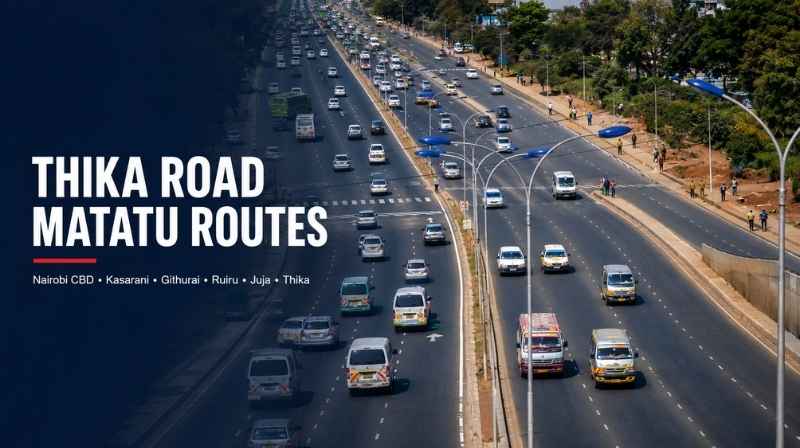

Nairobi Matatu Route 237 connects Nairobi CBD with Thika Town, travelling along the Thika Road superhighway through major commuter centres including Roysambu, Githurai, Kahawa, Ruiru and Juja.
Unlike shorter Thika Road services that terminate at Githurai or Ruiru, Route 237 continues farther north through Juja and the JKUAT area before reaching Thika Town. This makes it one of the key route numbers for commuters travelling the full Nairobi–Thika corridor.
Route 237 Quick Information
Route Number: 237
Route: Nairobi CBD – Thika Town
Origin: Nairobi CBD
Main Destination: Thika Town
Main Corridor: Thika Road
Major Areas Served: Ruaraka, Roysambu, Githurai, Kahawa, Kenyatta University, Ruiru, Kimbo, Juja, JKUAT and Thika
CBD Boarding Areas: Munyu Road/Ronald Ngala Street area, Ngara and Race Course Road/OTC area
Return Route: Thika Town – Nairobi CBD
Where to Board Route 237 in Nairobi CBD
Route 237 matatus and buses travelling to Thika have been documented at several boarding locations around central Nairobi.
These include the Munyu Road junction near Ronald Ngala Street and the Race Course Road area near the former OTC/Tusky’s location. Thika-bound services have also historically been available around Ngara.
Because loading points can change according to operator and city traffic arrangements, passengers should look for vehicles displaying:
237 – THIKA
and confirm that the vehicle is travelling all the way to Thika rather than terminating earlier along Thika Road.
Route 237 from Nairobi to Thika
Route 237 follows one of the longest major commuter corridors radiating from Nairobi CBD.
A simplified version of the journey is:
Nairobi CBD → Pangani → Muthaiga → Thika Road → Ruaraka → Roysambu → Githurai → Kahawa → Kenyatta University → Ruiru → Kimbo → Juja → JKUAT → Thika Town
The route therefore serves both Nairobi commuters and passengers travelling into neighbouring Kiambu County.
Major Route 237 Stops and Areas Served
Ruaraka and Allsops
After leaving central Nairobi, Route 237 joins the Thika Road corridor and serves the Ruaraka/Allsops area.
Current route data lists stops including KCA, Drive Inn and Allsops before the service continues north along Thika Road.
Roysambu
Route 237 serves Roysambu, one of the busiest public transport areas along Thika Road.
Passengers travelling only as far as Roysambu can use several other routes as well, so a Thika-bound Route 237 is particularly valuable for commuters continuing farther north.
Githurai
Githurai is a major intermediate point on Route 237.
The important distinction is that Route 237 does not terminate there. It continues through the Kahawa corridor towards Ruiru, Juja and eventually Thika.
Passengers travelling beyond Githurai should therefore make sure they board a service displaying Thika as its final destination.
Kahawa and Kenyatta University
Route 237 continues through the wider Kahawa corridor.
Current stop information identifies points including Kahawa, Kahawa Sukari and Kenyatta University (KU) along the route.
This makes Route 237 useful for passengers travelling between Nairobi and the wider KU/Kahawa area as well as those continuing towards Ruiru and Thika.
Ruiru
Ruiru is one of the most important intermediate towns on Route 237.
Passengers travelling from Nairobi to Ruiru can use appropriate Thika-bound services, but Route 237 continues beyond Ruiru towards Kimbo, Juja and Thika.
Kimbo
After Ruiru, Route 237 continues along Thika Road through the Kimbo area.
Current route data lists Kimbo among the stops between Ruiru and Juja.
Juja
Juja is another major destination served by Route 237.
Passengers travelling from Nairobi CBD to Juja can use Route 237 services continuing towards Thika.
Juja is an important commuter and university town along the Nairobi–Thika corridor.
JKUAT
Route 237 serves the JKUAT Main Gate area after Juja.
This makes the route particularly useful for students, staff and other passengers travelling between Nairobi and Jomo Kenyatta University of Agriculture and Technology.
Passengers should tell the conductor that they intend to alight at JKUAT rather than simply asking for Juja.
Thika Town
Thika Town is the principal destination and northern terminus of Route 237.
Passengers travelling the complete route remain on the service beyond Ruiru, Juja and JKUAT before reaching Thika.
Route 237 Is More Than a Nairobi Route
Route 237 is particularly important to the Metros route database because it illustrates how Nairobi’s commuter network extends beyond the county boundary.
The route starts in Nairobi County but serves major population centres in Kiambu County, including Ruiru, Juja and Thika.
It therefore functions as an important metropolitan commuter connection rather than simply an inner-city matatu route.
Roads Used by Route 237
The defining road for Route 237 is:
Thika Road
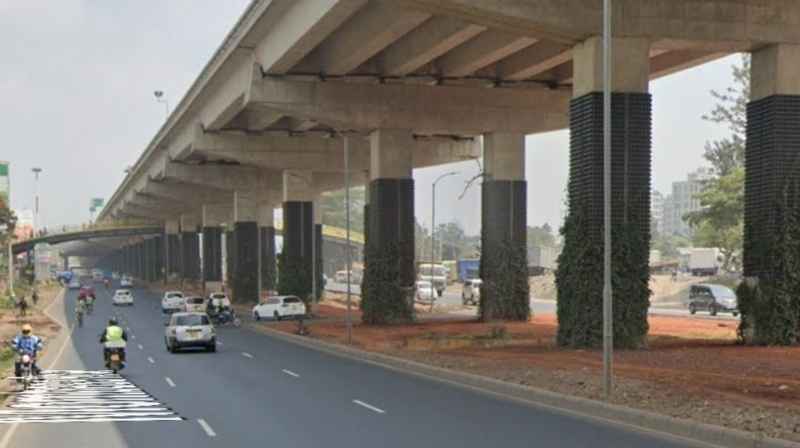
The service uses the Nairobi–Thika highway corridor for the majority of its journey.
This makes Route 237 one of the clearest examples of a route whose number is closely associated with an entire major transport corridor.
Route 145 vs Route 237
Routes 145 and 237 overlap for a significant part of their journey, but their main destinations are different.
Route 145 — Ruiru
Route 145 is principally associated with Ruiru.
It is useful for passengers whose journey ends around the Ruiru section of the Thika Road corridor.
Route 237 — Thika
Route 237 continues beyond Ruiru.
Its journey includes:
Ruiru → Kimbo → Juja → JKUAT → Thika
For passengers travelling to Juja or Thika, Route 237 is therefore the more relevant route number.
Can You Use Route 237 to Travel to Ruiru?
Yes.
Although the final destination is Thika, Route 237 passes through Ruiru.
Passengers travelling to Ruiru should tell the conductor their destination and confirm that the particular service is picking up and dropping off passengers there.
Can You Use Route 237 to Travel to Juja?
Yes. Route 237 serves Juja before continuing towards Thika.
Current route information also identifies Juja Stage and JKUAT Main Gate Stage among the stops on the Route 237 corridor.
Route 237 Return Journey: Thika to Nairobi
Route 237 operates in the opposite direction for passengers travelling from Thika towards Nairobi.
The return corridor broadly follows:
Thika → Juja → JKUAT → Kimbo → Ruiru → Kahawa → Githurai → Roysambu → Ruaraka → Nairobi
Passengers boarding at intermediate locations should confirm that the vehicle is Nairobi-bound.
Route 237 Matatu Fare
The Route 237 fare depends heavily on the distance travelled.
A passenger travelling the complete journey from Nairobi CBD to Thika will normally have a different fare from someone alighting at Roysambu, Githurai, Ruiru or Juja.
Fares can also vary according to the operator, traffic conditions, passenger demand, weather and time of day. Morning and evening peak periods may attract different fares from quieter off-peak periods.
Important: Matatu fares are not always fixed and can change at any time. Any Route 237 fare published in this guide should therefore be treated as an estimate rather than a guaranteed price. Passengers should confirm the current fare before boarding.
Fare last checked: Current Nairobi–Thika fare requires field verification.
How Long Does Nairobi to Thika Take?
Travel time between Nairobi and Thika can vary substantially.
The biggest factors include traffic on Thika Road, time of day, number of intermediate stops and whether the vehicle operates as a faster or more frequently stopping service.
Passengers should therefore allow additional travel time during Nairobi’s morning and evening peak periods rather than relying on a fixed journey duration.
Route 237 Operating Pattern
Current transit information lists Route 237 as a service between Townterminal and Thika Town, with dozens of recognised stops along the corridor.
However, matatu and bus operating patterns can change according to operator, passenger demand and time of day.
Passengers should confirm current service availability when travelling particularly early or late.
Frequently Asked Questions About Route 237
Where does Route 237 go?
Route 237 connects Nairobi CBD with Thika Town through the Thika Road corridor.
Where can I board Route 237 in Nairobi?
Thika-bound Route 237 services have been documented around Munyu Road/Ronald Ngala Street, Ngara and the Race Course Road/OTC area.
Does Route 237 use Thika Road?
Yes. Thika Road is the principal corridor used by Route 237.
Does Route 237 pass Roysambu?
Yes. Route 237 serves Roysambu before continuing towards Githurai and Kahawa.
Does Route 237 pass Githurai?
Yes. Githurai is a major intermediate point on Route 237.
Does Route 237 pass Kenyatta University?
Yes. Current route data identifies Kenyatta University among the stops along Route 237.
Does Route 237 go to Ruiru?
Yes. Route 237 serves Ruiru but continues beyond it towards Juja and Thika.
Does Route 237 go to Juja?
Yes. Juja is one of the major destinations along Route 237.
Does Route 237 pass JKUAT?
Yes. Current route data lists JKUAT Main Gate Stage along Route 237 before the service continues towards Thika.
What is the difference between Route 145 and Route 237?
Both use Thika Road and serve Ruiru, but Route 145 is principally a Ruiru service while Route 237 continues through Juja to Thika Town.
Route 237 at a Glance
Route Number: 237
Route: Nairobi CBD ↔ Thika Town
Main Corridor: Thika Road
Key Areas: Ruaraka, Roysambu, Githurai, Kahawa, KU, Ruiru, Kimbo, Juja, JKUAT, Thika
CBD Boarding Areas: Munyu Road/Ronald Ngala Street, Ngara and Race Course Road/OTC area
Main Destination: Thika Town
Destination County: Kiambu County
Route stages, fares, stops and operating arrangements can change. Metros Kenya periodically reviews its Nairobi matatu route information to provide commuters with useful and up-to-date travel information.