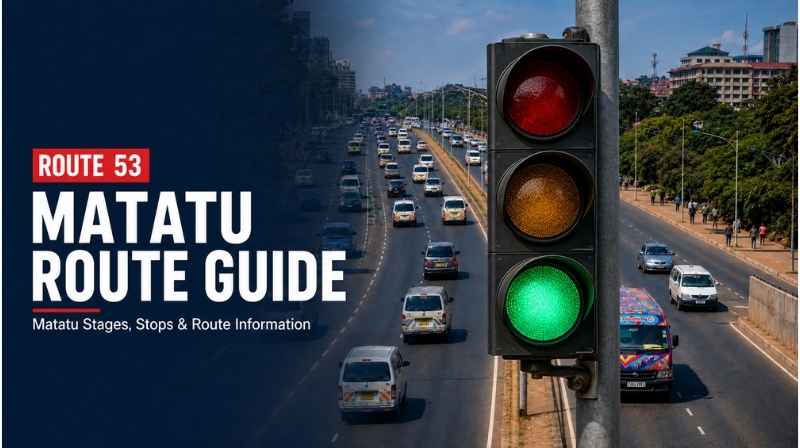

Nairobi Matatu Route 53 serves commuters travelling from Nairobi CBD towards Thome and Marurui, with Roasters providing an important connection between the route and the Thika Road corridor.
Unlike many Thika Road matatus that continue north towards Kasarani, Githurai or Ruiru, Route 53 turns towards the Thome-Marurui area, making it an important service for commuters whose journeys end in these neighbourhoods.
Route 53 Quick Information
Route Number: 53
Route: Nairobi CBD – Roasters – Thome – Marurui
Origin: Nairobi CBD
Main Destination: Marurui
Major Areas Served: Roasters, Thome and Marurui
Key Connection: Thika Road at Roasters/Mountain Mall area
Destination Area: Marurui
Return Route: Marurui to Nairobi CBD
Where Does Route 53 Go?
Route 53 connects Nairobi CBD with Marurui, serving Roasters and Thome along the journey.
The core route is:
Nairobi CBD → Roasters → Thome → Marurui
For commuters, Roasters is an important landmark on this route because it provides access between Thika Road and the neighbourhoods farther inside the Thome-Marurui area.
Route 53 and Roasters
Roasters is one of the most recognisable points associated with Route 53.
The Roasters/Mountain Mall area sits along Thika Road and functions as an important public transport connection for commuters travelling towards Thome and Marurui.
Passengers already travelling along Thika Road can therefore use Roasters as a connection point for public transport heading into the Marurui area.
Route 53 to Thome
Route 53 serves Thome, making it useful for commuters travelling between Nairobi CBD and the Thome residential area.
Current public transport information continues to identify Route 53 as a service around Thome, including the Ruaraka/Thome side of the route.
Passengers should tell the conductor their specific stop because Thome covers a wider residential area than a single roadside stage.
Route 53 to Marurui
Marurui is the principal destination associated with Route 53.
Marurui lies around the Thome and Northern Bypass area, and Route 53 provides an important public transport connection for residents travelling between the neighbourhood and central Nairobi.
Current transit information continues to list Route 53 with Marurui as its destination, supporting its identification as the main numbered route serving this corridor.
Major Route 53 Stops and Areas Served
Important areas associated with Route 53 include:
Nairobi CBD
The city-centre origin for passengers travelling towards Thome and Marurui.
Roasters / Mountain Mall area
A major connection point along Thika Road for passengers heading towards the Thome-Marurui corridor.
Thome
One of the principal residential areas served by Route 53.
Marurui
The principal destination associated with Route 53.
Additional neighbourhood stops occur within the Thome-Marurui area, and passengers should confirm their specific drop-off point with the conductor.
Route 53 and the Northern Bypass
Marurui is located along the Northern Bypass corridor, giving Route 53 additional importance beyond simply connecting Nairobi CBD with a residential estate.
Passengers reaching Marurui can access other public transport connections serving destinations along the Northern Bypass.
This makes Marurui useful as a transfer point for some journeys that continue beyond the normal Route 53 corridor.
Where to Board Route 53 in Nairobi CBD
Route 53 operates between Nairobi CBD and Marurui.
The precise CBD loading position can change with operator arrangements and city traffic-management measures. Commuters should therefore look for vehicles displaying:
53 — Thome / Marurui
and confirm the current loading position before boarding.
Metros Kenya will add a precise CBD stage to this guide once the current loading point has been independently verified.
Travelling to Marurui from Thika Road
Passengers who are already travelling along Thika Road do not necessarily have to travel into Nairobi CBD to access Marurui.
Roasters/Mountain Mall is an important interchange point.
Local public transport operates from around the Mountain Mall/Roasters area towards Marurui, providing another option for passengers approaching from destinations along Thika Road.
Route 53 Return Journey: Marurui to Nairobi
Passengers travelling from Marurui or Thome towards Nairobi CBD can use Route 53 services operating in the city-bound direction.
Commuters should confirm the vehicle’s final CBD destination before boarding because drop-off arrangements in central Nairobi can change.
Route 53 Matatu Fare
The Route 53 fare depends on where a passenger boards and alights and can vary according to traffic conditions, passenger demand and time of day.
Passengers making shorter connections between Roasters and Marurui may pay a different fare from commuters travelling the full journey between Nairobi CBD and Marurui.
Fares may also increase during morning and evening peak periods, rainy weather, public holidays or periods of unusually high demand.
Important: Nairobi matatu fares are not always fixed and can change at any time. Any fare quoted in this guide should therefore be treated as an estimate rather than a guaranteed price. Confirm the current fare with the conductor before boarding.
Fare last checked: Full CBD–Marurui fare requires current field verification.
Route 53 Operating Times
Route 53 serves the Nairobi CBD–Thome–Marurui corridor, but individual matatus do not necessarily operate according to a single fixed timetable.
Service frequency can vary according to the time of day, passenger demand and individual operator arrangements.
Passengers travelling particularly early in the morning or late in the evening should confirm current service availability.
Route 53 Connections
Route 53 provides useful connections with two important Nairobi transport corridors:
Thika Road — via Roasters/Mountain Mall
and
Northern Bypass — via the Marurui area
This makes the route particularly useful for passengers who need to transfer between central Nairobi, Thika Road and neighbourhoods around the Northern Bypass.
Frequently Asked Questions About Route 53
Where does Route 53 go?
Route 53 connects Nairobi CBD with Roasters, Thome and Marurui.
Does Route 53 go to Thome?
Yes. Thome is one of the principal areas served by Route 53.
Does Route 53 go to Marurui?
Yes. Marurui is the main destination associated with Route 53.
Does Route 53 pass Roasters?
Yes. Roasters is a major point on the Route 53 corridor and provides connections with Thika Road.
Can I get a matatu to Marurui from Roasters?
Yes. Public transport operates from around the Roasters/Mountain Mall area towards Marurui, making it possible to connect to Marurui without beginning the journey in Nairobi CBD.
Is Marurui near the Northern Bypass?
Yes. Marurui is located along the Northern Bypass corridor, close to the Thome area.
Is Route 53 the same as the Kasarani routes?
No. Although Route 53 connects with the Thika Road area at Roasters, its important destinations are Thome and Marurui. Passengers travelling to Kasarani should use a service specifically serving Kasarani.
Route 53 at a Glance
Route Number: 53
Route: Nairobi CBD ↔ Marurui
Key Areas: Roasters, Thome, Marurui
Thika Road Connection: Roasters / Mountain Mall area
Main Destination: Marurui
Northern Bypass Connection: Marurui area
Route stages, fares, stops and operating arrangements can change. Metros Kenya periodically reviews its Nairobi matatu route information to provide commuters with useful and up-to-date travel information.