Kenya’s renewable energy resources, growing electric bus industry and advances in artificial intelligence could combine to create a cleaner, smarter and more reliable public transport system.
Nairobi is entering a new era of urban mobility. For decades, the city’s public transport system has depended heavily on diesel-powered buses and matatus, exposing commuters to exhaust emissions, fluctuating fuel costs and unpredictable services.
But a different future is emerging, one in which electric city buses, green energy and artificial intelligence (AI) could work together to transform how Kenyans move around their cities.
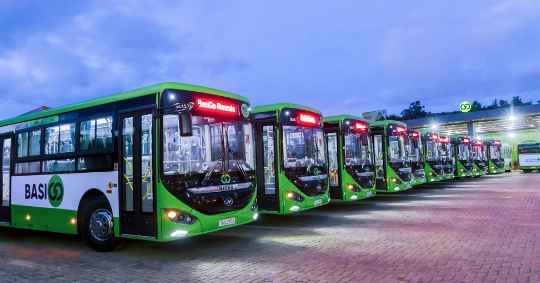
The transition is already taking shape. Kenyan electric mobility companies are introducing battery-powered buses, while advances in digital technology offer opportunities to improve route planning, passenger information and fleet management.
As Metros Kenya previously reported in Electric City Buses: Nairobi’s Quiet Transport Revolution, Five Years On, electric buses are gradually becoming part of Nairobi’s public transport landscape.
The next challenge is making these vehicles part of a coordinated, intelligent urban transport network.
Kenya’s Green Energy Advantage
Kenya has a significant advantage in the transition towards electric public transport: much of its electricity comes from renewable sources.
Geothermal generation from the Rift Valley, hydroelectric power, wind energy and solar installations contribute substantially to the national electricity supply.
This means electric buses operating in Nairobi can benefit from an electricity system that is already less dependent on fossil fuels than those of many other countries.
Unlike conventional diesel buses, electric vehicles produce no exhaust emissions while operating.
This could help reduce roadside air pollution, particularly around crowded bus terminals, residential neighbourhoods and major transport corridors.
Electric vehicles are not entirely emission-free across their full life cycle. Battery manufacturing, electricity generation and vehicle production still have environmental impacts.
Nevertheless, Kenya’s renewable electricity resources provide a strong foundation for reducing the carbon footprint of urban public transport.
Electric Buses Are Already Changing Nairobi
The arrival of electric buses is no longer a distant ambition.
Companies such as BasiGo and Roam have contributed to the development of Kenya’s electric mobility industry through vehicle deployment, manufacturing and assembly activities, charging infrastructure and technology development.
During an earlier visit to BasiGo’s operations, Metros Kenya examined how the company evaluates electric buses before releasing them into passenger service.
The report, BasiGo Reveals How Electric Buses Are Tested for Range, Load Capacity and Safety Before Hitting Kenyan Roads, documented the importance of testing battery range, braking, suspension and passenger-load performance.
These considerations are particularly important in Nairobi, where public transport vehicles encounter heavy traffic, variable road conditions and demanding daily operating schedules.
Electric mobility is also expanding beyond conventional commuter buses.
Metros Kenya previously covered the introduction of electric school and commuter vehicles in Nairobi’s Electric Bus Revolution Expands as New School and Commuter EV Buses Hit the Roads.
Such developments indicate that electric mobility could eventually serve multiple passenger transport markets, including schools, SACCOs, corporate transport and urban commuter operations.
Artificial Intelligence Could Solve Nairobi’s Transport Inefficiencies
Electric buses address how public transport vehicles are powered. Artificial intelligence could help address how they are operated.
Nairobi’s transport system experiences sharp changes in passenger demand throughout the day.
During morning rush hours, commuters travel from residential areas such as Kasarani, Githurai, Embakasi, Rongai, Kikuyu and Ruaka towards the central business district.
In the evening, passenger movement largely reverses.
However, the availability of public transport vehicles does not always match demand.
Some vehicles operate at full capacity while others spend extended periods waiting at terminals.
AI-powered fleet management systems could analyse passenger volumes, traffic patterns, historical demand and vehicle locations to recommend more efficient departure schedules.
For example, operators serving the Thika Road corridor could use digital demand forecasting to determine how many buses should operate during morning peak hours.
Nairobi’s major transport corridors are already documented in the Metros Kenya guide, Nairobi’s Major Roads Explained: The Corridors That Keep the City Moving.
These corridors could provide a starting point for developing data-driven electric bus operations.
Instead of relying exclusively on informal dispatching arrangements, operators could introduce predictable departures supported by real-time passenger information.
Smart Charging: Where Artificial Intelligence Meets Renewable Energy
One of the biggest operational challenges for electric bus companies is charging.
Unlike diesel vehicles, which can refuel at conventional filling stations, electric buses require access to suitable charging equipment and carefully planned charging schedules.
Artificial intelligence could help operators manage this process.
Smart charging software can analyse battery charge levels, expected travel distances, electricity tariffs, charger availability and planned vehicle departures.
Using this information, operators could schedule charging sessions when vehicles are not needed for passenger services.
Consider an electric bus fleet operating between Nairobi CBD and Kitengela.
Instead of charging every bus at the same time, an intelligent management system could determine which vehicles need immediate charging and which have sufficient battery capacity to complete additional journeys.
Where electricity tariffs and operational conditions permit, charging could also be scheduled during lower-cost periods.
As more electric buses enter service, coordinating charging demand will become increasingly important.
Kenya’s developing regulatory framework will also influence this transition.
Metros Kenya previously examined these issues in Kenya Moves to Write E-Mobility Law as Electric Buses and Charging Networks Expand.
Could Nairobi Introduce AI-Managed Electric Bus Corridors?
Imagine a commuter waiting for an electric bus along Ngong Road.
Instead of guessing when the next vehicle will arrive, the passenger checks a mobile application displaying its location, estimated arrival time and available passenger capacity.
The same system could notify commuters about delays, route changes and alternative connections.
Behind the scenes, AI-supported software could analyse traffic conditions and recommend adjustments to departure intervals.
Such technology could eventually be introduced along Thika Road, Jogoo Road, Mombasa Road, Waiyaki Way and other busy transport corridors.
Nairobi’s proposed Bus Rapid Transit network could provide an opportunity to integrate electric buses with intelligent fleet management and passenger information systems.
The planned corridors and their proposed alignments are outlined in the Nairobi BRT Routes and Bus Rapid Transit Guide.
However, these capabilities should not be confused with an existing citywide AI-controlled bus network.
Their implementation would require investment in digital infrastructure, reliable data collection, transport management systems and cooperation between operators and public authorities.
Electric Buses Could Change the Commuter Experience
For Nairobi commuters, the benefits of electric buses extend beyond cleaner energy.
Electric motors provide smoother acceleration and quieter operation than conventional diesel engines.
Modern city buses can also incorporate accessible entrances, electronic passenger information displays and digital fare collection systems.
Some electric city buses are designed to accommodate both seated and standing passengers within approved capacity limits.
Metros Kenya previously examined this distinction in Standing in an Electric Bus Is Not Overloading: BasiGo’s Francis Explains What Many Kenyans Still Don’t Understand About City Buses.
Artificial intelligence could introduce another layer of improvement through predictive maintenance.
By analysing information from vehicle sensors and operational systems, fleet managers could identify developing faults before they result in breakdowns.
This could improve fleet availability and reduce unexpected interruptions.
For commuters, the ultimate measure of success would be straightforward: a comfortable bus that arrives reliably, operates safely and charges an affordable fare.
The Economic Case for Moving Beyond Diesel
Diesel has dominated Kenya’s public transport industry for decades.
But dependence on petroleum products exposes transport operators to fluctuating fuel prices and conventional engine maintenance costs.
Electric buses offer a different operating model.
Although their initial purchase costs can be higher, electric vehicles can benefit from lower energy costs per kilometre and reduced maintenance requirements under suitable operating conditions.
Their commercial performance depends on daily mileage, financing costs, battery life, electricity prices and vehicle utilisation.
This is where artificial intelligence could provide additional value.
By improving route allocation, reducing unnecessary idle time and optimising charging schedules, digital fleet management could help operators make better use of their vehicles.
The opportunity is not simply to replace thousands of diesel matatus with battery-powered versions of the same fragmented system.
It is to develop a more coordinated transport network where vehicle capacity, passenger demand and scheduled services are managed efficiently.
The Role of Government and Nairobi County
Electric buses cannot transform Nairobi’s transport system through private investment alone.
Public authorities have an important role in developing charging infrastructure policies, transport terminals, road management systems and regulatory standards.
Nairobi County could explore electric bus-friendly terminals, designated charging locations and measures that give high-capacity public transport greater operational efficiency.
National agencies would also need to coordinate electricity infrastructure planning with the expansion of electric vehicle fleets.
Dedicated bus lanes and properly managed terminals could help electric buses operate more reliably.
Without these improvements, even the most advanced electric bus would remain vulnerable to Nairobi’s familiar traffic congestion.
A New Economic Opportunity for Kenya
The convergence of renewable energy, electric mobility and artificial intelligence could create opportunities extending beyond passenger transport.
Electric bus assembly, battery maintenance, charging infrastructure, software development and fleet management could support new technical employment.
Kenyan universities, engineering firms and technology startups could contribute to developing transport data systems, passenger applications and predictive maintenance platforms.
The country’s established digital payment ecosystem could also support integrated electronic ticketing.
Meanwhile, smaller electric passenger vehicles could expand the market beyond full-size buses.
Metros Kenya documented one example in Inside BasiGo’s Golden Dragon Electric Van: Francis Mungai Takes Metros Through Kenya’s 15-Seater EV.
As adoption expands, Kenya could develop expertise that supports electric public transport across East Africa.
However, achieving this potential will require sustained investment, technical training and policies that encourage commercially viable operations.
Nairobi’s Transport Future Must Be Electric and Intelligent
The future of Nairobi’s public transport should not be measured simply by the number of electric buses on the road.
The more important questions are whether commuters can travel affordably, whether services are dependable and whether the city becomes cleaner and easier to navigate.
Electric buses offer a practical opportunity to reduce dependence on diesel, while artificial intelligence provides tools for improving fleet efficiency and passenger services.
Kenya already has several important foundations: renewable electricity resources, an emerging electric mobility industry and a growing digital technology sector.
The challenge is bringing these strengths together.
For Nairobi, the next transport revolution could involve more than replacing diesel engines with electric motors.
It could mean replacing unpredictable departures with reliable schedules, inefficient fleet operations with intelligent management, and exhaust-filled streets with cleaner, quieter public transport.
That is the promise of electric city buses in the age of artificial intelligence — and an opportunity Kenya should take seriously.