

NAIROBI, Kenya, Aug 24 — BasiGo is subjecting its electric buses to extensive load, range, braking and suspension tests before releasing them for commercial passenger operations, as the company works to demonstrate that electric buses can withstand the demands of Kenya’s public transport environment.
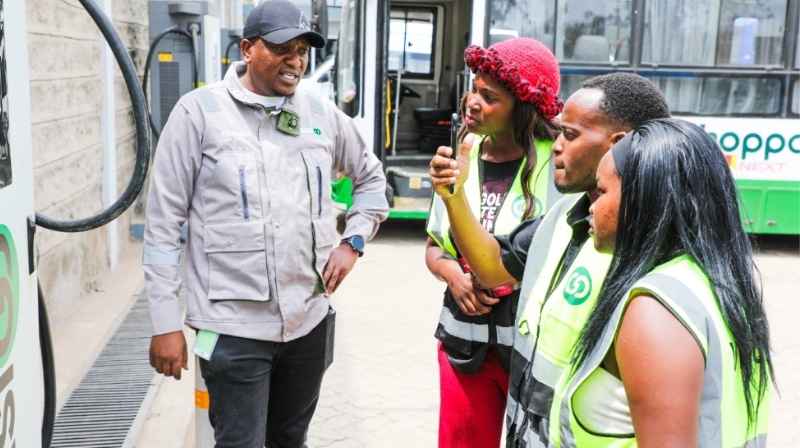
During a visit by Metros Kenya to BasiGo’s fleet and charging operations on Friday, August 21, Fleet Manager Francis Mungai explained that putting an electric bus on Kenyan roads involves considerably more than receiving the vehicle from the manufacturer and handing it over to an operator.
ALSO READ: Nairobi Bus Stations & Termini: Complete Guide to Matatu Stages and Destinations
Instead, the buses undergo a validation process intended to establish whether their actual performance corresponds with the specifications established during design and manufacturing.
Mungai said engineers already know key parameters such as the vehicle’s tare weight and maximum permissible load from the design stage. Once the bus arrives, however, those specifications have to be tested under conditions that approximate real passenger operations.
One of the methods used by BasiGo is loading buses with sandbags to reproduce the weight they would carry when transporting passengers.
“We use sandbags to simulate the passenger load,” Mungai told Metros Kenya during the tour.
The additional weight allows the technical team to observe how a fully loaded vehicle behaves compared with an empty or lightly loaded bus.
According to Mungai, BasiGo examines several critical performance areas during this process, including the suspension, braking, speed and driving range.
The tests are particularly important for electric public transport because passenger loading and operating conditions can influence how much energy a bus consumes and consequently how far it can travel before requiring another charge.
Passenger weight put to the test
For a conventional passenger, the weight of a fully occupied bus may not be immediately obvious. For fleet engineers, however, the difference between an empty bus and one carrying a full passenger load is significant.
Mungai explained that BasiGo therefore validates how the vehicle performs when additional weight is introduced.
The exercise helps determine whether the suspension behaves as expected and whether braking performance remains within the required parameters.
It also enables the company to assess the relationship between vehicle weight and energy consumption.
“We look at how the load affects the suspension, the range, the braking and even the speed,” Mungai explained.
That becomes particularly important when an electric bus enters revenue service, where it may spend much of the day repeatedly accelerating, stopping, picking up passengers and operating under varying traffic conditions.
Kenya’s public transport environment can be demanding. A city bus may encounter congestion, frequent stops, varying passenger loads and long operating hours during a normal working day.
BasiGo’s validation process is intended to establish that the buses can perform under those conditions before they begin carrying fare-paying passengers.
Range remains critical to electric bus operations
Driving range was another major issue discussed during the Metros Kenya visit.
Mungai said the electric buses are designed to operate within a range of approximately 200 to 300 kilometres, although actual performance depends on operating conditions and other variables.
For an electric public transport fleet, range is not simply a specification on a manufacturer’s brochure. It directly affects how operators schedule buses and when vehicles need to return to charging infrastructure.
A bus that cannot reliably complete its scheduled work before requiring a charge could create operational difficulties for the operator.
This is why load testing matters. A vehicle carrying passengers consumes energy differently from an unloaded vehicle, making real-world validation important when determining practical operating range.
The testing therefore allows BasiGo to compare what was expected at the design stage against what the vehicle actually delivers once subjected to operational loads.
BasiGo bus clocks about 91,000 kilometres
Evidence of longer-term operation was also visible during the tour.
One of the electric buses inspected by Metros Kenya had already accumulated approximately 91,000 kilometres.
Mungai said the vehicle was continuing to perform well despite the substantial mileage.
The figure is significant because one of the major questions surrounding the transition to electric public transport is how electric buses perform after accumulating tens of thousands of kilometres in everyday commercial operations.
For fleet operators, the decision to move from diesel to electric vehicles ultimately depends not only on environmental considerations but also on reliability, availability and the ability of the vehicle to continue generating revenue over its working life.
The approximately 91,000 kilometres recorded by the bus provided Metros Kenya with an opportunity to observe a vehicle that was no longer operating merely as a demonstration unit but had accumulated considerable road use.
Charging becomes part of fleet management
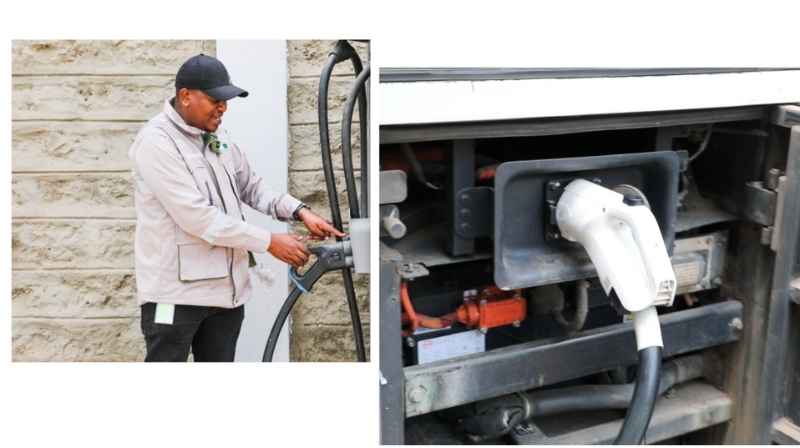
The visit also provided a closer look at the infrastructure required behind electric bus operations.
Unlike diesel buses, which can refuel relatively quickly at conventional filling stations, electric fleets require charging to be incorporated into their operating schedules.
That makes charging infrastructure an integral part of fleet management.
The ability to operate electric buses successfully therefore depends on more than the vehicles themselves. Charging stations must be positioned and managed so buses can replenish their batteries and return to passenger service without unnecessarily disrupting operations.
As electric fleets grow, coordinating vehicle movements with charging availability becomes increasingly important.
For public transport operators, this means the transition to electric mobility involves thinking about the bus and its supporting energy infrastructure as one operating system.
Testing before passengers board
Mungai said the objective of the validation process is ultimately to establish that the buses are ready for the conditions they will encounter once deployed commercially.
Rather than relying exclusively on manufacturer specifications, BasiGo can use the tests to evaluate the vehicles under simulated passenger loads before they enter revenue operations.
The approach covers some of the characteristics that matter most to operators and commuters: whether the bus can carry its intended load, whether its suspension can cope with that weight, whether it maintains adequate braking performance and whether it can achieve the required operating range.
For passengers, much of this engineering work takes place out of sight.
By the time commuters board an electric bus, the vehicle may already have undergone testing designed to reproduce the loads it will encounter once every seat is occupied and additional passengers are on board.
Electric buses move beyond demonstration stage
The validation programme also illustrates how Kenya’s electric mobility sector is moving beyond simply demonstrating that an electric bus can operate on local roads.
The next stage is proving that electric vehicles can function reliably as commercial public transport assets.
That distinction is important.
A public service vehicle must generate revenue consistently, operate according to an operator’s schedule and carry passengers safely over thousands of kilometres.
Reliability, charging availability, maintenance, range and vehicle utilisation consequently become just as important as the technology powering the bus.
For BasiGo, testing vehicles before revenue deployment is one part of addressing those requirements.
As electric buses become increasingly visible on Kenyan roads, their long-term success will ultimately depend on whether they can perform the same fundamental task expected of conventional buses: move large numbers of passengers reliably, safely and economically every day.
And according to Mungai, establishing that capability begins before the first paying passenger steps aboard—by loading the buses, testing them and confirming that their real-world performance matches what they were designed to deliver.