Britain’s Royal Navy Tests New Helicopter That Flies without a Pilot

Summary

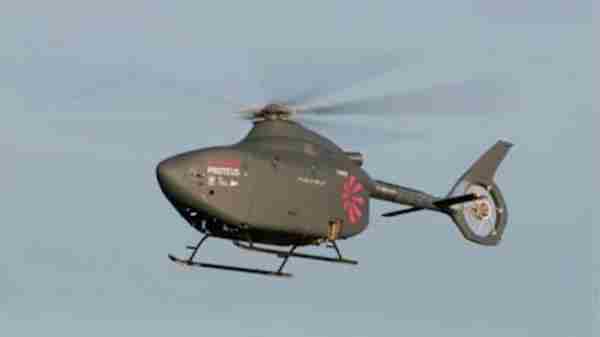
Britain’s Royal Navy has successfully tested its first full-sized autonomous helicopter, Proteus. The drone aircraft is designed to track submarines, patrol seas, and carry out dangerous missions without human pilots, as defence spending rises across Europe due to growing security concerns in the North Atlantic.

Royal Navy Tests Autonomous Helicopter

Britain’s Royal Navy has announced that its first full-sized autonomous helicopter has completed its maiden flight. The aircraft, known as Proteus, successfully carried out a short test flight on Friday.

Proteus is designed to operate without a crew onboard and can be used in high-risk missions, including tracking submarines and monitoring activity at sea.

ALSO READ U.S. Suspends Immigrant Visa Processing for 75 Countries

Rising Security Concerns in the North Atlantic

The development comes amid increased military tension in Europe following Russia’s full-scale invasion of Ukraine in February 2022. Since then, European governments have raised defence spending and planned to expand their armed forces.

The United States has also shown interest in Greenland as part of efforts to monitor waters used by Russian submarines and vessels around Greenland, Iceland, and Great Britain. Russia has rejected claims that it poses a threat to the region, calling such concerns a myth.

Designed for Modern Naval Warfare

Proteus was developed under a £60 million ($80.46 million) programme and is seen as a key tool for defending Britain and NATO allies against what the Navy described as “evolving threats.”

The helicopter was designed and built by Leonardo, a defence and aerospace company. It uses advanced software and sensors to analyse its environment and make decisions independently.

According to the Royal Navy, Proteus will be used for anti-submarine warfare, sea patrols, and tracking underwater vessels.

Leonardo Helicopters UK managing director Nigel Colman said the aircraft marks a major step forward in maritime aviation, adding that it can carry out “dull, dirty and dangerous” missions without putting human operators at risk.

Source: Reuters
Hot this week

Changa Fuel: Kenyan Platform Wants to Make Shared Travel Cheaper and Safer

A Kenyan technology company is seeking to change how...

Could Nairobi Become Africa’s Most Photographed City?

Nairobi's streets are becoming open-air photography studios. As county authorities move to recognise street photographers, some welcome the change while others fear growing competition could threaten their livelihoods. Could Nairobi become Africa's most photographed city?

Could Ebola Bring Back Lockdowns? How Nairobi Commuters Should Prepare

Kenya’s Ebola cases have reached seven. Here are the symptoms to know, how to protect yourself on public transport, and why commuters should plan quietly for the possibility of movement restrictions.

Why You Must Get Out of Your Car on the Likoni Ferry: 5 Reasons That Might Surprise You

Passengers crossing the Likoni Channel are required to leave their vehicles, but why? From the danger of sinking cars to insurance complications and emergency evacuations, here are five reasons behind this important ferry safety rule. Copy

Delta’s Premium Seats Now Out-Earn Economy. Kenya Airways Has 30 Per Dreamliner.

Delta Air Lines is betting on premium passengers with 101 premium seats on its new Airbus A350-1000. Kenya Airways operates just 30 business-class seats on each Dreamliner. Could the American airline's strategy offer lessons for Kenya's national carrier? Copy

Topics

Changa Fuel: Kenyan Platform Wants to Make Shared Travel Cheaper and Safer

A Kenyan technology company is seeking to change how...

Could Nairobi Become Africa’s Most Photographed City?

Nairobi's streets are becoming open-air photography studios. As county authorities move to recognise street photographers, some welcome the change while others fear growing competition could threaten their livelihoods. Could Nairobi become Africa's most photographed city?

Could Ebola Bring Back Lockdowns? How Nairobi Commuters Should Prepare

Kenya’s Ebola cases have reached seven. Here are the symptoms to know, how to protect yourself on public transport, and why commuters should plan quietly for the possibility of movement restrictions.

Why You Must Get Out of Your Car on the Likoni Ferry: 5 Reasons That Might Surprise You

Passengers crossing the Likoni Channel are required to leave their vehicles, but why? From the danger of sinking cars to insurance complications and emergency evacuations, here are five reasons behind this important ferry safety rule. Copy

Delta’s Premium Seats Now Out-Earn Economy. Kenya Airways Has 30 Per Dreamliner.

Delta Air Lines is betting on premium passengers with 101 premium seats on its new Airbus A350-1000. Kenya Airways operates just 30 business-class seats on each Dreamliner. Could the American airline's strategy offer lessons for Kenya's national carrier? Copy

Government Raises Fuel Prices, Matatus Raise Fares — And Kenyans Are Expected to Pay for Everyone’s Failures

The government has increased fuel prices, and matatu owners now want fares raised by 10%. But who is protecting commuters? Metros Kenya examines the role of the government, EPRA, the Ministry of Transport and matatu operators in Kenya's growing transport costs.

You Could Be Fined or Even Jailed on Kenya’s SGR for These 5 Surprising Things — Number 3 Might Shock You

Did you know that certain actions aboard Kenya's Madaraka Express could attract fines or even imprisonment? Discover five surprising SGR passenger rules, from ticket transfers and First Class seating to prohibited items and emergency equipment.

Bolt Launches Bolt Plus in Kenya: What KSh 280 Monthly Subscription Means for Passengers

Bolt has launched Bolt Plus in Kenya, offering up to 10% ride cashback, priority driver matching and free deliveries for KSh 280 monthly. Here is what passengers should know.

Related Articles

Popular Categories

spot_imgspot_img