
NAIROBI, Kenya — Nairobi’s commuter railway provides an alternative public transport network for passengers travelling between the Central Business District and residential, industrial and satellite-town destinations across the wider metropolitan area.
Centred on Nairobi Central Railway Station, the network connects commuters with destinations including Ruiru, Embakasi Village, Syokimau and the southern corridor towards Mlolongo, Athi River and Lukenya, while western railway services provide connections towards Dagoretti, Kikuyu and Limuru.
For passengers, the railway can be particularly useful during peak periods when major roads such as Thika Road, Mombasa Road, Jogoo Road and Waiyaki Way experience congestion.
Metros Kenya has developed individual railway route guides covering the major lines. This page brings those routes together as the main Nairobi Commuter Rail guide, allowing commuters to move from the network overview to detailed information about individual train routes, stations and road connections.
Passengers looking beyond Nairobi can also use the Kenya Train Routes, SGR and Commuter Rail Guide for the wider national passenger railway network.
Nairobi Commuter Rail Routes
The Nairobi commuter railway should be understood as a network of corridors radiating from Nairobi Central Railway Station rather than a single train route.
Individual services may have different stopping patterns and operating schedules, so passengers should always confirm the destination and stops before boarding.
Nairobi Central to Ruiru Commuter Train
The Nairobi Central to Ruiru Commuter Train provides a railway alternative for commuters travelling between the CBD and the heavily populated northeastern side of Nairobi.
The general station sequence is:
Nairobi Central → Makadara → Mutindwa → Dandora → Mwiki → Githurai → Kahawa West → Kenyatta University → Ruiru
The route is particularly important because it parallels parts of the heavily travelled Thika Road metropolitan corridor.
Passengers can use intermediate stations to reach Eastlands and northern Nairobi neighbourhoods, while Ruiru provides connections with matatus travelling farther into Kiambu County.
The Metros Ruiru guide also identifies matatu connections at stations such as Mutindwa, Dandora, Mwiki, Githurai and Ruiru.
Nairobi Central to Embakasi Village Commuter Train
Eastlands commuters can use the Nairobi Central to Embakasi Village Commuter Train.
The route generally follows:
Nairobi Central → Makadara → Donholm → Pipeline → Embakasi Village
This makes the railway particularly relevant to passengers travelling between Nairobi CBD and the densely populated eastern side of the city.
Donholm and Pipeline also provide access to extensive matatu networks serving neighbouring estates such as Umoja, Fedha and other parts of Embakasi.
The Embakasi railway corridor could eventually become even more important because there are plans to extend passenger rail farther east.
Metros has a separate guide to the proposed Embakasi Village–Utawala–Ruai Commuter Railway Extension. The approximately 12-kilometre extension is proposed rather than an operational passenger service and should not be confused with the existing Embakasi Village line.
Nairobi Central to Syokimau Commuter Train
The southern corridor is served by the Nairobi Central to Syokimau Commuter Train.
Its principal route is:
Nairobi Central → Makadara → Imara Daima → Syokimau
This provides an alternative to road travel along the Mombasa Road side of Nairobi.
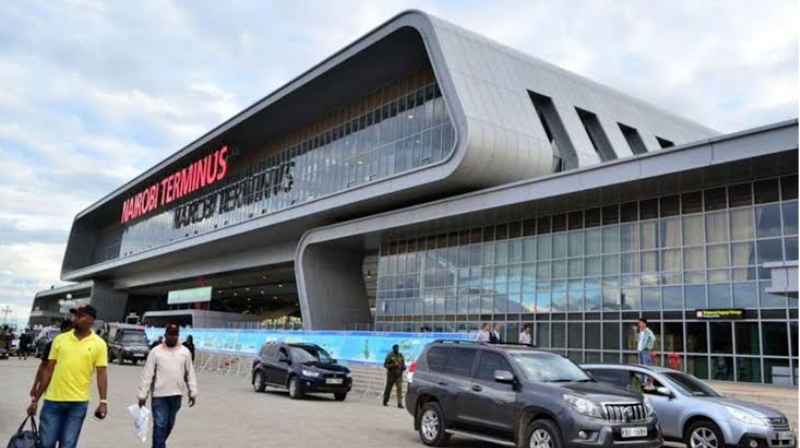
Syokimau is particularly important within Nairobi’s railway system because of its proximity to Nairobi Terminus, the city’s principal SGR station.
Nairobi Central to Nairobi SGR Terminus Link Train
Passengers travelling on the Madaraka Express should distinguish between Nairobi Central Railway Station and Nairobi Terminus.
They are not the same station.
Nairobi Central is located beside the CBD, while Nairobi Terminus is situated in Syokimau.
Kenya Railways provides connecting services between the two, and Metros has developed a separate Nairobi Central Railway Station to Nairobi SGR Terminus Link Train Guide explaining how the connection works.
The service generally follows:
Nairobi Central → southern Nairobi railway corridor → Nairobi Terminus, Syokimau
Its primary purpose is to connect passengers travelling between Nairobi CBD and Madaraka Express services.
Passengers using the link train should check which SGR departure it connects with and allow sufficient time for the transfer.
For the wider Standard Gauge Railway passenger network, see the Madaraka Express SGR Passenger Routes and Station Guide.
Nairobi Central to Lukenya Commuter Train
The southern railway corridor extends beyond Syokimau towards Machakos County.
The Nairobi Central to Lukenya Commuter Train Route Guide covers the service towards Mlolongo, Athi River and Lukenya.
The general direction is:
Nairobi Central → Makadara → Imara Daima → Mlolongo → Athi River → Lukenya
This corridor is important because it provides a rail alternative to travelling entirely by road along Mombasa Road.
Passengers alighting at Mlolongo or Athi River can connect with road-based public transport for surrounding residential and industrial areas.
For example, Metros’ Route 110 Nairobi–Mlolongo–Athi River–Kitengela guide covers one of the principal matatu connections along the same corridor.
Nairobi’s Western Commuter Rail Corridor
The western railway corridor provides connections from Nairobi towards Kibera, Dagoretti, Kikuyu and Limuru.
Metros’ main railway database identifies the Nairobi–Limuru commuter corridor as:
Nairobi Central → Kibera → Satellite → Dagoretti → Kikuyu → Limuru
Passengers travelling only as far as Kikuyu can use services operating along this western corridor.
This railway alignment provides an alternative to road journeys through western Nairobi and can connect passengers with matatus serving Dagoretti, Kikuyu, Uthiru and surrounding communities.
Nairobi Commuter Rail Network at a Glance
| Railway corridor | Main areas served | Metros route guide |
|---|---|---|
| Ruiru | Dandora, Mwiki, Githurai, Kahawa West, KU, Ruiru | Nairobi–Ruiru Train |
| Embakasi Village | Makadara, Donholm, Pipeline, Embakasi | Nairobi–Embakasi Train |
| Syokimau | Makadara, Imara Daima, Syokimau | Nairobi–Syokimau Train |
| SGR Terminus | Nairobi CBD–Syokimau SGR connection | CBD–SGR Link Train |
| Lukenya | Imara Daima, Mlolongo, Athi River, Lukenya | Nairobi–Lukenya Train |
| Western corridor | Kibera, Dagoretti, Kikuyu, Limuru | Kenya Rail Network Guide |
Nairobi Commuter Train Timetable
Unlike matatus, Nairobi commuter trains operate according to scheduled departure times.
This means commuters need to plan their journeys differently.
A passenger who misses a matatu may wait for the next vehicle, but missing a commuter train can mean waiting considerably longer or switching to road transport.
For that reason, passengers should confirm the current timetable before travelling, particularly for early-morning services, evening return trains and connections with the Madaraka Express.
Train departure times and stopping patterns can change, so this category guide should not become dependent on a large static timetable that may quickly become outdated.
Instead, Metros’ individual route guides can carry route-specific schedule information, while passengers should confirm the latest operational timetable with Kenya Railways before travelling.
Nairobi Commuter Rail Fares
Commuter rail is designed as a relatively affordable form of mass public transport, but the fare depends on the destination and service.
Passengers should check the applicable fare before boarding because charges can be revised.
This is particularly important when distinguishing between:
ordinary Nairobi commuter services,
DMU services,
SGR link services,
and
Madaraka Express journeys.
The SGR is a separate passenger railway service with its own ticketing and fare structure.
For passengers travelling beyond Nairobi, the Metros Madaraka Express SGR Passenger Routes and Station Guide explains the broader passenger network between Mombasa, Nairobi and Suswa.
Connecting From Commuter Rail to Matatus
One of the most useful ways of understanding Nairobi commuter rail is to consider it together with the matatu network.
The train does not necessarily have to take a passenger directly to the final destination.
Instead, a journey can work like this:
Home → matatu → railway station → commuter train → connecting matatu → destination
For example, a passenger arriving at Githurai can connect with matatus operating along Thika Road.
At Ruiru, passengers can connect with services towards other parts of Ruiru and Kiambu County.
At Dandora, passengers have access to Eastlands matatu services.
At Embakasi, commuters can connect towards Pipeline, Fedha, Utawala and surrounding areas.
At Athi River, passengers can connect with matatus towards Kitengela and other neighbouring areas.
This relationship between rail and road transport is why the commuter railway should form part of the wider Metros public transport database rather than being treated as a completely separate transport system.
Nairobi’s Future Commuter Railway Network
Not every railway line appearing in Nairobi transport plans is currently available to passengers.
This distinction is important.
For example, the Riruta–Ngong Commuter Railway Project is under development and is not currently an operational passenger railway.
The planned line would run:
Riruta → Karen → Bulbul → Ngong
Metros’ project guide records the planned line at approximately 12.5 kilometres, with future expansion potentially extending towards Kiserian and Ongata Rongai.
Likewise, the proposed Embakasi Village–Utawala–Ruai railway extension would extend the eastern commuter network beyond Embakasi Village, but regular passenger services are not yet available on that extension.
These future projects should therefore be presented separately from the operational commuter network.
Nairobi Commuter Rail and the SGR Network
Nairobi is also the principal interchange between the commuter railway and Kenya’s Standard Gauge Railway passenger network.
Passengers travelling to the Coast can connect with the Nairobi to Mombasa Express Train from Nairobi Terminus.
The Express service operates:
Nairobi Terminus → Voi → Mombasa Terminus
while the Inter-County service makes additional stops along the Nairobi–Mombasa corridor.
This gives Nairobi passengers a transport chain that can potentially run:
Matatu → Nairobi Central → link train → Nairobi Terminus → SGR → destination
It is an important example of how different modes of Kenyan public transport can work together.
Why Nairobi Commuter Rail Matters
Nairobi remains heavily dependent on road transport.
Matatus, buses, boda bodas, taxis, private vehicles and commercial traffic all compete for road capacity.
Commuter rail offers something structurally different: the ability to move passengers along established railway corridors without adding another vehicle to the road.
It can therefore complement matatus rather than simply compete with them.
A passenger from Ruiru, for example, may use the train for the long section into Nairobi and a matatu for the final few kilometres.
A passenger from Embakasi can do the same.
The value of rail consequently depends not only on trains but also on stations, schedules, fares and good last-mile public transport connections.
Nairobi Commuter Rail Guides on Metros Kenya
This page should serve as the main category article and navigation hub for Metros’ Nairobi commuter railway coverage.
Passengers can continue directly to:
Nairobi Central → Ruiru Commuter Train
Nairobi Central → Embakasi Village Commuter Train
Nairobi Central → Syokimau Commuter Train
Nairobi Central → Lukenya Commuter Train
Nairobi Central → Nairobi SGR Terminus Link Train
Riruta → Ngong Commuter Railway Project — developing, not yet an operational passenger route.
Embakasi Village → Utawala → Ruai Railway Extension — proposed extension.
Madaraka Express SGR Passenger Routes
Kenya Train Routes, SGR and Commuter Rail — the main Metros national railway database.
This structure gives the article a clear SEO purpose: someone searching for Nairobi commuter rail, Nairobi train routes, Nairobi commuter train stations, Nairobi train timetable, commuter train fares or Nairobi railway routes can enter through this hub and then move to the detailed route relevant to their journey.
For Metros, it also connects the railway database with the existing matatu and wider public transport network, building a more complete picture of how commuters actually move around Nairobi.