


NAIROBI, Kenya — Kenya’s aviation industry spends enormous resources training people to operate aircraft safely, maintain complex systems, manage air traffic and respond when something goes wrong. But there is another part of aviation safety that receives far less attention: the mental wellbeing of the people doing those jobs.
For Captain Ivana Alvares-Marshall, Governor of the African Section of The Ninety-Nines International Organisation of Women Pilots, that conversation has been developing for years.
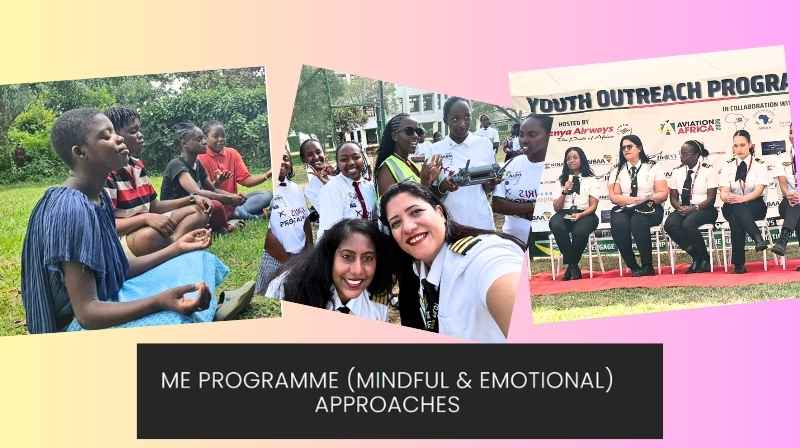
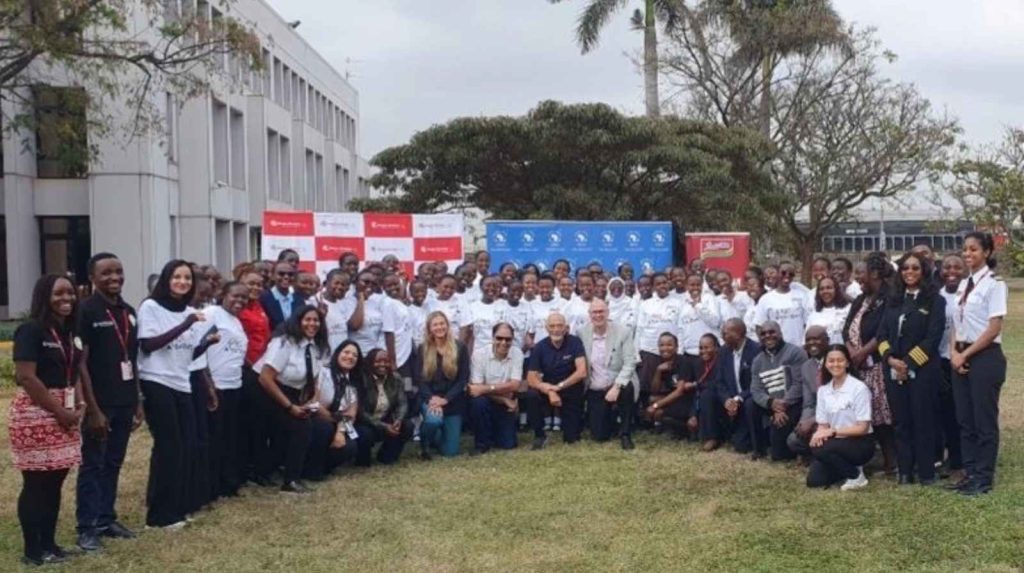
Last month, the African Section 99s brought that work directly to Nairobi when it hosted hundreds of young women at Kenya Airways’ Pride Centre as part of the Youth Aviation Outreach Programme that opened Aviation Week ahead of the Aviation AFRICA Summit and Exhibition.
The September 7 programme exposed students to careers ranging from flying and engineering to maintenance, air traffic control, safety management and flight operations. It was designed to show young women that aviation extends far beyond the cockpit.
But as Kenya works to bring a new generation into aviation, Alvares-Marshall believes the industry must also pay closer attention to something that is much harder to see.
The person behind the uniform.
When pressure follows people into the cockpit
Pilots and other aviation professionals work in an environment built around standards, discipline and human performance.
They are also human beings dealing with financial pressures, relationships, bereavement, professional setbacks, fatigue and the fear that admitting psychological difficulty could damage the careers they have spent years building.
Research suggests that concern cannot simply be dismissed.
A 2016 study published in Environmental Health, based on an anonymous survey of commercial airline pilots, found that 233 of 1,848 respondents — 12.6% — met the PHQ-9 threshold associated with clinical levels of depression. Seventy-five respondents, or 4.1%, reported thoughts of being better off dead or self-harm during the previous two weeks.
Those figures should not be interpreted to mean that 12.6% of all airline pilots are clinically depressed. The researchers themselves cautioned that the study had limited generalisability because participants were not randomly sampled, participation was incomplete and the anonymous design made it impossible to establish an exact reference population.
But another finding is particularly relevant to aviation.
The researchers discussed barriers that may prevent aviation professionals from seeking help, including long working hours, stigma, social expectations around resilience and independence, distrust of treatment and the belief that disclosing a mental-health problem could harm a person’s career.
That is the silence Alvares-Marshall wants aviation to confront.
Three stories that changed the conversation
According to material published by the African Section 99s, Alvares-Marshall traces her concern about mental wellbeing in aviation to experiences stretching back more than two decades.
While she was a student pilot in South Africa in 1999, she learned about the Air Botswana tragedy in which a pilot deliberately crashed an aircraft into other aircraft belonging to the airline.
The African Section also points to the 2019 death by suicide of a young flight-school student from Malawi following repeated examination failures amid shame and financial pressure, and another fatal aircraft incident in Botswana in 2020 involving a pilot who had experienced serious personal difficulties.
For Alvares-Marshall, the underlying lesson was that aviation cannot think about human performance only in terms of technical proficiency.
As the African Section puts it:
“The silence itself has become a safety risk.”
Her advocacy was already visible during the COVID-19 crisis. In June 2020, Alvares-Marshall appeared on the AviaDev Insight Africa podcast for a discussion titled “We need to talk about mental health.”
In October that year, she presented “Mindfulness & Well-Being in African Aviation” at AviAssist Foundation’s Safety in African Aviation Conference.
That work eventually developed further.
The ME Programme
In May 2025, the African Section introduced the Mindful and Emotional Approaches Programme — ME Programme, describing it as a neuroscience-backed initiative addressing emotional regulation, unresolved trauma and psychological resilience.
The three-day immersive programme is designed for schools, corporations and aviation organisations, with participants introduced to techniques intended to help them recognise and manage emotional triggers and understand their responses to stress.
Its aviation audience includes student and trainee pilots, licensed aviation professionals, flight schools, training organisations, airlines and aviation authorities.
That potentially gives the programme particular relevance in Kenya.
Kenya has one of the continent’s significant aviation ecosystems, encompassing airlines, airports, flight-training organisations, maintenance operations, regulators, ground handlers and thousands of people working behind the scenes.
Aviation professionals may spend years learning how to recognise an unstable approach, technical malfunction or operational hazard.
The ME Programme poses another question: how well are they trained to recognise what is happening to themselves?
Stress does not necessarily begin at work. A pilot, engineer, dispatcher, cabin crew member, air traffic controller or trainee can arrive at work carrying pressures from home, finances, relationships, examinations or career uncertainty.
The programme’s premise is not that everyone experiencing pressure is unsafe. Rather, it seeks to give people tools for emotional awareness, self-regulation and resilience before difficulties become overwhelming.
Nairobi’s girls are tomorrow’s aviation professionals
That makes last month’s Nairobi youth outreach particularly relevant.
More than simply introducing young women to aircraft and aviation careers, the Pride Centre event was about developing Africa’s future aviation workforce.
Students interacted with pilots, engineers and other professionals and were exposed to aircraft, maintenance facilities, simulators and drone technology. The African Section says the initiative was intended to broaden aspirations and demonstrate the variety of professions available within aviation.
Vice Governor Captain Dina Ahmed Dawod also delivered a message that widened the possibilities even further.
“You can actually even own an airline. You don’t have to be just a pilot.”
As Metros Kenya reported from the event, speakers repeatedly emphasised careers beyond the familiar pilot and cabin-crew roles, including engineering, air traffic control, maintenance, safety management and flight operations.
There is an important connection between that outreach and the mental-wellbeing programme.
If Kenya is encouraging young people to enter aviation, preparing them for the industry should arguably involve more than explaining how to obtain licences and qualifications.
Training can be expensive. Examinations can be demanding. Careers do not always progress according to plan. Young professionals may encounter financial pressure, competition, fatigue, disappointment and uncertainty before they establish themselves.
Technical resilience and emotional resilience therefore need not be treated as competing priorities.
Beyond aviation
The ME Programme has also moved outside the aviation environment.
African Section 99s says it has taken the approach to children facing difficult circumstances, including Kondanani Children’s Village, where children affected by abandonment and early-life adversity were introduced to emotional-awareness, self-regulation and resilience tools.
At the Jacaranda School for Orphans, the programme worked with children who had experienced the loss of parents to HIV/AIDS, using age-appropriate approaches intended to help with emotional regulation, stress, confidence and resilience.
That community work broadens what began as an aviation conversation.
The common thread is an attempt to give people practical ways of understanding emotional pressure before it becomes unmanageable.
Companies can help take the programme further
Alvares-Marshall told Metros Kenya that companies interested in supporting the initiative are normally sent a presentation explaining the programme and its outreach.
Sponsorship is then structured according to the scale of impact an organisation wants to support, including the number of students it wants to reach or the number of schools it wants the programme to cover.
That creates an avenue for Kenyan airlines, aviation businesses and other companies to participate not only through financial sponsorship but by determining how widely they want the outreach to extend.
The African Section has said that its broader ambition is to make mental-health support a normal part of aviation rather than an exception.
For Kenya, the conversation comes at an appropriate moment.
Last month’s Nairobi outreach asked young women to imagine themselves as the pilots, engineers, executives, safety professionals and aviation entrepreneurs of tomorrow.
The ME Programme adds another proposition to that message.
Building the next generation of Kenyan aviation professionals should not only be about making them technically capable of doing the job. It should also mean giving them the tools to withstand the pressures that can come with it.
Because aviation safety ultimately depends not only on the condition of the aircraft.
It also depends on the wellbeing of the human being behind the controls.