

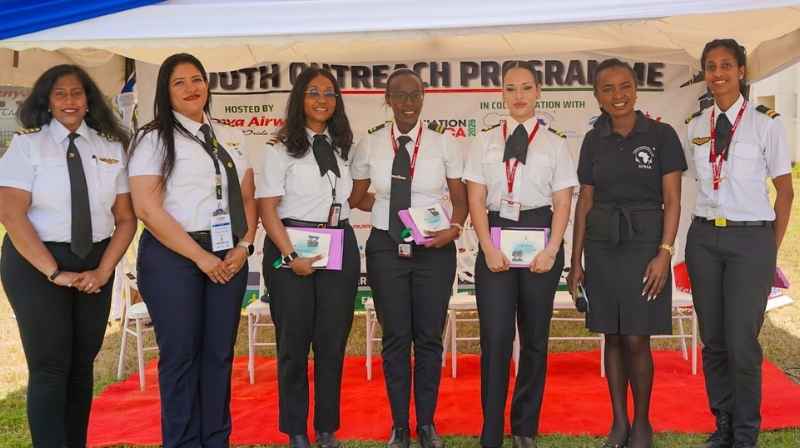

NAIROBI, Kenya, Sept 7 — Nairobi’s aviation week has opened with a strong message to young women considering careers in the industry: aviation is much bigger than becoming a pilot or cabin crew member.
That message dominated the Youth Aviation Outreach Programme held at Kenya Airways’ Pride Centre on Monday, where hundreds of young women came face-to-face with aviation professionals, industry organisations and businesses to learn about opportunities across the sector.
The programme, delivered by the African Section of the Ninety-Nines International Organisation of Women Pilots in collaboration with Aviation AFRICA, Kenya Airways, AFRAA, AATSA International and Wings For Women, was designed to expose young women to the breadth of careers available in aviation. African99s
ALSO READ: Nairobi Underground Metro Moves Closer to Implementation After Government Backing
For an industry often viewed from the outside through two highly visible professions — pilots and cabin crew — speakers sought to broaden that picture.
Aircraft engineering, maintenance, air traffic control, safety management, flight operations, airport management, regulation and other specialist fields were among the areas highlighted during the programme. African99s
From a childhood dream to the cockpit
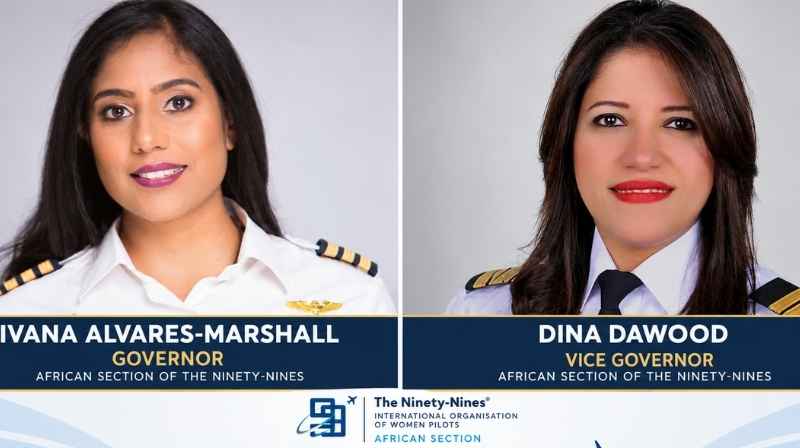
African Section 99s Vice Governor Dina Ahmed Dawod used her own aviation journey to demonstrate both the sacrifices and possibilities that can lie behind a career in the industry.
Dawod told participants that her ambition to fly began at a young age, but financing the dream became one of the obstacles she had to overcome.
She recalled how her sister eventually sold her apartment to help finance her aviation training — a sacrifice that helped turn an early ambition into a professional career.
Dawod is now a first officer flying charter operations, including services to Europe, and told the gathering that she is progressing towards becoming a captain.

But her message went beyond becoming a pilot.
“You can actually even own an airline. You don’t have to be just a pilot.”
Her remarks reflected a theme that ran through the event: young people should not define aviation solely by the jobs they can immediately see.
The industry also needs entrepreneurs, engineers, technicians, safety specialists, managers, regulators, technology professionals and other specialists working behind the scenes to keep aircraft and aviation businesses operating.
Information gap remains a challenge
The discussions also exposed another challenge facing aspiring aviators — access to information.
Young people may develop an interest in aircraft without necessarily knowing the different educational and professional pathways that can eventually place them inside the aviation ecosystem.
That makes career information, mentorship and interaction with people already working in aviation increasingly important.

It is also where the media has a larger role to play.
Metros Kenya advocated for greater involvement of mainstream and digital media in bringing aviation closer to the ordinary person, particularly at a time when the industry is trying to attract young people and broaden understanding of the opportunities available.
Much of the detailed conversation around aviation careers, technologies, businesses and industry developments has traditionally remained within specialist aviation publications, in-flight magazines and industry forums. These platforms remain important, but their audiences are often people who already have some connection to aviation.
Bringing more of those stories into mainstream media could expose students, parents, entrepreneurs, investors and people considering career changes to an industry they may otherwise encounter only as passengers.
That also means telling the stories of the people who are seldom illuminated when aviation makes the news — aircraft engineers and technicians, air traffic controllers, dispatchers, safety specialists, airport operations professionals, regulators, aviation entrepreneurs and the growing number of people working with drones, data and other emerging technologies.
The argument complements the message coming from the African Section 99s outreach: encouraging young women to enter aviation must be accompanied by giving them enough information to understand what aviation actually offers.
For Metros Kenya, taking aviation stories beyond specialist and in-flight publications and placing them before mainstream audiences can help close that information gap. Before a young person can aspire to a particular aviation career, they first need to know that career exists.
One by one, the panellists drew from their areas of expertise and personal experiences, explaining their routes into the industry and the persistence required to establish aviation careers.
The message was particularly relevant to students attending from Nairobi schools, including Buruburu Girls, as they considered possible careers after school.
The African Section 99s says its youth outreach programmes deliberately emphasise that aviation extends beyond flying and include exposure to engineering, air traffic control, safety management, maintenance and flight operations. African99s
Wings For Women founder tells of starting at 14
Another story brought the message even closer to the young audience.
Wings For Women founder Mahek Shah recounted how her own fascination with aviation began at a young age and how encouragement from her parents helped her pursue that interest.
She started Wings For Women at just 14, turning an early fascination with aviation into an initiative now involved in helping other young women discover opportunities within the sector.
The Kenyan organisation played a role in identifying and engaging students for the Nairobi outreach programme and is also involved in selecting participants for exposure to the wider Aviation AFRICA gathering. African99s
For the young women listening, the significance was difficult to miss: the person speaking to them about creating opportunities in aviation had herself started pursuing the idea while still close to their age.
International aviation organisations eye East Africa
The event also brought together organisations representing different parts of the aviation ecosystem.
Participants and supporters included organisations working in areas ranging from aviation leadership and training to consultancy, business aviation and industry development.
Among them were AATSA International and other aviation organisations seeking to deepen their engagement in East Africa, including US-based Edward Senior Aviation Advisory (ESAA).
Their participation added a commercial and professional dimension to the programme, allowing students to see aviation not simply as an airline industry but as a much wider ecosystem of businesses and specialist services.
The young participants were subsequently taken beyond the panel discussions for practical exposure, including an aircraft used for training and drone operations.
Such exposure is central to the outreach programme, which includes aircraft and maintenance visits, simulators, drone demonstrations and interaction with aviation professionals. African99s
Nairobi’s aviation week now shifts to Sarit
Monday’s youth programme effectively sets the stage for a bigger gathering of the aviation industry in Nairobi this week.
Attention now turns to the 10th Aviation AFRICA Summit & Exhibition, scheduled for September 9–10 at the Sarit Expo Centre in Nairobi.
The two-day summit is being hosted by Kenya’s State Department for Aviation and Aerospace Development, Kenya Civil Aviation Authority, Kenya Airports Authority and Kenya Airways. KCAA
Industry discussions are expected to range from airlines and infrastructure to regulation, training, business aviation, finance and emerging technologies such as drones. LinkedIn
For some of the young women who gathered at Pride Centre on Monday, the journey will continue there. The outreach programme provides for selected participants to attend Aviation AFRICA and interact with aviation leaders and organisations from across the continent. African99s
But the message that opened Nairobi’s aviation week was already clear.
Africa needs more young people — and particularly more young women — entering aviation. For that to happen, however, the industry must do more than tell them they can become pilots.
It must show them everything else they can become.