
At 3pm, getting a matatu home can feel easy.
Two hours later, the same stage can look completely different.
A queue has formed. The few matatus arriving are filling almost immediately. Conductors are shouting destinations, passengers are watching every vehicle approaching the stage and someone who normally pays one fare may suddenly be considering another route just to get home.
It raises a familiar Nairobi commuter question:
Where did all the matatus go?
They haven’t necessarily disappeared.
Rush hour changes how Nairobi’s public transport system works. Traffic slows vehicles down, passenger demand rises sharply and matatus that would normally have completed several trips can find themselves stuck somewhere along the route.
The result is something thousands of commuters experience almost every evening: plenty of passengers waiting at one end of a route while the vehicles they need are still trying to get back.
One traffic jam can remove a matatu from the stage for hours
Think about a matatu that normally completes a trip from Nairobi CBD to a residential area and returns relatively quickly during quieter hours.
That vehicle can make several trips.
Now put the same matatu into evening traffic.
It leaves the city full of passengers but encounters congestion along the way. It takes longer to reach its destination, passengers take time to alight, another group boards for the return journey and the vehicle then encounters traffic heading back.
The matatu hasn’t stopped operating.
But from the perspective of someone waiting at the stage, it has effectively disappeared.
Multiply that delay across dozens of vehicles serving the same route and a queue can grow surprisingly quickly.
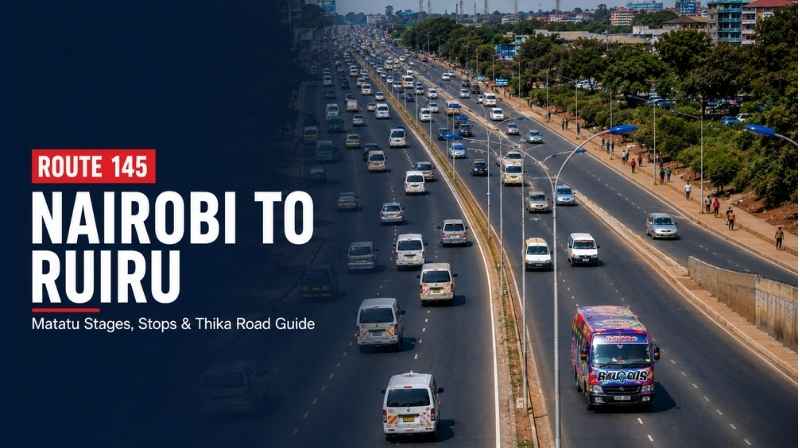
This is particularly important on Nairobi’s major public transport corridors, many of which carry large numbers of commuters between the CBD and residential areas.
Passengers can identify services operating across these corridors using the Metros Kenya Nairobi Matatu Routes and Numbers guide.
Rush hour doesn’t happen gradually
Another problem is that Nairobi’s evening passenger demand is heavily concentrated.
Offices close. Shops change shifts. Students leave institutions. Government workers head home. Businesses wind down.
Thousands of people suddenly want transport within roughly the same period.
Public transport therefore has to absorb a sharp increase in passengers just as the roads themselves are becoming more congested.
That combination matters.
More people need matatus at precisely the moment matatus take longer to complete each trip.
This is one reason a stage that looked almost empty earlier in the afternoon can have a long queue by early evening.
Sometimes the matatus are simply on the wrong side
There is another phenomenon commuters may recognise.
You are standing in a long queue waiting for a matatu heading home.
Across the road, several vehicles are travelling in the opposite direction.
It can be frustrating, but it illustrates an important characteristic of route-based public transport.
Vehicles must complete one journey before they can serve passengers waiting for the next one.
If traffic causes vehicles to bunch together on one side of a route, the opposite end can temporarily experience a shortage.
Eventually several matatus may arrive almost together.
That is why commuters can sometimes wait a long time and then suddenly see three or four vehicles serving the same route appear within minutes.
The matatu stage itself becomes part of the problem
Rush-hour pressure is not confined to the road.
Stages and termini also have limited space.
Vehicles need somewhere to enter, pick up passengers and leave. Passengers need room to queue, while other matatus may be loading for neighbouring destinations at the same location.
When several vehicles arrive simultaneously, movement around a busy stage can become difficult.
Nairobi’s public transport network relies on numerous termini and roadside stages spread across the CBD and surrounding neighbourhoods.
The Metros Kenya Nairobi Bus Stations and Matatu Stages guide helps commuters identify some of the major boarding points and the destinations they serve.
Understanding the correct stage becomes particularly important during rush hour. Walking to the wrong boarding point and then trying to cross the CBD to another one can add considerably more time to an already difficult journey.
SACCO operations matter too
Not every Nairobi matatu operates independently.
Many vehicles operate under SACCOs and companies that organise particular routes and manage different aspects of their operations.
How vehicles are dispatched, how frequently they operate and how effectively a fleet is managed can influence what passengers experience at the stage.
A route may have many registered vehicles, for example, but that does not automatically mean every vehicle is available at exactly the moment passengers need it.
Some could be stuck in traffic. Others may be undergoing repairs or maintenance. Some may already be carrying passengers elsewhere along the route.
For commuters trying to understand which operators serve their destination, Metros maintains a Nairobi Matatu SACCOs, Routes and Destinations directory.
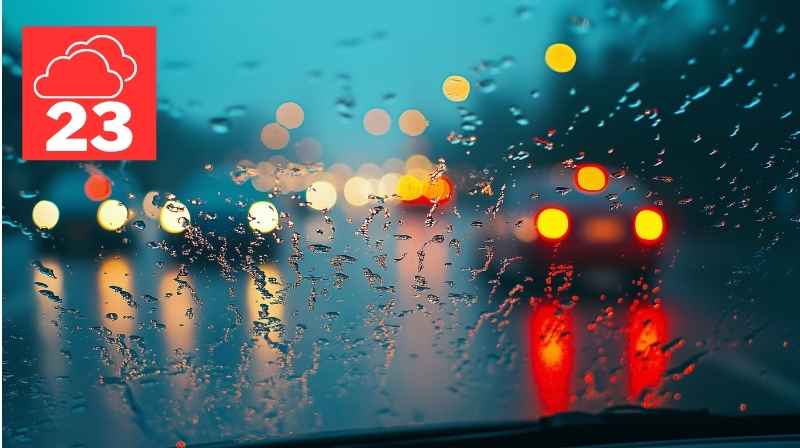
Then it starts raining
Now add Nairobi rain to the equation.
Traffic slows further.
People who might normally walk short distances begin looking for transport. Boda boda trips become less attractive to some passengers. More people crowd into sheltered stages.
Meanwhile, matatus already on the road can take even longer to return.
The combination can quickly turn an ordinary evening commute into a difficult one.
This is why checking the latest Nairobi weather forecast can be useful before leaving work or starting an evening journey.
If rain is expected around rush hour, leaving slightly earlier — where possible — can sometimes make a significant difference.
And then there is the fare question
This is where another familiar Nairobi experience enters the picture.
Passenger demand is high.
Vehicles are scarce.
The queue is long.
And suddenly the fare you normally pay is no longer the fare being called at the stage.
Fare changes during peak periods remain one of the most noticeable features of Nairobi’s largely market-driven matatu system.
Different routes and operators handle fares differently, and prices can be influenced by factors including passenger demand, traffic conditions, time of day and operating costs.
For commuters, however, the experience is much simpler:
The moment you need a matatu most can also be the moment the journey becomes more expensive.
That deserves an article of its own.
Knowing another route can save your evening
Regular commuters often develop something newcomers to Nairobi may not have: alternatives.
They know another matatu number.
They know another stage.
They know where to change vehicles.
They know that walking a short distance to another boarding point can sometimes be faster than remaining in one enormous queue.
That knowledge becomes particularly valuable when there is an accident, road closure, heavy rain or unusually severe congestion.
It is also one reason Metros is building its Nairobi public transport databases around routes, SACCOs, stages and destinations rather than treating each of those subjects separately.
A commuter does not simply need to know that Route 46 exists.
They need to know where it goes, where to board it, which operators serve the corridor and what alternatives exist when the normal journey is disrupted.
So where did your matatu go?
Probably nowhere unusual.
It may be sitting in traffic several kilometres away.
It may be completing the previous journey.
It may be approaching the other end of the route.
Or it may be one of several vehicles that have become concentrated on the wrong side of the corridor just as hundreds of passengers arrive at your stage.
That is the contradiction at the heart of Nairobi’s rush hour.
Passenger demand reaches its highest point just when congestion reduces the number of trips each matatu can make.
So the next time it is 5:30pm and your matatu appears to have vanished, look at the traffic around you.
There is a good chance your ride home hasn’t disappeared at all.
It is stuck in the same rush hour you are trying to escape.