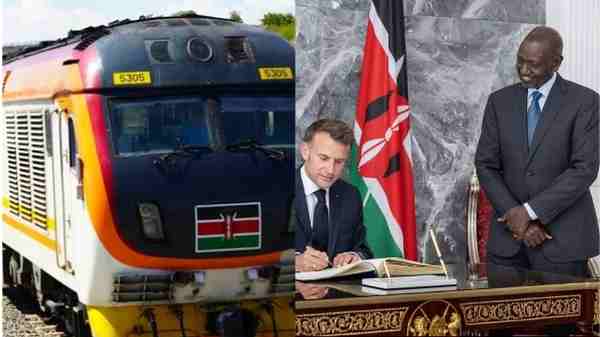

President William Ruto and French President Emmanuel Macron today witnessed the signing of a major agreement aimed at modernizing the Nairobi Central Station to Embakasi Rail Line 5 corridor, a project expected to reshape commuter movement within the capital.
The agreement was signed during high-level bilateral talks held at State House Nairobi as Kenya and France unveiled multiple infrastructure and development partnerships.
What the Rail Project Means for Nairobi
The planned modernization targets the commuter rail link connecting Nairobi Central Station to the Embakasi area, one of the city’s busiest transport and residential corridors.
The route is strategically important because it serves thousands of daily commuters travelling between the CBD, Industrial Area, Embakasi, and surrounding eastern suburbs.
If fully implemented, the project could:
- Reduce pressure on major roads leading into the CBD
- Improve reliability and speed of commuter rail services
- Support Nairobi’s long-term mass transit plans
- Strengthen connections to key transport hubs including the airport corridor
- Encourage more residents to shift from road transport to rail
🚉 Focus on Nairobi’s Growing Transport Crisis
The modernization push comes as Nairobi continues struggling with severe congestion, especially during morning and evening peak hours.
Roads leading to Embakasi, Outer Ring, Jogoo Road, Mombasa Road, and the CBD frequently experience long traffic delays that affect both workers and businesses.
Transport planners have increasingly argued that expanding and modernizing commuter rail infrastructure could provide one of the fastest ways to reduce pressure on Nairobi’s overloaded road network.
🇫🇷 France’s Growing Role in Kenya Infrastructure
France has continued expanding its involvement in Kenya’s infrastructure and urban transport sector, particularly in projects linked to sustainable mobility and urban development.
Today’s agreement signals growing international interest in Nairobi’s transport transformation plans as the city searches for long-term solutions to population growth and daily commuter challenges.
What Nairobi Commuters Will Watch Next
Attention will now shift to:
- Project timelines
- Funding structure
- Construction phases
- Possible station upgrades
- New train capacity and frequency
- Potential service disruptions during works
For many Nairobi residents, the biggest question remains whether the modernization will finally deliver a faster, dependable commuter rail system capable of competing with daily road transport.
Metros will continue tracking updates on the Nairobi Central Station–Embakasi Rail Line modernization project, including commuter impact, timelines, and transport changes expected across the city.