
By Metros Kenya | October 16, 2026
The government has increased fuel prices. Matatu owners have announced a 10% fare increase. And once again, the ordinary Kenyan commuter is expected to pay more without asking questions.
It is becoming a familiar story. The government announces higher fuel prices, transport operators complain, and passengers end up carrying the burden. Nobody seems particularly interested in protecting the person who wakes up at 5am, boards a matatu and struggles to make ends meet.
But this time, the government, the Energy and Petroleum Regulatory Authority (EPRA), the Ministry of Transport and matatu operators all have serious questions to answer.
ALSO READ: Nairobi Matatu Routes: Complete Guide to Routes and Destinations
The Government Cannot Keep Passing Its Problems to Kenyans
The latest fuel price review has increased petrol prices by KSh12.93 per litre, diesel by KSh9.90 and kerosene by KSh28.49.
In Nairobi, diesel now costs KSh227.76 per litre, while petrol costs KSh226.96. The new prices apply from October 15 to November 14, 2026.
The government has blamed rising international fuel costs and disruptions linked to the conflict in the Middle East.
These are genuine problems. Kenya imports its petroleum products, and international events affect what the country pays.
But international problems should not become a permanent excuse for every increase in the cost of living.
What exactly is the government doing to reduce Kenya’s dependence on expensive imported fuel? How much relief are Kenyans getting from the taxes they pay? And why must ordinary households always be the first to suffer?
The government collects taxes and levies on fuel. It also has the responsibility to explain how those charges affect pump prices and what can reasonably be done to protect consumers.
Kenyans deserve answers, not another announcement followed by another round of suffering.
EPRA Must Explain the Numbers, Not Just Announce Them
EPRA is responsible for regulating petroleum prices, but announcing new figures every month is not enough.
The Motorists Association of Kenya has raised questions about how the latest fuel prices were calculated.
One particularly troubling issue is kerosene.
While the reported cost of importing kerosene rose by 9.41%, its pump price increased by approximately 14.89%. Diesel, meanwhile, increased by approximately 4.54% at the pump.
EPRA has explained that narrowing the price difference between kerosene and other fuels can help discourage fuel adulteration.
But why should families who use kerosene for cooking and lighting face higher prices because some people may be illegally mixing fuels?
Shouldn’t the answer be better enforcement against those breaking the law?
EPRA must also clearly explain the taxes, import costs, transport charges and other factors that determine the final price.
Publishing a price list is not the same as making the pricing system easy for ordinary Kenyans to understand.
Where Is the Ministry of Transport When Commuters Need Protection?
The Ministry of Transport should not wait until matatu operators threaten strikes or announce fare increases before engaging the industry.
Its responsibility goes beyond listening to vehicle owners.
Millions of Kenyans depend on public transport to reach work, school, hospitals and markets.
When fares rise, the impact is immediate.
Yet the public rarely sees a clear national plan explaining how the government intends to make everyday commuting more affordable.
Where are the measures to improve public transport efficiency? Where is the progress on reliable mass transit? What is being done to make modern electric buses more affordable for operators?
Matatu owners have also accused the government of failing to honour commitments made during earlier discussions in Mombasa, including promises concerning diesel prices and electric vehicle support.
The Eastleigh Voice
The government should publicly explain which commitments were made, which have been implemented and which remain outstanding.
Commuters should not be caught in the middle of disagreements between transport operators and government officials.
And Now the Matatu Owners Want 10% More? Based on What?
This is where the argument becomes even more troubling.
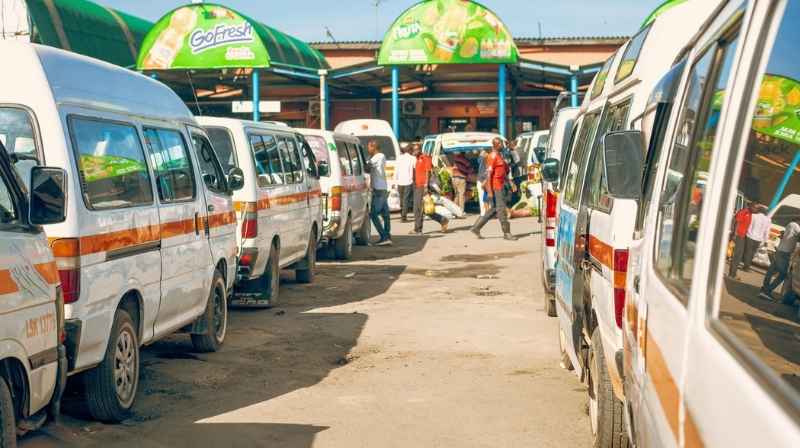
The Matatu Owners Association has directed members to increase fares by 10%, saying operators must remain profitable.
Its president, Albert Karakacha, has argued that operators cannot continue absorbing higher costs.
Fair enough. Matatus are businesses, and businesses need to make money.
But passengers are not walking ATMs.
Diesel prices have increased by approximately 4.54%. Why, then, should passengers face a 10% fare increase?
Fuel is not the only cost of running a matatu, and operators may be facing other financial pressures. But those pressures should be explained rather than used to justify a blanket increase.
Consider a simple example.
A matatu using 30 litres of diesel daily will spend an additional KSh297 on fuel following the latest increase.
If that vehicle carries 200 paying passengers over the day, the additional fuel cost works out to about KSh1.49 per passenger.
Now imagine the same operator increases a KSh100 fare by KSh10.
Across 200 passenger journeys, that produces KSh2,000 in additional revenue.
These are illustrative figures, not the actual accounts of a particular matatu. Passenger numbers, distances and fuel use vary widely.
But the example raises an important question: where is the calculation showing that a 10% fare increase is necessary?
Before demanding more money, matatu owners should explain exactly how much their costs have increased.
When Fuel Prices Fall, Matatu Fares Suddenly Forget How to Come Down
There is something almost magical about matatu fares in Kenya.
When fuel prices increase, operators are quick to announce that passengers must pay more.
But when fuel prices fall, the urgency to adjust fares downwards is often nowhere to be seen.
Suddenly, everyone remembers insurance, tyres, spare parts, loans and maintenance.
These are real business expenses. But they do not disappear when diesel prices rise, and they should not become convenient explanations only when passengers ask for cheaper fares.
If fuel prices are used to justify higher fares, lower fuel prices should also trigger a serious review of those fares.
A fair system must work both ways.
Otherwise, commuters are simply being asked to finance increases while receiving little benefit from reductions.
ALSO READ: Airport Rules in Kenya: Passenger Laws, Security Rules and Traveller Guide
What About the Commuter Who Has No Association to Defend Them?
Matatu owners have associations. Motorists have associations. Fuel companies have industry representatives.
But who speaks for the ordinary passenger?
Who represents the worker travelling from Rongai to Nairobi every morning? Who defends the student taking two matatus to school? Who asks whether a mother travelling to hospital can afford another fare increase?
A commuter paying KSh100 each way currently spends KSh200 daily.
With a 10% increase, that becomes KSh220.
Over 22 working days, the commuter will spend an additional KSh440.
That may not sound like much to people sitting in boardrooms discussing transport costs.
But for a low-income worker, KSh440 matters.
It can buy food, pay part of a household bill or cover other essential expenses.
And for passengers using several matatus daily, the additional cost becomes even greater.
It is time public transport decisions considered the passenger, not just the vehicle owner.
Kenya Must Stop Treating Diesel Matatus as the Only Transport Solution
Perhaps the biggest failure is that Kenya keeps returning to the same argument without seriously changing how people move.
Fuel prices rise. Matatu owners complain. Fares increase. Commuters suffer.
Then everyone waits for the next fuel price review.
How long can this continue?
Kenya should be investing more seriously in modern electric city buses, better public transport systems, reliable schedules and high-capacity vehicles.
Electric buses are already operating on Kenyan roads, showing that public transport does not have to depend entirely on diesel.
Electric vehicles also have costs, including electricity, financing, batteries and charging infrastructure. But they offer an opportunity to reduce dependence on imported petroleum and the repeated shocks that come with it.
The government should make it easier for operators to invest in cleaner buses, rather than leaving the country trapped in the same cycle of fuel increases and fare disputes.
And matatu owners should begin asking how they can modernise their businesses instead of treating fare increases as the first answer to every financial problem.
A public transport system cannot move forward if its only response to rising costs is to charge passengers more.
The Competition Authority and Parliament Should Also Pay Attention
The Competition Authority of Kenya should examine whether fare increases announced collectively by transport associations raise competition concerns.
Individual operators face different costs, passenger numbers and routes. A common percentage announced across an industry deserves scrutiny, particularly where passengers have limited alternatives.
Parliament also has a responsibility to examine fuel taxation, petroleum pricing and the effectiveness of the Government-to-Government fuel import arrangement.
The Motorists Association of Kenya has already demanded an independent audit of that arrangement and greater transparency in how fuel prices are calculated.
These questions should not be ignored.
If the fuel import system is delivering savings, Kenyans deserve to see clear evidence. If it is not, the government should explain what needs to change.
And if matatu operators believe their businesses cannot survive without a 10% fare increase, they should publish the figures supporting that position.
The Passenger Cannot Keep Paying for Everyone
The government has its explanations. EPRA has its calculations. The Ministry of Transport has its responsibilities. Matatu owners have their complaints.
But the ordinary commuter has bills too.
Kenyans should not be expected to accept every increase simply because an authority or association has announced it.
Fuel prices may rise for reasons beyond Kenya’s control. Transport operators may genuinely face higher expenses. Those realities must be acknowledged.
But neither justifies passing unexplained costs directly to passengers.
The government must be more transparent about fuel prices. EPRA must make its calculations understandable. The Ministry of Transport must put commuters at the centre of transport policy. And matatu owners must demonstrate why their proposed fare increases are necessary.
At Metros Kenya, our position is simple: public transport must work for the passenger, not just the people collecting the money.
Until the numbers are clearly explained, the proposed 10% matatu fare increase deserves to be challenged.
Because after the government, the regulators and the matatu owners have all had their say, there is one person who still has to find the money.
The commuter.
Metros Kenya Opinion | This article reflects editorial analysis. The fare and fuel calculations are illustrative and do not represent audited operating costs of individual matatu operators.