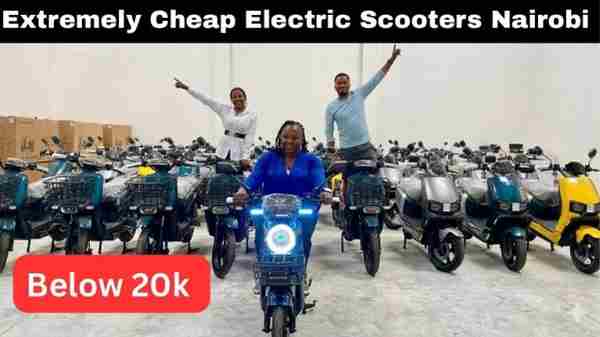

Electric scooter Kenya searches have been rising as more affordable models enter the market. With some scooters selling for as little as KSh 23,500, they cost less than many smartphones and promise commuters a future without fuel costs. Yet despite their attractive prices, electric scooters remain a rare sight on Kenyan roads.
For many people, the idea seems simple. Buy a scooter once, charge it at home for less than KSh 50, avoid expensive matatu fares and save money every day. But in reality, thousands of Kenyans are still choosing motorcycles, matatus and private cars instead.
Our investigation found that the biggest obstacles are not just price. Road conditions, weather, safety concerns, limited public awareness and uncertainty about where scooters can be used all play a major role.
ALSO READ: Why Nairobi’s Electric Buses and Bodas Are Becoming Cheaper Than Petrol and Diesel
A Growing Market
Over the past three years, online marketplaces such as Jumia, Jiji and Facebook Marketplace have filled with electric scooters from brands including Xiaomi, Segway-Ninebot, Green Lion, Hanlin and Ducati-branded models.
Entry-level scooters start below KSh 25,000, while premium commuter models can cost more than KSh 100,000.
Unlike petrol motorcycles, electric scooters require no fuel. Most charge from a standard household power socket, making them one of the cheapest forms of personal transport to operate.
Cheap to Buy, Difficult to Use
Although owning a scooter appears affordable, using one every day in Kenya is another matter.
Many residential estates have rough roads, potholes, loose gravel and muddy sections during the rainy season. Most budget scooters are designed for smooth urban roads rather than rough terrain.
Manufacturers themselves advise riders to avoid heavy rain and allow scooters to dry completely before charging, highlighting the limits of many entry-level models.
For commuters travelling only a few kilometres on paved roads, scooters can work well. For many others, especially outside major towns, road conditions remain a serious challenge.
Do You Need a Licence?
One of the biggest questions potential buyers ask is whether an electric scooter requires a driving licence.
During this investigation, Sweech.co.ke, an electric scooter retailer, confirmed that personal electric scooters do not require a driving licence to operate.
The company said many potential customers hesitate because they wrongly believe they could face legal problems.
“Many people fear the law might catch up with them, but e-scooters don’t require a licence. Some also think they are difficult to ride, yet most people learn within two days at most,” said a representative from Sweech.co.ke a dealer for electic mobility and other appliances
That clarification removes one of the biggest misconceptions surrounding electric scooters in Kenya. However, prospective buyers should still confirm whether any future regulations or specific high-powered models may have different legal requirements.
Safety Still Matters
Even without licensing requirements, safety remains a concern.
Kenyan roads are designed mainly for pedestrians, bicycles, motorcycles and cars. Dedicated lanes for small electric vehicles are almost non-existent.
Scooter riders often have to share busy roads with larger vehicles or use footpaths alongside pedestrians, creating risks for everyone.
Without clear infrastructure for micromobility, many commuters simply do not feel safe riding an electric scooter every day.
Battery Range Is Improving
Battery technology has improved significantly.
Depending on the model, manufacturers advertise ranges from around 10 kilometres on entry-level scooters to more than 100 kilometres on premium models.
Actual performance depends on several factors, including rider weight, hills, road conditions and battery age.
For most urban commuters travelling short distances each day, modern scooters can provide enough range for daily use before needing an overnight recharge.
Why Many Kenyans Still Choose Motorcycles
Electric motorcycles continue to receive much more attention from investors and transport companies than personal scooters.
Motorcycles offer higher speeds, carry passengers and heavy loads, and are better suited to Kenya’s rough roads. Financing options are also more widely available for electric motorcycles than for personal scooters.
For delivery riders and boda boda operators, motorcycles remain the more practical choice.
Awareness Remains Low
Many Kenyans have never ridden an electric scooter.
Some believe they are difficult to balance. Others assume they are only suitable for children or recreation.
Dealers say these misconceptions discourage many first-time buyers. According to Sweech.co.ke, most people can learn to ride safely within a couple of days.
Greater public awareness and demonstrations could help more commuters understand how scooters work and where they are most useful.
What Could Help the Market Grow?
Industry players say several improvements could encourage wider adoption:
- Better road surfaces in residential estates.
- Dedicated lanes or shared paths for micromobility.
- Clear national guidance on where electric scooters may be ridden.
- Better consumer information on battery range, weather resistance and maintenance.
- Affordable insurance products designed specifically for electric scooters.
These measures would give buyers greater confidence before investing in the technology.
The Bottom Line
Electric scooters offer one of the cheapest ways to travel in Kenya. They are inexpensive to charge, require little maintenance and can significantly reduce transport costs for short daily trips.
Yet affordability alone has not created an electric scooter revolution.
Poor road conditions, safety concerns, limited infrastructure and widespread misconceptions continue to slow adoption.
The good news is that one major concern appears to be based on misinformation. According to Sweech.co.ke, personal electric scooters do not require a driving licence, removing a barrier that has discouraged many potential buyers.
As Kenya continues expanding its electric mobility sector, electric scooters may eventually become a common sight. For now, however, they remain a practical solution for a relatively small group of urban commuters rather than a mainstream replacement for matatus or boda bodas.
Leah Sagini https://www.tiktok.com/@leahsagini is a Multi Media University Student. She is an avid Writer and a Digital Creator. Her Passion Includes documenting Everyday Life around Campus Social Life.