

In the next hour, you will touch a stage railing, a seat back, a handful of change and a handrail nobody has wiped since the last election. No one around you will think twice. That is the Nairobi commute: shoulder to shoulder, hand to hand, every single day.
This week, that routine collided with a headline nobody wanted. On Saturday 17 October, the Ministry of Health confirmed that Kenya’s Ebola cases have reached seven, including three health workers who treated the country’s first patient. That man fell ill in the DRC, flew into Nairobi on 3 October and died on 5 October. The strain is Bundibugyo, for which there is no approved vaccine or treatment. About 130 of his contacts were identified; 128 are in quarantine and two are still being traced.
Our view is simple. This is not a reason to panic, and it is not a reason to relax. Ebola does not drift through a crowded matatu the way flu does. But it has now spread inside Kenya, and the people most exposed to any public-health shock are the ones who cannot stay home: commuters.
worst symptoms
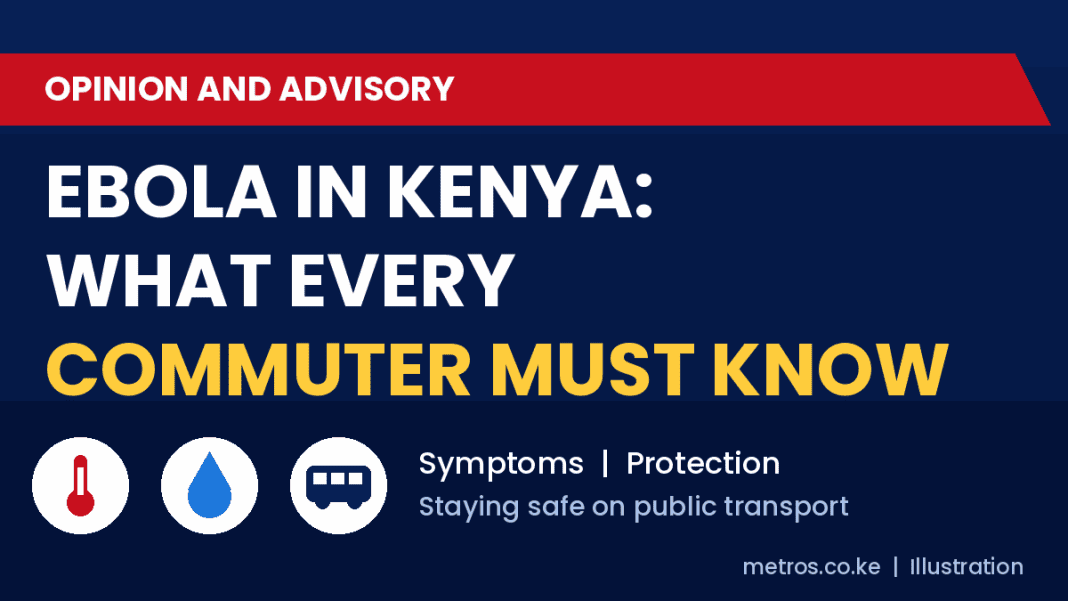
Ebola can take between 2 and 21 days to show itself, and a person is not contagious until symptoms begin. The early signs look like everyday illnesses, which is exactly why they get ignored:
- Sudden fever
- Severe headache
- Muscle and joint pain
- Extreme tiredness and weakness
- Sore throat
- Loss of appetite
As the illness progresses, it can bring vomiting, diarrhoea, stomach pain and, in some cases, unexplained bleeding or bruising.
Fever and body aches are also what malaria and typhoid look like in Nairobi, so please do not diagnose yourself. The warning sign is symptoms plus contact: a fever after you have been near a confirmed case, or after travel from an affected area, is urgent.
Could a lockdown come? Plan as if it might
No lockdown has been announced, and we are not predicting one. But Kenyans remember the curfews and movement restrictions of 2020, and the lesson still stands: when authorities act, they act fast, and daily-wage commuters feel it first. With local transmission confirmed and health workers among the sick, assuming restrictions are off the table would be careless.
Commuters are already stretched. Fuel prices are up and matatu owners are pushing for higher fares, and any restriction on movement would land on top of that.
Plan quietly, and hope you never need the plan:
- Keep your M-Pesa funded. Cashless fares mean less handling of shared money, and they keep you moving if cash points are disrupted.
- Know two routes to work. If a stage closes or a road is restricted, do not learn a new route for the first time that morning.
- Stock sensibly, not wildly. A reasonable supply of essentials and any regular medication is wise. Panic buying helps no one.
- Talk to your employer now. Ask whether you can work from home for even part of the week.
- Trust official updates only. WhatsApp forwards travel faster than facts. Follow the Ministry of Health and county government channels.
How to protect yourself on public transport
Ebola spreads through direct contact with the blood or body fluids of a person who is sick, or through contaminated items such as bedding and clothing. That shapes what commuters should do:
- Clean your hands often. Carry an alcohol-based sanitiser and use it after holding rails, seat backs and cash, and always before eating. Wash with soap and water when you can.
- Keep your hands off your face. Eyes, nose and mouth are where germs get in.
- Give a visibly ill person space. If someone in your matatu is vomiting, bleeding or seriously unwell, do not touch them or anything they have touched. Get off at the next safe point and alert the authorities.
- Do not handle the sick or the dead. Contact with a body at a funeral is among the highest-risk situations in any Ebola outbreak.
- Do not travel if you are unwell. A fever is a reason to stay home and call the health hotline, not a reason to push through to the office.
- Do not stigmatise. Fear of Ebola must not turn into hostility toward anyone because of where they come from or what they do for a living, including health workers.
Masks are not the main protection against Ebola in daily life. Clean hands and avoiding contact with body fluids matter far more. Crowding is not the core Ebola risk either, but ventilation still matters for every other illness doing the rounds, so it is worth knowing how well your vehicle breathes.
Saccos should put sanitiser in vehicles and at stages, brief their crews, and refuse to carry a visibly sick passenger without alerting health authorities. County governments should put guidance where commuters actually are, at stages, termini and railway stations, not only on social media. Rail passengers should remember that the SGR has its own rules too.
The Ministry of Health must also keep publishing clear, regular updates, because trust is the first casualty when information goes quiet. Some observers have already asked how the first patient got through screening. That question deserves an honest answer, and how officials communicate with the public from here will decide whether people follow their advice.
This outbreak is serious, but it is manageable if people act early and calmly. Wash your hands, watch for symptoms, avoid contact with the sick, and make your plan now. Commuters keep this city moving. Let’s keep them safe.
If you or someone you know develops symptoms after contact with a suspected case, call the Ministry of Health Ebola hotline immediately: [insert verified hotline number]. Do not go to a crowded clinic or board public transport.