
A Kenyan technology company is seeking to change how people travel by connecting private car owners with passengers heading in the same direction, allowing them to share fuel costs while introducing digital tools to improve safety and convenience.
Changa Fuel, a shared mobility platform developed by Selluh Technologies, is positioning itself as an alternative for commuters who want more affordable and convenient travel arrangements without hiring an entire vehicle.
In an interview with Metros Exchange, the company’s founder and CEO, John Evans Otieno, explained how the platform brings together drivers with available seats and passengers looking for transport along similar routes.
The concept is simple. A motorist travelling from Nairobi to Kisumu, for example, may have several empty seats. Instead of making the journey alone and meeting the entire fuel cost, the driver can connect with passengers heading in the same direction and share the expense.
Passengers, in turn, get an opportunity to travel in a private vehicle without paying the full cost of hiring one.
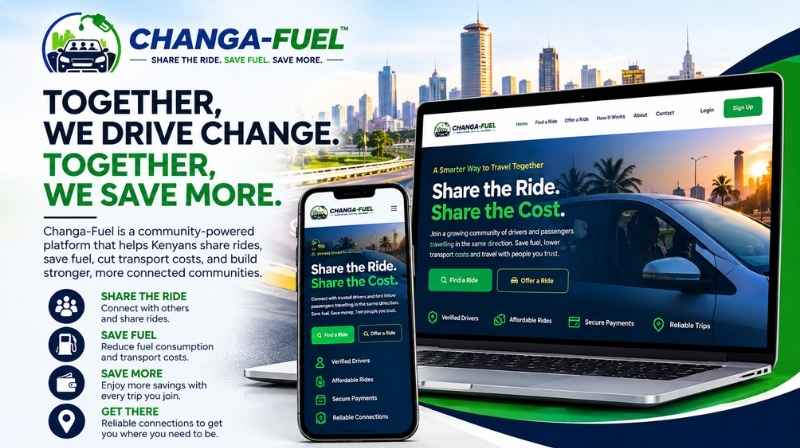
The company operates through its official website, Changa Fuel, where users can find available rides, offer rides and register on the platform.

Turning Empty Car Seats Into Travel Opportunities
For many Kenyan motorists, fuel is one of the biggest expenses associated with travelling, particularly over long distances.
At the same time, thousands of private vehicles move between towns and cities with unoccupied seats.
Changa Fuel wants to connect these two realities.
Otieno explained that the company’s model focuses on drivers who already intend to make a journey rather than requiring them to operate like conventional taxi drivers.
A vehicle owner can list a planned trip, indicate the route and available seats, and connect with passengers travelling in the same direction.
The passengers contribute towards the journey, helping the driver recover part of the fuel expense.
Unlike conventional taxi-hailing services, where a passenger typically pays for a dedicated journey, Changa Fuel focuses on sharing the cost of an existing trip.
The platform allows drivers to set their routes, departure times and prices, while passengers can search for journeys and book seats.
Safety Features Designed to Protect Passengers
One of the biggest concerns associated with sharing private vehicles is personal safety.
Travelling with unfamiliar drivers or passengers requires trust, particularly during long-distance journeys.
Otieno told Metros Exchange that Changa Fuel has incorporated several security features intended to make shared commuting safer.
These include identity verification, journey monitoring and emergency communication tools.
According to the company, drivers and passengers undergo identification procedures designed to establish who is using the platform.
The registration process includes identity checks, selfie verification and other personal details intended to strengthen accountability.
Vehicle information and insurance documentation also form part of the company’s driver verification arrangements.
These measures are intended to help users make more informed decisions about the people with whom they share a journey.
A System That Monitors the Entire Journey
Perhaps the most interesting feature discussed during the interview was Changa Fuel’s journey-monitoring technology.
Otieno explained that the system is designed to follow a vehicle’s movement from the beginning of a trip to its destination.
When a journey takes significantly longer than expected, the monitoring system can flag the delay.
The company’s team can then contact the driver or passenger to establish what has happened.
A delay could result from traffic congestion, a vehicle breakdown, an accident or another incident requiring assistance.
According to Otieno, the objective is to ensure that unusual developments during a journey do not go unnoticed.
This approach introduces a level of journey oversight that could be particularly useful for passengers travelling between towns.
Technology That Can Detect Trouble Inside a Vehicle
Changa Fuel is also developing its passenger safety approach around technology intended to identify potential disturbances during a journey.
During the interview, Otieno explained that the system can monitor sounds inside a vehicle and identify possible signs of a confrontation.
He distinguished between ordinary conversations among passengers and situations involving shouting or fighting.
Where the system identifies a possible security incident, the company’s monitoring team can contact the people involved.
If the traveller cannot be reached, Otieno said the company can seek assistance from security agents in the area.
The feature reflects Changa Fuel’s ambition to move beyond simply matching drivers and passengers by incorporating active journey support into its service.
Emergency SOS Feature for Passengers
Another safety feature highlighted by Otieno is an emergency SOS function.
The system is designed to allow passengers to send an alert to Changa Fuel when they encounter a problem during their journey.
Otieno explained that the emergency feature also prompts users to contact the nearest security agency.
During the Metros Exchange conversation, he was asked how the company would respond to a security incident affecting a passenger travelling between Nairobi and Kisumu, particularly if the incident occurred around Kericho.
The discussion highlighted the importance of knowing a vehicle’s location and having a way to communicate with passengers or drivers when something goes wrong.
For travellers making long journeys, such features could offer an additional channel for requesting help.
How Passengers Can Book a Ride
Changa Fuel has designed its platform around a relatively straightforward booking process.
Passengers begin by registering and verifying their identity.
They can then search for a journey using their departure point, destination and preferred travel date.
Once they identify a suitable driver, they can select a seat and confirm the booking.
The platform supports M-Pesa payments and allows passengers to rate their experience after completing a journey.
Drivers can also receive ratings from passengers, creating a record of user feedback within the system.
For people interested in trying the service, the process begins through the company’s official website.
Personal Accident Cover for Verified Users
Beyond its digital security features, Changa Fuel also advertises personal accident insurance for verified users.
According to the company, eligible verified users receive personal accident cover during Changa Fuel trips at no additional charge.
The company’s website identifies Birdview Microinsurance as the underwriter of the cover.
The insurance feature forms part of Changa Fuel’s effort to build confidence among passengers and drivers who may otherwise hesitate to share a vehicle with unfamiliar people.
Travellers should review the applicable policy terms and coverage conditions before relying on the insurance.
Changa Fuel Founder Says Platform Has Attracted Thousands of Users
During the Metros Exchange interview, Otieno said Changa Fuel had attracted approximately 29,000 users and 450 drivers.
He presented the figures as an indication of the interest the company has generated in shared mobility.
The next challenge for the platform will be ensuring that passengers can consistently find drivers travelling along their preferred routes.
For shared commuting to become convenient, a platform needs sufficient participation from both sides.
Drivers need passengers who can help them share fuel expenses, while passengers need reliable access to suitable journeys.
Changa Fuel is seeking to build that network by encouraging private motorists to list their planned trips and make their empty seats available.
Shared Commuting Could Complement Kenya’s Public Transport System
Changa Fuel enters a transport sector already experiencing significant technological change.
Kenya’s conventional public transport system remains heavily dependent on buses and matatus, while newer mobility businesses are introducing electric vehicles, digital payments and technology-based passenger services.
Metros Kenya has previously examined how electric buses are being introduced into commercial passenger operations in its report, BasiGo Reveals How Electric Buses Are Tested for Range, Load Capacity and Safety Before Hitting Kenyan Roads.
The transition is not limited to replacing diesel vehicles with electric alternatives.
Digital technology is also creating opportunities to improve how journeys are organised, how passengers communicate with transport providers and how available vehicle capacity is used.
As explored in Kenya’s Electric Bus Revolution Is Gaining Speed, But the Infrastructure Question Remains, modernising public transport requires improvements in passenger management, digital systems and supporting infrastructure.
Changa Fuel approaches the challenge from a different direction.
Instead of introducing a new fleet of buses, it seeks to make better use of private vehicles that are already travelling on Kenyan roads.
The two approaches could complement each other.
High-capacity electric buses can serve busy urban corridors, while shared private journeys could offer additional options for passengers travelling between towns or along routes where conventional services are less convenient.
Changa Fuel Also Targets Parcel Deliveries
The company’s ambitions extend beyond passenger transport.
Its website includes a cargo-sharing service intended to connect people who need to transport goods with vehicle owners who have available carrying capacity.
The service allows users to look for vehicles, including lorries, pickups and cars, travelling along suitable routes.
Changa Fuel also describes an OTP-secured handover process for parcel deliveries.
The idea follows the same principle as its passenger service: making use of existing journeys and available vehicle space rather than arranging an entirely separate trip.
A New Approach to Everyday Mobility
For Otieno, Changa Fuel represents an opportunity to rethink the relationship between private vehicle ownership and public transport.
A private car does not necessarily have to carry only its owner during every journey.
With suitable coordination, identity checks and passenger communication, the same vehicle could provide transport to other people travelling along a similar route.
The arrangement could help motorists reduce their fuel expenses while offering passengers another way to organise their travel.
It also introduces the possibility of reducing the number of separate vehicles required to transport people making similar journeys, particularly where ride-sharing becomes widely adopted.
The company’s emphasis on safety technology is an important part of that ambition.
For many potential users, the decision to share a vehicle will depend not only on affordability but also on confidence in the driver, fellow passengers and the support available during a journey.
The Road Ahead for Changa Fuel
Changa Fuel is seeking to establish itself in Kenya’s growing digital mobility market by combining fuel-cost sharing with identity verification, journey monitoring and emergency support features.
Its proposition is particularly relevant at a time when motorists and commuters are looking for practical ways to manage transport expenses.
The company will need to continue building a dependable network of drivers and passengers while demonstrating that its safety and booking systems can deliver a consistent experience.
For Otieno, however, the opportunity begins with a simple observation: many vehicles are already making journeys with empty seats, while other people are paying separately to travel in the same direction.
Changa Fuel wants to bring them together.
Passengers interested in finding a ride and motorists wishing to offer available seats can visit www.changa.ke to learn more about the platform.
The full conversation with John Evans Otieno is part of Metros Exchange, a Metros Kenya interview series featuring entrepreneurs and industry leaders working to transform transport and mobility across Africa.
ALSO READ
- BasiGo Reveals How Electric Buses Are Tested for Range, Load Capacity and Safety Before Hitting Kenyan Roads
- Kenya’s Electric Bus Revolution Is Gaining Speed, But the Infrastructure Question Remains
- Inside BasiGo’s Golden Dragon Electric Van: Francis Mungai Takes Metros Through Kenya’s 15-Seater EV
- Matatu Laws in Kenya: Rules Every Commuter Should Know