

NAIROBI, Kenya — For years, flying between Nairobi and other parts of Kenya carried an image of exclusivity — something associated with executives, wealthy tourists and travellers willing to pay substantially more for convenience. But that perception is increasingly being challenged as passengers begin putting a higher value on something they cannot recover once it is lost: time.
For a traveller accustomed to spending much of the day on the road, the possibility of reaching another part of the country in roughly an hour can fundamentally change the calculation.
The question is increasingly becoming less about whether someone can claim the status of being an air traveller and more about whether several hours spent travelling by road are worth the saving.
ALSO READ: Dash 8 Q400 Could Offer Attractive Returns on Nairobi–Mombasa Route, Pilot Barrack Siglain Says
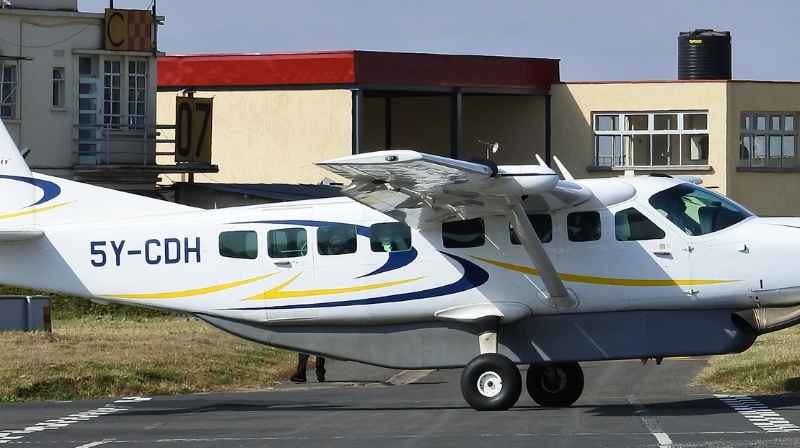
And once passengers begin making that calculation, Wilson Airport becomes particularly important.
Located close to Nairobi’s central business district, Wilson is the capital’s principal hub for many regional and safari services, connecting passengers with destinations across Kenya. Metros Kenya’s growing Kenya Domestic Flights database brings many of these connections together in one passenger guide.
Air travel is becoming a question of value, not status
Flying domestically should not automatically be interpreted as a luxury purchase.
The better comparison is the total cost of the journey.
A passenger travelling overland may spend less on the ticket itself, but the journey can consume several hours. Depending on the destination, it may also involve meals along the way, transfers, waiting time and the physical fatigue associated with a long journey.
Flying changes that equation.
The ticket may cost more, but the traveller purchases something important in return: time.
For a businessperson, several hours saved could become productive working time. For a family, flying could eliminate an exhausting day on the road. For someone travelling for an important appointment, it could make it possible to leave Nairobi and reach another part of Kenya on the same morning.
That does not make flying the right choice for everyone.
But it does mean comparing only the bus or matatu fare against the airline ticket can provide an incomplete picture.
Domestic fares can sometimes be more accessible than passengers assume
Metros Kenya’s domestic flight database illustrates why travellers should compare prices rather than dismiss flying automatically.
Indicative one-way planning ranges currently listed in the database include around Sh6,000–Sh15,000 for Nairobi–Mombasa, Sh5,500–Sh13,000 for Nairobi–Kisumu and Sh6,500–Sh15,000 for Nairobi–Malindi. Actual fares vary considerably according to airline, date, demand and how early a passenger books.
Those prices will still be expensive for many travellers, particularly compared with road transport.
But for someone who values the hours saved, the comparison becomes considerably more interesting.
Instead of asking only:
How much does the ticket cost?
The traveller begins asking:
How much does the entire journey cost me in money and time?
Wilson Airport sits at the centre of that choice
Wilson Airport provides access to a substantial domestic network.
Metros’ flight database lists Wilson connections towards Mombasa, Diani/Ukunda, Malindi, Lamu, Nanyuki, Meru and Migori, alongside safari destinations including the Maasai Mara, Amboseli and Samburu.
For example, travellers heading to the North Coast can consult the Wilson to Malindi Flights guide, where Metros currently estimates a direct flight at roughly one hour to one hour and 20 minutes, subject to the operating service.
Likewise, passengers considering Lamu can use the Nairobi to Lamu Flights guide to compare departure airports, fares and journey times before deciding how they want to travel.
This is where Wilson’s location becomes especially useful.
A Nairobi resident does not necessarily need an expensive airport transfer just to begin considering air travel.
The airport can itself be reached through Nairobi’s public transport network.
You can take a matatu from Nairobi CBD towards Wilson Airport
One of the relevant services in the Metros route database is Route 15, which connects Nairobi CBD with Lang’ata while passing Wilson Airport.
Metros’ Route 15 Nairobi to Lang’ata guide maps the journey as:
Nairobi CBD → Nyayo Stadium → Nairobi West → T-Mall → Wilson Airport → Uhuru Gardens → Lang’ata.
For an airline passenger travelling light, this provides an inexpensive way of getting towards the airport area.
Passengers should tell the conductor that they are travelling specifically to Wilson Airport before boarding and confirm the appropriate alighting point.
The irony: you can take a matatu to catch a plane
There is nothing contradictory about using one of Nairobi’s cheapest forms of mass transport to access one of its fastest forms of long-distance transport.
A passenger can leave Nairobi CBD aboard a matatu, reach Wilson and then board an aircraft that eliminates hours from the long-distance portion of the journey.
The journey becomes:
Matatu → Wilson Airport → Aircraft → Destination
That is also why the distinction between public transport and air travel need not be about social status.
They are simply different parts of a transport network.
The commuter’s objective should be to select the combination that provides the best value for the particular journey.
Passengers unfamiliar with Nairobi’s route system can also use the Nairobi Matatu Routes and Numbers database, which places Route 15 within the wider Lang’ata Road transport corridor.
Time changes the mathematics
Consider the principle rather than a particular route.
Suppose one mode takes eight hours while another requires approximately one hour in the air.
The difference is not simply seven hours.
It is seven hours multiplied by whatever value the passenger attaches to that time.
For illustration, someone who values an hour of their time at Sh500 could regard seven hours as representing Sh3,500 worth of time.
At Sh1,000 an hour, seven hours represents Sh7,000.
This doesn’t mean everyone should calculate their life according to an hourly wage, nor does it mean flying becomes cheaper automatically.
It demonstrates why the cheapest ticket is not necessarily the cheapest journey.
The greater the value an individual places on time, the more competitive faster transportation becomes.
Comfort also has a price
There is another component that is harder to put into shillings: fatigue.
A long road journey can consume most of a day and leave the traveller needing additional time to recover.
A shorter journey can allow someone to arrive with considerably more of the day remaining.
That matters to business travellers, but it isn’t exclusive to them.
Someone travelling for a family function, university appointment, holiday, meeting or other personal engagement may value exactly the same thing.
Saving time and seeking greater comfort do not have to be regarded as luxuries reserved for wealthy passengers.
Check the airfare before assuming you cannot afford it
Perhaps the most useful change passengers can make is simply to compare before deciding.
Don’t assume the aircraft is unaffordable.
Likewise, don’t assume flying is automatically better value.
Airfares change according to destination, airline, travel date, availability and how early the passenger books.
For example, Metros currently lists an indicative Nairobi–Lamu one-way range of approximately Sh8,000–Sh18,000, with the flight taking roughly one hour 20 minutes to one hour 40 minutes. Passengers must also account for the onward boat connection from Manda Airport when travelling to Lamu Island.
The traveller should compare:
Airfare + airport transfer + check-in + total journey time
against:
Road fare + transfers + stops + total journey time.
Sometimes road transport will win decisively.
On another journey, the price difference may be small enough that saving several hours makes flying attractive.
Wilson opens up more than Kenya’s major cities
Another advantage of Wilson is the nature of its network.
It isn’t simply an alternative airport for flights between major cities.
Wilson is particularly important for regional and safari aviation, with Metros’ domestic flight database mapping services towards destinations including Nanyuki, the Maasai Mara, Amboseli, Samburu, Lewa and Loisaba, in addition to coastal destinations.
For coastal travellers, the database also connects into individual destination guides. The Nairobi to Diani/Ukunda Flights guide, for instance, explains the air connection to Ukunda Airport and provides indicative journey times and fares for passengers comparing their options.
This is where the value of air travel can become particularly apparent.
The more difficult or lengthy a destination is to reach overland, the greater the potential value of the hours saved by flying.
Travelling with luggage changes the equation
Using a matatu to reach Wilson will not suit every airline passenger.
Someone carrying a backpack or small suitcase may find public transport perfectly practical.
A family carrying several suitcases, a passenger with bulky equipment or someone unfamiliar with Nairobi may find a taxi or ride-hailing vehicle more appropriate.
Again, the principle should be value rather than status.
Taking a taxi does not automatically make someone extravagant, just as arriving at Wilson by matatu says nothing about whether that passenger can afford an airline ticket.
Each mode solves a different transport problem.
Leave enough time to reach Wilson
Wilson’s proximity to the CBD should not encourage passengers to leave at the last minute.
Traffic along the CBD approaches, around Nyayo Stadium and on the Lang’ata Road corridor can substantially increase journey times.
The Metros Route 15 guide specifically advises passengers travelling to Wilson Airport not to assume a fixed journey time because congestion can change considerably.
An ordinary commuter delayed by 30 minutes arrives late.
An airline passenger delayed by 30 minutes could miss check-in.
Passengers should therefore work backwards from their airline’s required check-in time and provide a generous traffic buffer.
Don’t confuse Wilson with JKIA
First-time domestic passengers should pay particular attention to the airport shown on their booking.
Wilson Airport and Jomo Kenyatta International Airport are different airports.
A booking displaying WIL means Wilson Airport.
A booking displaying NBO refers to Jomo Kenyatta International Airport.
This distinction is particularly important because some destinations can be served from either airport depending on the airline.
The Metros Nairobi–Lamu guide, for example, identifies services from either JKIA or Wilson depending on the carrier.
Travelling to the wrong Nairobi airport can turn an otherwise convenient flight into a difficult cross-city transfer.
A changing definition of affordable travel
Perhaps the most significant change is therefore psychological.
Affordability does not always mean buying the cheapest ticket available.
It can also mean selecting the journey that provides the best overall return for the money spent.
For one passenger, that will remain the bus.
For another, it will be the train.
For another, paying more for an aircraft ticket may be justified because it returns several hours of the day.
That is where the old perception of domestic aviation as primarily a symbol of status begins to weaken.
The aircraft doesn’t have to represent prestige.
It can simply represent a faster and more comfortable way of getting somewhere.
For travellers who want to compare the wider network before deciding, Metros Kenya’s Kenya Domestic Flights: Airports, Airstrips & Flight Routes Guide provides the starting point.
For years, many passengers may have asked:
“Can I afford to fly?”
Increasingly, there is another question worth asking:
“What is my time worth?”
Once time, comfort and the total journey are considered alongside the ticket price, flying within Kenya may no longer look quite as prohibitive as many travellers once assumed.
And for a Nairobi passenger who reaches that conclusion, the journey can begin in the most ordinary way possible — aboard Route 15 from Nairobi towards Wilson Airport.