
Thirty-two Kenyan families who lost relatives in the 2019 Ethiopian Airlines Flight 302 crash are set to receive a combined Sh11.3 billion in compensation from Boeing, bringing a lengthy legal battle over the fatal Boeing 737 MAX disasters closer to an end.
Under the latest compensation arrangement, each of the 32 Kenyan families is expected to receive about $2.73 million, equivalent to approximately Sh353.3 million, according to figures contained in the settlement.
The payments stem from a $444.5 million (about Sh57.5 billion) crash-victims compensation fund established under an agreement between Boeing and the United States Department of Justice.
The latest fund follows earlier compensation established after the crashes of Ethiopian Airlines Flight 302 and Lion Air Flight 610, the two accidents that triggered the worldwide grounding of the Boeing 737 MAX.
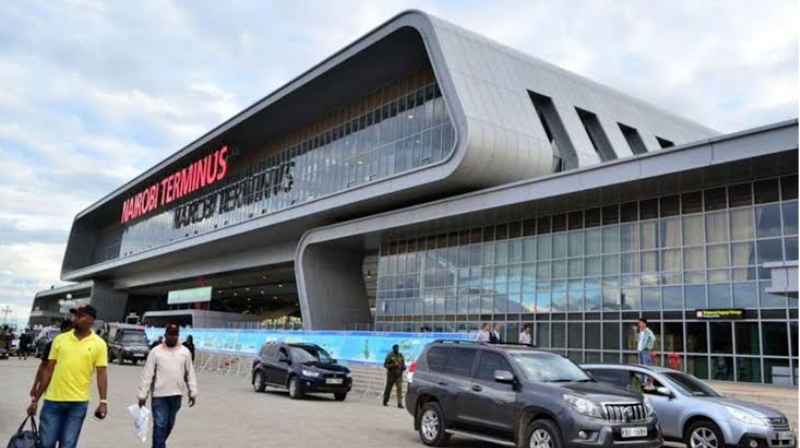
For Kenya, the Ethiopian Airlines disaster remains particularly significant because Flight 302 was travelling from Addis Ababa to Nairobi’s Jomo Kenyatta International Airport (JKIA) when it crashed shortly after takeoff.
Explore the Metros Kenya JKIA Passenger Guide
Kenyan families among those represented in Boeing case
Chicago-based Ribbeck Law Chartered, which represented families affected by the two 737 MAX crashes, said Boeing would begin making the final compensation payments to its clients.
The law firm represented 93 families across several regions, including Africa, the United States, the Middle East and Asia.
According to the firm, resolving the claims required coordination across more than 35 countries as well as litigation in multiple jurisdictions.
Manuel von Ribbeck of Ribbeck Law Chartered said the firm’s legal work for the represented families had now concluded, with Boeing expected to compensate the clients following the non-prosecution agreement reached with the US Department of Justice.
The payments add another chapter to a legal process that has stretched for years following one of the deadliest aviation disasters involving passengers travelling to Kenya.
Flight 302 was heading to Nairobi when it crashed
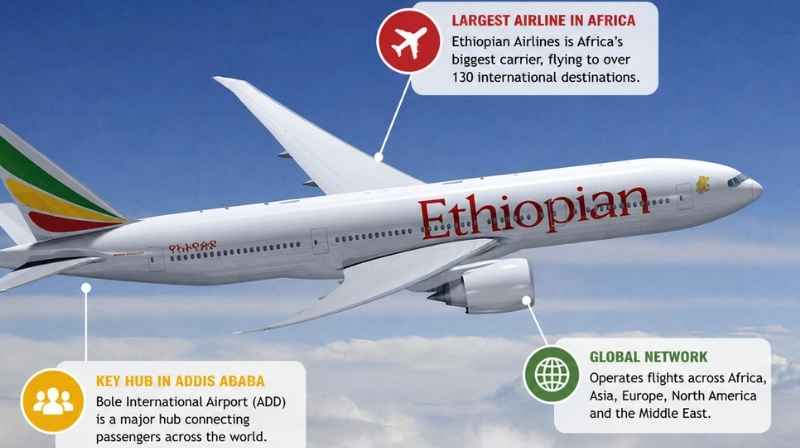
Ethiopian Airlines Flight 302 departed Addis Ababa on March 10, 2019, bound for Nairobi.
The Boeing 737 MAX 8 crashed shortly after takeoff, killing all 157 people aboard.
Kenya suffered the largest number of casualties from a single nationality, with 36 Kenyans reported among those killed. The compensation report identifies 32 victims as holding Kenyan passports, while four others travelled under other or dual nationalities.
The accident came less than five months after Lion Air Flight 610, another Boeing 737 MAX 8, crashed into the Java Sea in Indonesia.
Combined, the two accidents killed 346 people.
Investigations into the crashes placed intense scrutiny on the Boeing 737 MAX’s flight-control systems and the information provided during the aircraft’s certification process.
Boeing 737 MAX grounded for 20 months
The two accidents led aviation regulators around the world to ground the Boeing 737 MAX.
The grounding lasted about 20 months, disrupting airline operations globally and contributing to costs for Boeing running into billions of dollars.
The crisis also resulted in lawsuits from victims’ families and a criminal investigation in the United States over Boeing’s interactions with the Federal Aviation Administration (FAA).
US authorities accused Boeing of conspiring to defraud the FAA in relation to technical information concerning the 737 MAX.
For Nairobi, the accident also underscored the importance of the Addis Ababa–Nairobi aviation corridor, which connects two of East Africa’s major aviation hubs.
Boeing initially agreed to more than $2.5 billion
In January 2021, Boeing entered into a Deferred Prosecution Agreement with the US Department of Justice.
Under that agreement, the aircraft manufacturer committed more than $2.5 billion through several components.
These included a $243.6 million criminal penalty, approximately $1.77 billion in compensation to Boeing’s airline customers, and a $500 million fund for the families and beneficiaries of people killed in the Lion Air and Ethiopian Airlines crashes.
The $500 million victim fund was separate from civil lawsuits brought individually by victims’ families.
That distinction is important because compensation arising from the 737 MAX disasters has come through different legal channels rather than one single settlement.
Boeing’s agreement later came under renewed scrutiny
The criminal proceedings did not end with the 2021 agreement.
In May 2024, the US Department of Justice determined that Boeing had breached its obligations under the Deferred Prosecution Agreement.
According to the department, Boeing had failed to adequately design, implement and enforce a compliance and ethics programme capable of preventing and detecting violations of US fraud laws.
The development came during another period of heightened scrutiny of Boeing following the January 2024 Alaska Airlines Boeing 737 MAX 9 door-plug blowout.
Boeing and the Justice Department subsequently negotiated a proposed guilty-plea agreement involving additional financial penalties and investment in safety and compliance.
However, a federal judge in Texas rejected the proposed arrangement in December 2024.
New agreement added $444.5 million for crash victims
The dispute eventually resulted in another agreement in May 2025.
Under the Non-Prosecution Agreement, Boeing would avoid prosecution while taking on additional financial and safety commitments.
One of the most consequential provisions for the victims’ families was an additional $444.5 million compensation fund.
When added to the earlier $500 million fund, the criminal-case victim funds reached approximately $944.5 million.
The additional fund was structured around the 346 people killed in the Ethiopian Airlines and Lion Air disasters, producing an average additional compensation figure of approximately $2.73 million per victim.
The agreement also required Boeing to invest another $455 million in safety, quality and compliance programmes and retain an independent compliance consultant.
Families challenged US government’s Boeing agreement
Not all of the victims’ families supported the government’s handling of the case.
Some challenged the arrangement, arguing that their rights had not been adequately protected during negotiations between Boeing and the Justice Department.
A Texas court nevertheless approved the US government’s request to dismiss the criminal charge in November 2025.
Families opposed to the dismissal appealed, taking the dispute to the US Fifth Circuit Court of Appeals.
On March 31, 2026, the appellate court rejected challenges concerning both the 2021 Deferred Prosecution Agreement and the 2025 Non-Prosecution Agreement.
A subsequent request for rehearing was denied in May, with the court mandate following in June.
That brought the criminal-case litigation close to its conclusion, although separate civil claims involving individual victims continued.
Some families have won much larger civil awards
The compensation being distributed through the Boeing victim funds should not be confused with damages obtained through separate civil lawsuits.
Some families have pursued Boeing through the courts rather than resolving their claims through confidential settlements.
In May 2026, for example, a Chicago federal jury awarded $49.5 million — approximately Sh6.4 billion — to the family of Samya Stumo, who died aboard Ethiopian Airlines Flight 302.
The award included compensation relating to her suffering before death, loss of companionship and the family’s grief.
Another Chicago jury had previously awarded more than $28 million (about Sh3.6 billion) to the family of Shikha Garg, a United Nations environmental consultant who also died aboard Flight 302.
These civil awards are separate from the compensation funds created through Boeing’s agreements with the US government.
Flight 302 remains deeply connected to Kenya
Although Flight 302 crashed in Ethiopia, the disaster has a particularly strong connection to Kenya.
The aircraft was bound for Nairobi, Kenya recorded the largest national group among the victims, and Kenyan families subsequently became part of the international litigation against Boeing.
The case has also become one of the most significant aviation safety disputes of the modern era, changing how regulators, airlines and aircraft manufacturers approach the Boeing 737 MAX.
For Kenya, it remains part of the country’s aviation history because the passengers aboard Flight 302 were only hours away from arriving at JKIA when the aircraft went down.
Explore the Metros Kenya Domestic Flights, Airlines, Routes & Fares Guide